Reform UK has plans for Scotland
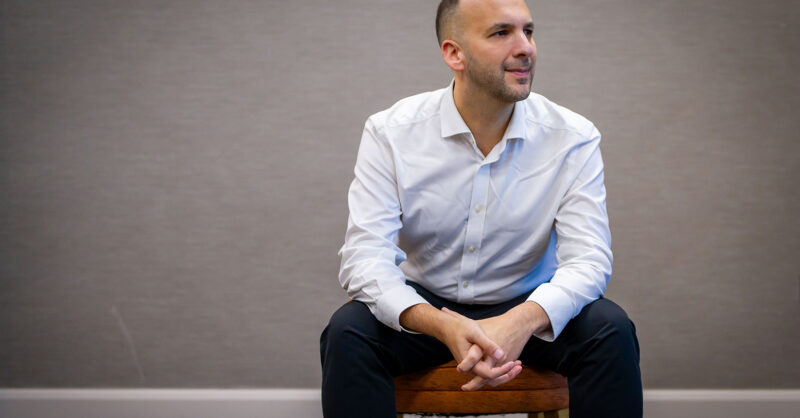
If Malcolm Offord is elected to Holyrood on 7 May, as seems all but certain, the leader of Reform in Scotland will be the wealthiest MSP in the history of the Scottish Parliament.
Lord Offord of Garvel (he has resigned from the House of Lords but retains his peerage) has made a fortune over many decades working in private equity. He has a gilded life – large houses, sports cars, a boat, equally rich friends – and yet now claims to speak for the nation’s working class. When, during our interview, I ask him how authentically he can present himself as the voice of ordinary people, it is the only point at which he comes close to losing his cool.
He understands their lives by “going to talk to them and meet them and spend time with them, going on to the streets with them, being out in the pissing rain. Frankly, I’ve never lost who I am and where I come from, ok? My family still live in Greenock [where he grew up]. That’s why I’m standing in Inverclyde, because it’s my hometown. I remember being at Edinburgh University and putting my card in the cash machine and nothing came out. I know exactly what it’s like to have no money – don’t patronise me on that. I hated having no money and I want to help people with no money. I want to help people get back on their feet, I want to help people get into work, I want to help people get good jobs, I want to help people improve their lives. What’s wrong with that?”
Offord is the new kid on the political block, having only been appointed leader by Nigel Farage in January. He is that rare thing: a successful businessman who has taken to and enjoys politics. The polls indicate that Reform could win as many as 24 of Holyrood’s 129 seats in May, beat Labour into third place, and thus form the official opposition. It is an astonishing disruption to a political culture which has for decades been dominated by social democrat parties. The idea that Reform was a purely English nationalist phenomenon, that it couldn’t happen here, is about to be exploded.
Subscribe to the New Statesman today for only £1 a week.
One wonders why a 61-year-old financier, who could be relaxing into a life of elite luxury, can be bothered throwing himself into the horrors and stresses of political life, especially at the helm of a party that is still viewed by many Scots as a toxic, far-right, racist brand. It’s a tough, bruising gig. He lost friends by defecting from the Conservatives, he admits. Talking to him, however, leaves no doubt about the passion he has for challenging and, if he can, changing the status quo.
“I’m ambitious for Scotland,” he says. “I’m fed up with mid-table mediocrity. Scotland is massively underperforming and I’m a bit embarrassed about that. The party I was in didn’t have the ambition to do anything about that. By their own admission they said to me ‘we only have one policy, we only want one policy, which is to say no to a referendum’. That’s the only way we get votes, is what I was told by the Scottish Conservative Party. They’re in a co-dependent relationship with the SNP. A doom loop. I was fed up with it.” There have been some awkward conversations with his former colleagues, including Russell Findlay, leader of the Scottish Tories. Offord was the Scottish party’s treasurer until his departure, as well as the UK party’s energy spokesman in the Lords.
“As treasurer, I was organising donor dinners. The donors were saying ‘what’s the plan for government?’ Well, they don’t have one. That was the first reason for leaving. The second reason was being in London, in the Lords, and I was given the energy brief by Kemi. Our energy is now seven times more expensive than China, four times more expensive than the US, we’re completely deindustrialising, losing high-quality jobs. The whole country is covered in wind turbines with not a single blade made in Scotland. I began to say this at the despatch box, and I got the most opposition from my own side. I would come out of there with darts in my back from people like Theresa May, Alok Sharma, John Selwyn Gummer.”
One relationship that he says has survived is that with Alister Jack, the former Scottish Secretary who Offord worked with as a minister and who he describes as his political “mentor”. “Alister and I had a good relationship because we’re both not politicians. Alister’s a businessman and I’m a businessman. I worked with him in the Scotland Office and we were the most effective Scotland Office in 25 years. Local authorities said to me ‘we haven’t seen anyone from London for 25 years’. When devolution happened from Whitehall it was ‘devolve and forget’. We went to them with ideas, money, encouragement, which of course the SNP hated. Alistair and I have a different perspective on this [defection] but he is not a tribal politician, like I’m not a tribal politician. So he and I have been able to maintain our friendship because we knew each other before we went into politics.” What did he say to you? “He wasn’t happy, but that doesn’t mean to say that we can’t have a cordial relationship. There are other relationships which are over.”
I’ve known Offord for a few years, and was surprised by his decision to join Reform. I’d always regarded him as a liberal Conservative, perhaps belonging to the One Nation wing of the party. I’d have thought he would be more comfortable with people like Ruth Davidson, Rishi Sunak and George Osborne than the likes of Suella Braverman, Robert Jenrick and Lee Anderson. “Perhaps it was being in the Lords and seeing the grandees of the Blair and Cameron governments around me, and thinking that something has gone wrong over the past 25 years,” he says. “We’re not as prosperous as we should be. We’re not as happy as we should be. Our public services are not as well run as they should be. And being there, seeing them all together – Nigel Farage uses the phrase ‘uniparty’. When I look at the fact that our energy prices are sky high, that we have the highest taxes and borrowing since the war, and that we have the most divided nation since the war, something’s gone wrong. So the One Nation Tory might be this nice, middle-of-the-road concept, which sits very nicely along Blairite New Labour. There’s nothing to choose between them, with the Lib Dems thrown into coalition for five years. It has produced this sort of blancmange. General Patton said ‘if everyone’s thinking the same thing, no one’s thinking’. We’ve had 25 years of consensual thinking which has resulted in the position we’re in. I’m a private equity guy, that’s the business I’m in – I’m a disruptor.”
He admits he is learning on the job, and occasionally slips up. He recently appeared to suggest that Catholic schools should be abolished, a “loose statement” that he quickly rowed back on. As a hard-nosed businessman he is prone to saying exactly what he thinks, which can be refreshing in a climate of soundbites and focus-grouped strategies, but is not without risk. “Reform is not a perfect party, but it’s a disruptor party and it’s here to make change to Britain,” he says. “Sometimes, as we all know, you have to crack some eggs to make an omelette.”
Offord has had to oversee the recruitment of 73 candidates for the Holyrood election, the vast majority of whom have no background in politics. Both the full candidate list and the Reform manifesto will be published on Thursday. I ask him about the kind of people who are standing. “Of our candidates, 80 per cent have not been politicians before. They’re ordinary people – doctors, lawyers, civil servants, farmers, engineers, entrepreneurs, business owners. A wide spread of people, all of whom have got jobs or businesses. They don’t need to do this – are probably taking a pay cut to do it.” Why are they doing it? “Because they’re fed up of professional politicians standing every five years, giving you the word salad, and nothing changes, nothing gets better. They are motivated sufficiently to stop shouting at the telly and put themselves forward. The fact is therefore that they’re not going to be smoothie-chops politicians, they’re not going to be media savvy, it’s going to be a challenge. They’re all smart, they’re all motivated, we’re going to see something different.”
What’s the vetting process been like? “It’s been very intensive, as you can imagine. It’s quite an exercise for a new party to put that together in short order. And then of course next year we’ve got the council elections, another 300 to find. Not an easy process. There’s been a lot of testing, a lot of assessment, a lot of vetting. Intensive days, a lot of media stuff, a lot of personal values stuff. We worked hard on that process.” He says all social media accounts have been checked out. Does he have complete confidence in all 73? “There might be somebody who’s fallen through the net, but we’ve done the vetting and are confident in the vetting process.” The presence for the first time of Reform MSPs in Holyrood promises to significantly alter the environment. In what is likely to be a parliament of minorities, none of the other parties are likely to want to do any deals with them. This raises the question of how Offord intends to approach daily parliamentary life. Would he prefer to be collaborative or oppositional and obstructive?
“At the end of the day Reform has a centre-right agenda which wants to make the country more prosperous, cut taxes, raise productivity, make people healthier and wealthier,” he says. “Anybody that wants to come and talk to us about that agenda, we can work with. But if we’re the only people with that agenda, we might have to be outsiders. In which case we have to be the voice in the wilderness and keep saying what we believe in. There’s been 25 years of devolution and it’s been predominantly government by centre-left parties, by what you might call social democratic principles, whether it’s been Labour or Lib Dem or SNP, and we know that the mindset in the parliament is that any time there’s a problem the only way to fix it is to throw money at it. Money doesn’t solve every problem. We can do better than that, we can be more creative than that. It doesn’t need to be the state every time either. When Scotland started out on the devolution journey, state spending as a percentage of GDP was 43 per cent. Today it’s 55 per cent. The UK is 44 per cent. London and the south east would be 35 per cent. We’re spending the most per capita of any part of the UK. Are our schools better? Are our hospitals better? Are our roads better. Are we happier? Are we more prosperous? If the answer to these questions is no, it might be time to say ‘should we try something different?’”
Reform is still policy-light, although that will presumably change with the release of the manifesto. One commitment Offord has given is that he would cut Scotland’s six tax bands to three, and cut income tax by 1p in each band immediately, and then by a further 2p by the end of the parliament. That would take Scotland’s income tax to below the UK level. This will be funded in part, he says, but cutting the number of quangos. “We want to void cutting frontline services,” he says. “We’ll go for waste, duplication and ideological spending. We’ve got 29,000 civil servants – there were 21,000 before Covid, are we better managed? We have 23,000 working in the quangos, with massive overlap between them.” Offord says he has a “spreadsheet” of quangos and is looking to scrap around 25 per cent of them. Which ones are for the chop? “You might start by saying all of them, and then work backwards to which ones you want to keep. My instinct is to say they’re all abolished until we work out which ones we want to keep.”
Then there’s immigration, an issue which until recently had not been politicised in Scotland in the way it has been south of the border. Indeed, all of the main parties at Holyrood have been in favour of higher immigration, given our aging population and the depopulation of rural Scotland. Offord’s language around the issue, talking about “our people”, has offended some and has opened up a painful debate. “I’m trying to talk about this as honestly as I can, reflecting what local people say to me in their communities,” he says. “Local people, especially working class communities, are very unhappy. They see unfairness. If we ignore that, and they feel they’re being ignored by mostly middle-class politicians who don’t want to talk about it, it’s too uncomfortable, the result is that local communities feel they’re not being properly represented, and they’re feeling sore, angry and resentful. We should not want that in our communities. I’m being honest, and saying we need to fix that to make it fair.”
Controversial or not, Reform cannot be ignored. Until relatively recently, the toxicity around the party’s brand meant that establishment Scotland would avoid meeting its representatives. With the election looming that is no longer the case. Offord says his diary is “packed” and that he has met with the CBI, the Scottish Retail Consortium and small business groups. The party has also had a briefing from the civil service. Scottish politics is changing, and Malcolm Offord is determined to change it for good.
[Beware: Reform UK wants to join you in your bedroom]
Content from our partners
Related