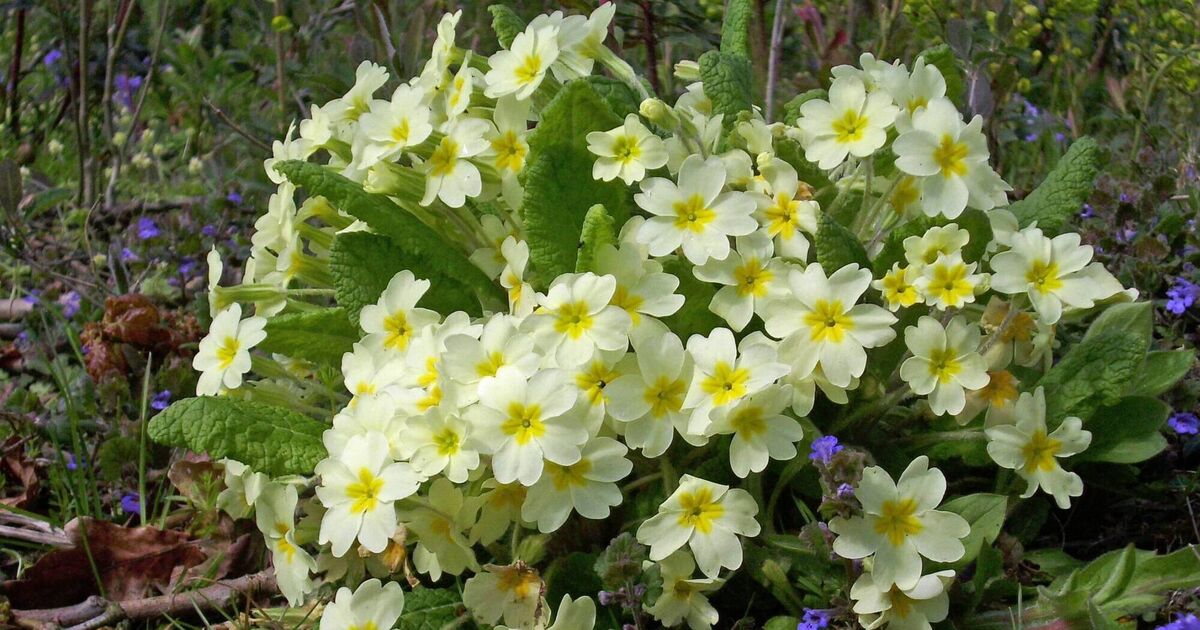
Peter Dowdall: Why so many of us love primroses
With so many plants available to us now in garden centres and online, new introductions every season, top flower colours, improved growing habits, repeat-flowering varieties, the lot and still, I can't tell you how many people I have spoken to recently that have told me their favourite flower at this time of year is the simple yet beautiful, common wild primrose, Primula vulgaris. The same plant that grows in every hedgerow and mossy bank in the country, flowering away without anyone watering it, feeding it, or giving it a second thought. I think we must learn something from that.Right now, primroses are at their best. The soft, pale yellow flowers with the deeper yellow eye at the centre are unmistakable, and they are everywhere if you start looking, along the bottom of hedges, on shaded banks, at the edge of woodland, in old gardens where nobody has been too tidy about things, and that’s actually our first clue about how to grow it successfully. The wild primrose wants a bit of shade, a bit of moisture in the soil, and it does not want to be competing with aggressive, vigorous neighbours. As with every plant, get the basics right, and it will look after itself.In our own gardens, it works brilliantly at the base of a hedge or under a deciduous tree, where it can naturalise away.It's easy to bulk up numbers if you want to encourage it to increase and multiply. Just after flowering is one of the best times to divide and move primrose clumps. Once they are in and settled, they will spread slowly and seed themselves around, which is exactly what we want.Take a trip to any garden centre in the land right now, and you will see plenty of “primroses” available in bright reds, deep purples, oranges and different shades of yellow. These are not wild Irish primroses; they are heavily hybridised forms, bred entirely for colour impact. They may look well in a pot by the front door for a few weeks, though with all the rain we have had so far this spring, even that is not certain. But they are not the same plant at all. They offer nothing to bees and very little to enrich biodiversity generally. A bumblebee coming out on a mild March day in search of early nectar wants a simple, open flower with accessible pollen and nectar, and that is exactly what the native primrose provides. The cowslip, Primula veris, is closely related and also well worth growing. It is a different plant for a different situation. The cowslip, which I think is my favourite plant, wants an open, sunny spot with well-drained soil, so think south-facing banks, gravel areas, or a meadow section of lawn where you hold off on the mowing in spring. The flowers of the cowslip are a deeper, richer yellow than the primrose, carried in clusters on stems about twenty centimetres tall, and they are beautifully fragrant. If you want to establish cowslips from seed, sow in autumn and leave the pot or tray outside through winter; they need a cold period to germinate well. Once you take the time to stop and appreciate the wild primroses all about us, you will suddenly begin to see so much more, because there are other native wildflowers in flower right now that deserve a place in any Irish garden. The lesser celandine, Ficaria verna, is one you will have seen carpeting roadsides and hedgebanks with glossy yellow flowers. It has a reputation for spreading, and that reputation is earned, so do not plant it somewhere where you strive for tidiness and order. Much better to leave it in a wild corner, under a hedge, on a bank where nothing much else wants to grow; it is one of the best ground-covering plants we have for this time of year.The wood anemone, Anemone nemorosa, is also opening into flower now in woodland gardens and shaded borders. Beautifully elegant, white, starry flowers are produced on very low plants which spread slowly by underground rhizomes to build up beautiful patches over time. It needs a cool, shaded spot in a humus-rich soil and looks so good when mixed with the dog violet, Viola riviniana. This is another tough, adaptable little plant that will grow in sun or shade, on a dry bank or in moister ground, in grass or in bare soil. The blue-purple flowers are just so attractive, and it is extremely useful for pollinators and for several species of fritillary butterfly that depend on violets as a larval food plant.Cuckooflower or Cardamine pratensis, also called lady's smock, is just coming into bloom now in damper spots. Pale lilac-pink flowers, delicate-looking but actually pretty tough, and it is the sole food plant of the orange-tip butterfly caterpillar. If you want to grow these natives in your own garden, they are unfortunately rarely available in garden centres, but they will grow very easily from seed. It's important to use Irish-provenance seed and never dig plants from the roadside or the countryside; it is illegal, it rarely works, and it damages wild populations that are already under enough pressure.