Punk isn’t dead. Here’s where you can find it in 2026
Punk’s peak
Punk rose to prominence in 1976, shaking up music’s status quo and challenging authority.
The ascent was quick. Raised on a diet of girl groups, early Beatles, surf and garage rock and looking as if they existed on a diet of bubblegum and fries, New York four-piece Ramones spearheaded the genre and lit the fuse for the UK explosion when they played a couple of London shows in July 1976. New Rose by The Damned, considered the first single released by a British punk band, arrived in October 1976. And by the time the Sex Pistols’ gloriously confrontational debut album, Never Mind the Bollocks hit number one on the UK album charts just over a year later, they had already been dropped by two record labels, banned from performing all over the UK and dropped the f-bomb on national TV.
“I just loved the brashness of it,” says Matt Grimes, a senior lecturer in music industries and radio at Birmingham City University, who recalled hearing Sex Pistols’ Anarchy in the UK on the radio aged 14.
“It sounded just like the rock’n’roll my dad was listening to but more angry, a lot more in your face. I was really quite taken by that.
“They were articulating in a way that made a lot more sense to me, but in a language that I didn’t have, but absolutely spoke to everything that I was thinking. It was an education for me.”
Matthew Worley, a historian at the University of Reading and author of No Future: Punk, Politics and British Youth Culture, 1976–1984, was also taken with the music after seeing Adam & The Ants on Top of the Pops. Advertising helps fund Big Issue’s mission to end poverty
For some, punk’s appeal is the music, for others it’s about the worldview: questioning authority and the do-it-yourself culture of expressing yourself with the resources you have around you.
“I think, as an idea, it took away the question of: can I do this? And it enabled people to be active rather than passive and to be participants rather than spectators, and to do it rather than consume it,” says Worley.
“It gave you critical faculties. You questioned everything. Punk was a critique of the music at the time, society at the time, politics at the time. But it was also a practice. It was a way of doing something.”
Punk’s time in the spotlight was brief. By 1978, the Sex Pistols were done and the brief mainstream mania moved on.
“The media commodified punk within about a year of it coming out, and then, within a year of that, it was pretty much dead in the water,” says Grimes.
“The minute you started seeing punk bands on Top of the Pops, you knew the shit’s hit the fan, it’s all over.” Advertising helps fund Big Issue’s mission to end poverty
Read more:
The music and how it evolved
Punk as a sub-genre has continued to evolve through local scenes around the world and captured mainstream appeal from time to time, notably with Green Day’s American Idiot in the early 2000s.
The DIY ethos and political slant of punk continues to inspire bands today. Grimes names Lambrini Girls, Benefits and Pigs x7 as British bands who have harnessed the adversarial spirit of the past.
But the ideas behind the punk movement have long since left their genre shackles behind.
“I think one of the more recent manifestations of punk has probably been grime. In so much as it follows those punk principles of you make music with what’s around you,” says Grimes, who credits punk with propelling him into anarchism and causes such as hunt saboteurs activism.
“You don’t have the money to get into the studio. So young kids in East London were downloading bent software off the internet and making these beats or making them on their phone. Advertising helps fund Big Issue’s mission to end poverty
“So a bit like punk: you don’t allow the resources around you to prevent you from doing what you need to do.”
Grimes teaches a music business course and likes to challenge his students to think about how punk manifests in modern music.
Even the biggest artist in the world could have read from the punk crib sheet. Here’s Grimes’ theory.
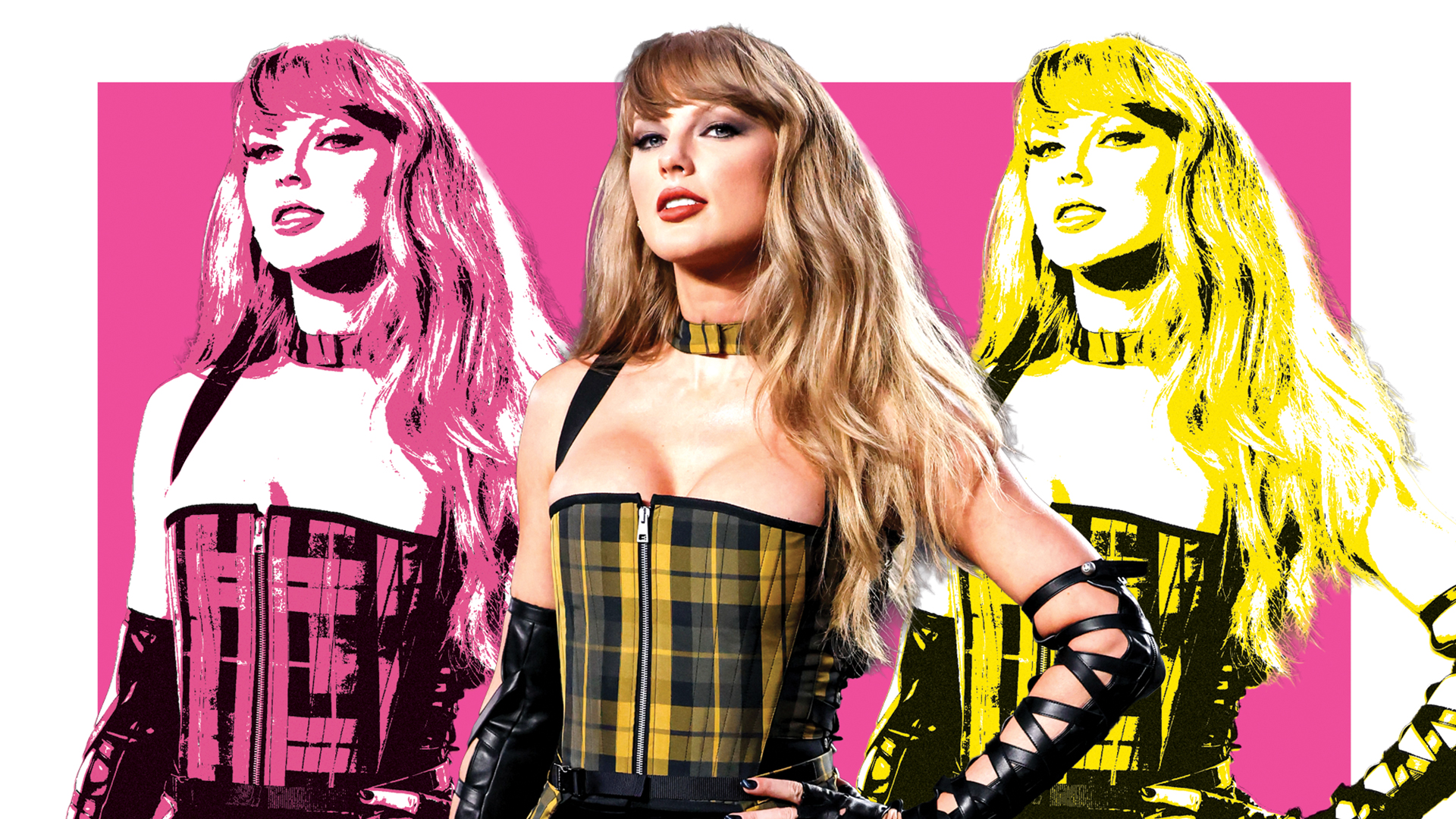
“I do a lecture with my students convincing them that Taylor Swift is really punk,” he says.
“She’s taken control of her own music. She’s very generous – during the Eras Tour she gave huge amounts of money to charities that supported women and supported single parents every town she visited.
“She gave all of her tour crew a bonus at the end of the tour. One could argue that’s generosity and philanthropy, but I think there’s a degree of punkness to that, where you have a lot more say and control over what the narrative is behind what you’re doing, rather than leaving it to the media.” Advertising helps fund Big Issue’s mission to end poverty
Punk in the age of distraction
On paper, the rise of billionaires, tyrannical leaders and the technological power shift of AI should be fertile ground to propel punk to new heights.
After all, back when George W Bush was dragging the US into a second Gulf War there were two Rock Against Bush albums to help prevent his re-election in 2004. The idea, sparked by Fat Mike from the band NOFX, followed on from the Rock Against Reagan protest concerts of the 1980s.
Now with Donald Trump laying waste to society, where is the punk response?
“For something to be countercultural or subcultural, there has to be a fixed target to oppose,” says Paul Fields, a senior lecturer on the sociology of music at Buckinghamshire New University.
“I was talking about this to Fat Mike: why have you not done a Rock against Trump? With Trump, he says one thing one second and, not only is he very likely to have said something that completely opposes that five minutes later, he’ll have said 10 or 15 other outrageous things that are a distraction from the first thing he said. So there’s a moving target.”
When punk rose in the 1970s, the targets were clear. The status quo. The government. The traditional institutions of state. Advertising helps fund Big Issue’s mission to end poverty
Now, the death of the monoculture has made the task harder.
“Punk could make a big intervention and a big splash [in the 70s],” said Worley. “I think a difference today is the media is so dissipated that it’s a lot harder to make a really evident and apparent cultural intervention that people pick up on and know about in the same way.
“Everything is a proverbial piss in the ocean now. Back then, if you pissed in the right way, you’d hit somebody.”
There are also new interpretations. Fields explains that the far-right American group the Proud Boys has suggested that conservatism is the new punk. He disagrees with that notion.
“I worry about young people now because it’s not so clear how to oppose these things,” says Fields.
“I feel for them. Not only have they been totally screwed in all ways anyway, but finding your community is harder to do.” Advertising helps fund Big Issue’s mission to end poverty
But there is some evidence that punk is continuing to connect with Gen Z.
That’s partly due to punk’s longstanding commitment to creating safe spaces and inclusion of marginalised groups, such as LBTQ+ or trans communities.
And, potentially, because there’s a lot to be angry about right now.
“The end of the winter of discontent, there was a lot of unemployment, there was a lot of poverty. There was a massive rise in the far right in the ’70s, the National Front going out on marches,” says Grimes.
“So, there are parallels between what’s going on now and what went on back in the ’70s, when punk really first started to emerge from that political turmoil.
“I’m not suggesting for a moment, punk will suddenly become flavour of the month again because it’s never gone away. It’s always been there. But I’m hoping that bands and musicians become a lot more overtly political than perhaps they have been before.” Advertising helps fund Big Issue’s mission to end poverty
And perhaps punk offers a bit of agency and expression in a world where control is reserved for the rich.
As Worley puts it: “There’s a bit of: I can’t change the world. I can’t overthrow government. I can’t bring down Apple or Google or something like that. But what I can do is do my own thing with people I like. And I can be something in that way.”
Do you have a story to tell or opinions to share about this? Get in touch and tell us more.
Change a vendor’s life.
Buy from your local Big Issue vendor every week – and always take the magazine. It’s how vendors earn with dignity and how we fund our work to end poverty.
You can also support online with a vendor support kit or a magazine subscription. Thank you for standing with Big Issue vendors.Advertising helps fund Big Issue’s mission to end poverty