Don’t forget the harm of Covid
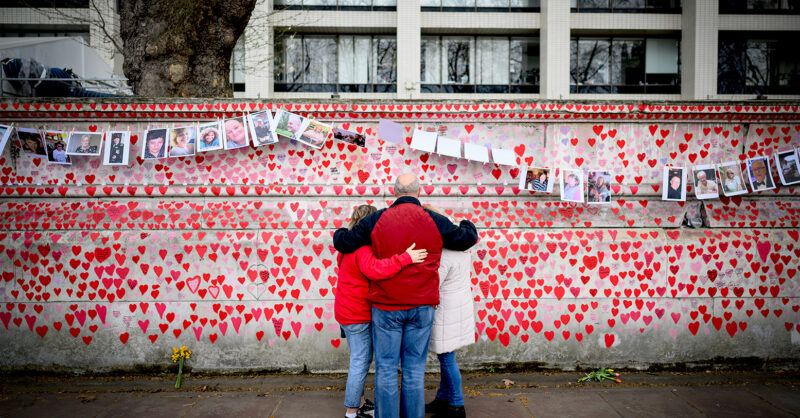
Opposite the Palace of Westminster, on the other side the Thames, stands the Covid Memorial Wall. From the parliamentary terrace where MPs sip pints after work or while waiting for late-night votes, it just looks like a blur of red. But cross the river to view it close-up, and you’ll see it is composed of over 250,000 individual hearts, each painted by hand, representing over 250,000 individual people who died in the UK of Covid-19.
Grief is a notoriously complex and paradoxical process. National grief, the grief of a nation ravaged by a pandemic whose impact was universal but felt in radically different ways by different people in different parts of the country, is unfathomably so. Sunday 8 March is the annual Covid Day of Reflection, six years after the virus first struck the UK. More than half a decade on, there will be many who have no interest in remembering and reflecting. There has been a kind of collective amnesia – particularly in politics – of those frenzied crisis months, of lockdown panic and daily death tolls. We have either blocked it from our minds and attempted to move on, or remember it in hazy, broad-brush terms, a surreal dream of Zoom quizzes and banana bread full of odd terminology – social distancing, rule of six, flatten the curve, test and trace, stay at home, protect the NHS, save lives.
But not everyone wants to forget. Not everyone is able to. And for one group in particular – Covid-19 Bereaved Families for Justice (CBFFJ) – forgetting is tantamount to betrayal.
On Thursday, the UK Covid Inquiry heard its final statements. This module, the last of ten in a process that has gone for four years and cost over £200m, has focused on the pandemic’s impact on society. This has not been about politicians and civil servants scrambling around to increase hospital capacity, source PPE, rewrite the rules of social engagement and safeguard the economy. Instead, it has been about what it did to us a country, particularly on our mental health and our cohesion as a society. And in the final week, representatives of the CBFFJ for all four nations had the chance to offer their testimony.
Subscribe to the New Statesman today for only £1 a week.
Far fewer people will have watched this than tuned in for the grilling of Dominic Cummings, Matt Hancock and Boris Johnson. There was nothing explosive, no political backstabbing nor the catharsis of seeing previously invincible-seeming figures squirming and skewered by cold, hard facts. But the testimonies were revelatory in their own quietly damning way.
We heard of people taken to hospital, whether with Covid or unrelated conditions, and then never seen again, leading to what one witness described as a “soft hostage situation”. Of family members calling daily to beg for updates, only to be brushed off or given misleading information by overstretched healthcare staff. Of having no opportunity to discuss treatment, prognosis and even DNR orders. Of the “trauma” of repeatedly asking the same questions and not getting answers. Of feeling loved ones had been “kidnapped”. Of being unable to visit, then finding buried in medical notes an implication that this lack of visitation had been their own choice. Of heartbreaking conversations in hospital car parks to determine which adult children would be permitted to enter and see a dying parent one last time. Of not being told loved ones were near the end and having no chance to say goodbye.
Nor did the agony end there. We heard accounts of the bereaved receiving a deceased spouse’s belongings in a sealed plastic bag, casually instructed to either burn it or leave it in the boot of a car for 72 hours to reduce the risk of infection. Of not being able to see the body, fuelling paranoid grief-fuelled musings that perhaps they had not died at all and it had all been a mistake. Of funerals too cursory to be worthy of the name: a meagre handful of mourners, sat apart and unable to comfort one another; eulogies delivered through masks; no hymns, no closure, no compassion. A son described the compounding loss of the lack of a wake, missing out on the opportunity to share memories of his father with people who had known him before he was born, to get to know him in another way. It made me think of the experience of a friend early in the pandemic: when his father went into hospital his wedding ring was cut off and mislaid, never to be returned to his grieving wife. The loss of that ring made the loss of the man even harder to bear. Still, he was comparatively fortunate: one witness recounted not even being told when a family member was going to be cremated.
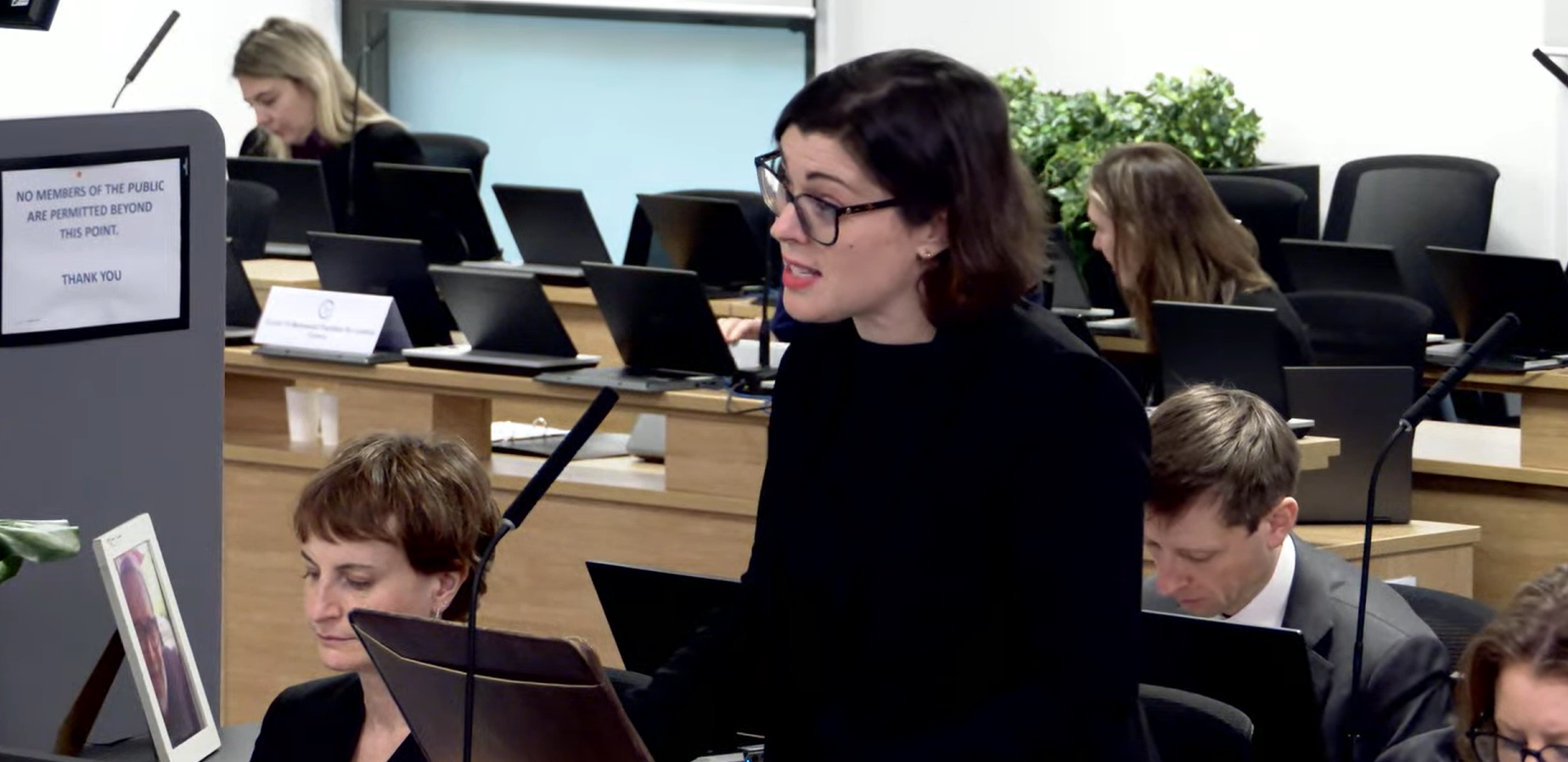
On the final day of the Inquiry, Anna Morris KC delivered a closing submission on behalf of the Covid-19 Bereaved Families for Justice, in which she spoke of the need for “recognition of the unique, complex and prologued grief” suffered by those who lost loved ones to the pandemic. There is no hierarchy of grief – it would be impossible, not to mention morally abhorrent, to attempt to create one. But listening to the witnesses and their advocates, the specific absurdities of the Covid bereavement process were made starkly apparent. To take a story at random as an example: one woman, when she asked for PPE to see her dying father, was asked if she really wanted to take that PPE away from a nurse. Her right – her need – to say goodbye did not merit consideration. The guilt of the state was handed down to grieving individuals.
This story may not be representative. There are people whose family members died during the pandemic who feel they received high-quality care, good communication and compassionate responses from healthcare and administrative staff, who did their best in impossible circumstances. But nor is this story an anomaly. Every Story Matters, a public consultation launched as part of the Covid Inquiry, received over 58,000 submissions recounting people’s experiences of every aspect of the pandemic. The nation’s struggles – with bereavement, accessing healthcare, finances, education, parenting, mental wellbeing – now form part of the historical record.
As a country, we might be determined to move on. That is a legitimate desire – at every stage of the Covid Inquiry, it has been suggested that wallowing in the past does more than good after a certain point. Six years on, perhaps it is time to let go.
But this argument overlooks the reality that letting go is only possible if we recognise the harm that was caused. The scars of the Covid pandemic run deep, a rupture in the relationship hundreds of thousands of citizens have with the state that has never fully healed. We see the consequences today in everything from the population’s worsening mental health, to rising distrust in institutions, to increased impatience with politicians and heightened suspicion of their motives. Covid is not to blame for all of that, of course, but it is part of the pandemic’s legacy, as well as the death toll and the financial damage. And until we recognise that, we will continue to be caught off-guard by fractures in civil society.
The red hearts on the Covid Memorial Wall may seem just a blur when viewed from Westminster. But behind each heart is a story. And those stories tell us more about the state of Britain six years on from the start of the pandemic than many of us want to admit.
[Further reading: Exclusive: Labour needs “progressive defectors” back to win general election]
Content from our partners
Related