Stream It Or Skip It: ‘Father Mother Sister Brother’ on MUBI, Jim Jarmusch’s Offbeat Anthology of Strained Familial Relations
Jim Jarmusch is functioning on an every-other pattern right now, with latest anthology Father Mother Sister Brother (now streaming on MUBI) being the gentle Adam Driver dramedy in between offbeat trad-horror comedies – 2013’s vampire film Only Lovers Left Alive was followed by 2016 Driver vehicle Paterson, which preceded 2019 zombie-com The Dead Don’t Die (and one therefore jumps to the conclusion that the indie auteur will release a werewolf flick in the next few years). FMSB finds Driver among a cast including Tom Waits, Mayim Bialik, Cate Blanchett, Vicky Krieps, Charlotte Rampling, Indya Moore, and Luka Sabbat, but this star-studded ensemble unfortunately doesn’t mix and match, since the film is essentially three separate shorts, although they are inevitably tied together by a compelling theme.
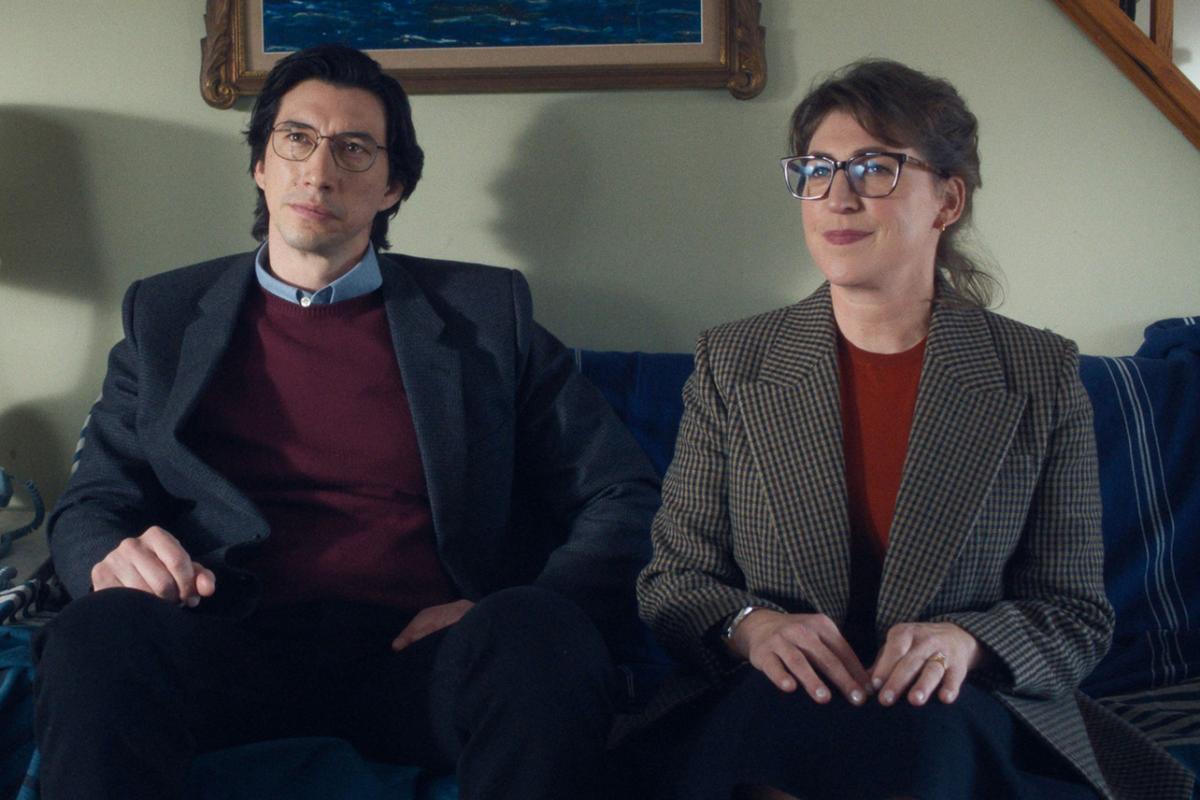
The Gist: Somewhere in rural America, an unnamed gent played by Waits lives in an isolated, heavily weathered lakeside home. He intentionally clutters up his neat and tidy living space (I noticed that one book he tosses around is titled Beaver Enthusiast), staging the place in anticipation of his son and daughter’s arrival. We meet them on the drive, Jeff (Driver) and Emily (Bialik): He’s divorced, she’s married with kids, they both seem reasonably well-off (Jeff drives a Range Rover), and they both at some point have financially assisted their father, who they rarely see or talk to. Neither knows how he supports himself after their mother passed away, and we’re privy to a vague mention of some upsetting incident involving the widower at the funeral. They arrive and the visit consists of friendliness but not necessarily familiarity or warmth, of long awkward silences interspersed by even more awkward conversation. The old man is grateful for Jeff’s gift of various “high end” groceries. Emily spots the Rolex on his wrist and he insists it’s a fake. The only element of clarity here? These people are related, but they don’t know each other particularly well.
Dublin: An unnamed woman (Rampling) speaks on the phone with her therapist, a last-minute expression of, I dunno, anxiety or concern or nervousness maybe, before her daughters visit for their annual teatime together. They don’t do holidays or birthdays or anything, just tea. Timothea (Blanchett), buttoned up and conservatively mannered, has car trouble on the way, but opts for timeliness over roadside assistance, evidence of this event’s importance, perhaps. Tim’s sister Lilith (Krieps), pink-haired and more casual than most, gets a ride from a friend (a girlfriend?) and pretends it’s a cab to hide, well, whatever it is she wants to hide – could be a bunch of things. Like Emily and Jeff above, there’s an element of sort-of-closeness between Tim and Lilith, and their mother, a successful novelist, has a chilliness to her that’s so very Rampling. And like the previous segment, things are said during their interactions, but really, nothing is said at all.
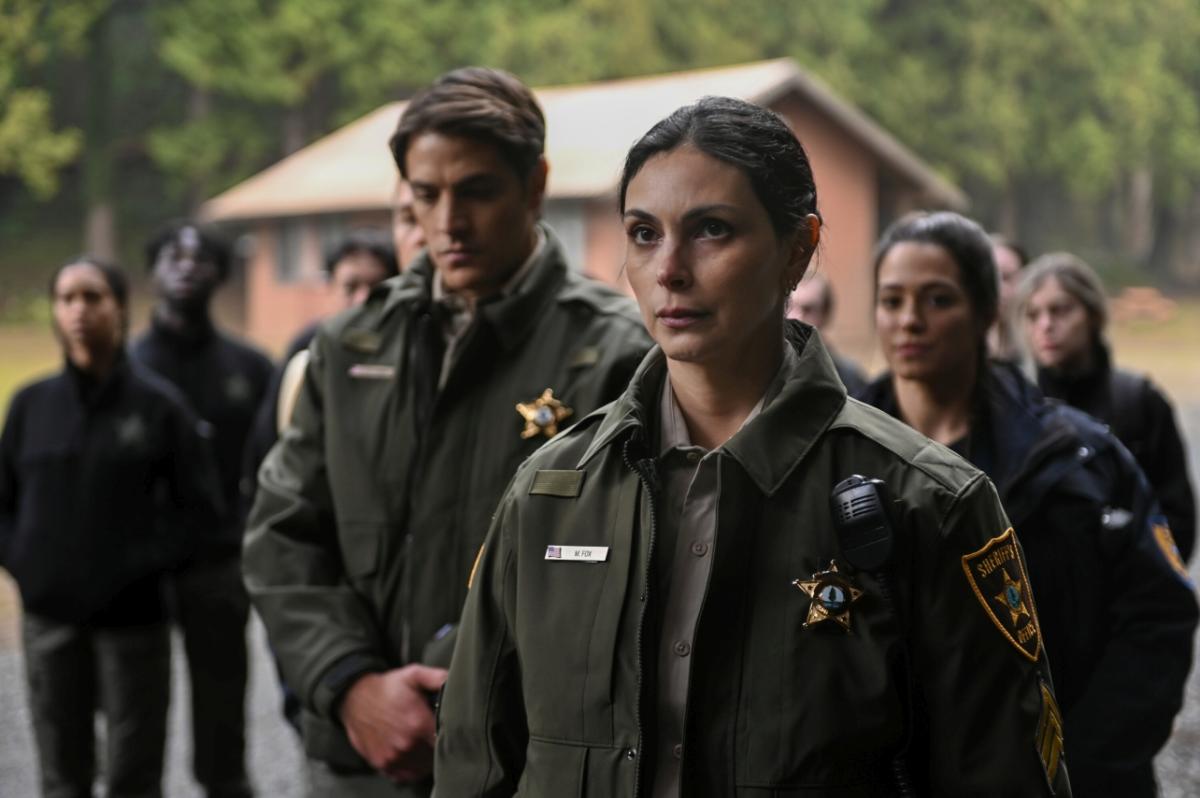
Finally, in Paris, Skye (Moore) and Billy (Sabbat) slake our thirst for human conversation that isn’t mannered, filtered, measured, halting, overthought, undercooked, overbaked, underwhelming or any of that. These people love each other and show their affection, thank Jebus. They’re fraternal twins from, in their words, “unconventional parents” who recently died in a plane crash. Like many things in their parents’ lives, their death stirs more questions than answers. The siblings stop by the apartment where they grew up, for one last reminiscence. It’s empty; Billy put everything in storage. He shows Skye an envelope full of old photos and their parents’ forged marriage certificate, and a host of what seem to be fake IDs. What life did their mom and dad lead? Will they ever truly know? They stop at the storage facility, and eyeball what’s left of those lives.
Photo: Frederick Elms, MUBI
What Movies Will It Remind You Of? This is Jarmusch’s fourth anthology film, following Mystery Train, Coffee and Cigarettes, and Night on Earth.
Performance Worth Watching: My hope of seeing Waits and Rampling play a couple was swiftly dashed, but each compellingly toys within an archetype – he, the scurrilous shyster, and she, the cold formalist. Neither is so strictly defined, of course.
Sex And Skin: None.
Photo: ©Mubi/Courtesy Everett Collection
Our Take: Father Mother Sister Brother’s keenest observation comes from a third-party observer, Lilith’s friend, who describes Lilith’s familial relations as “butterflies fluttering around each other in different directions.” We get a similar impression from Jeff, Emily and their father. None of them share anything of themselves that’s particularly true or real; their scenes are more about withholding, not knowing what to say or how to fill the time that they might value but perhaps don’t value despite the overwhelming sense that they should value it, greatly. The interactions aren’t passive-aggressive; they’re just, well, blank, playing out on shifting sands resulting from past events that are barely hinted at but were clearly problematic, because here these people are, feeling great distances between them despite everyone sitting around a small table, sipping tea.
These two vignettes illustrate how people who share DNA share obligations to each other, obligations existing on a murky spectrum between begrudging and loving. The third vignette reframes the preceding ones by removing the parental figures altogether and replacing them with something in the neighborhood of regret. Perhaps they’d prefer awkward interactions than this hollow feeling with little in the way of closure. We’re present with Billy and Skye as they soak in a confused emotional jacuzzi, wondering who their parents really were, sad that they could never ask and will never get the opportunity to do so should they find the courage.
Jarmusch’s approach to the material is minimalist to the point where his intent is obscured, likely by design. How these people got to where they are now is a blank slate to be filled with our own experiences, perhaps, a prompting to reflect on one’s own relationships with siblings, parents, offspring. There are rogues and conformists in all three families, nature and nurture indeterminate in each character’s makeup. Jarmusch threads motifs through each chapter: Rolex watches of questionable authenticity, overhead shots of teacups, frequent cutaways to aging family photos, POV shots of cars navigating roads, reiterations of the idiom “Bob’s your uncle” (or as the Rampling character amusingly puts it, “and your uncle is Robert”). They’re all either clues to greater truths or just the things one looks at when one doesn’t know what to do or say, or feels they can’t do or say what they wish, or feels nothing, or – well, interpret away.
Our Call: Of course, Jarmusch avoids any emotion that’s too grand or melodramatic – closure ain’t his thing (and honestly, it’s more myth than reality). Whether you’re moved by Father Mother Sister Brother or merely puzzled by the filmmaker’s rumination on the ties that bind depends on your own baggage. STREAM IT.
John Serba is a freelance film critic from Grand Rapids, Michigan. Werner Herzog hugged him once.