I woke up partially blind 5 days after my wedding, then came my diagnosis
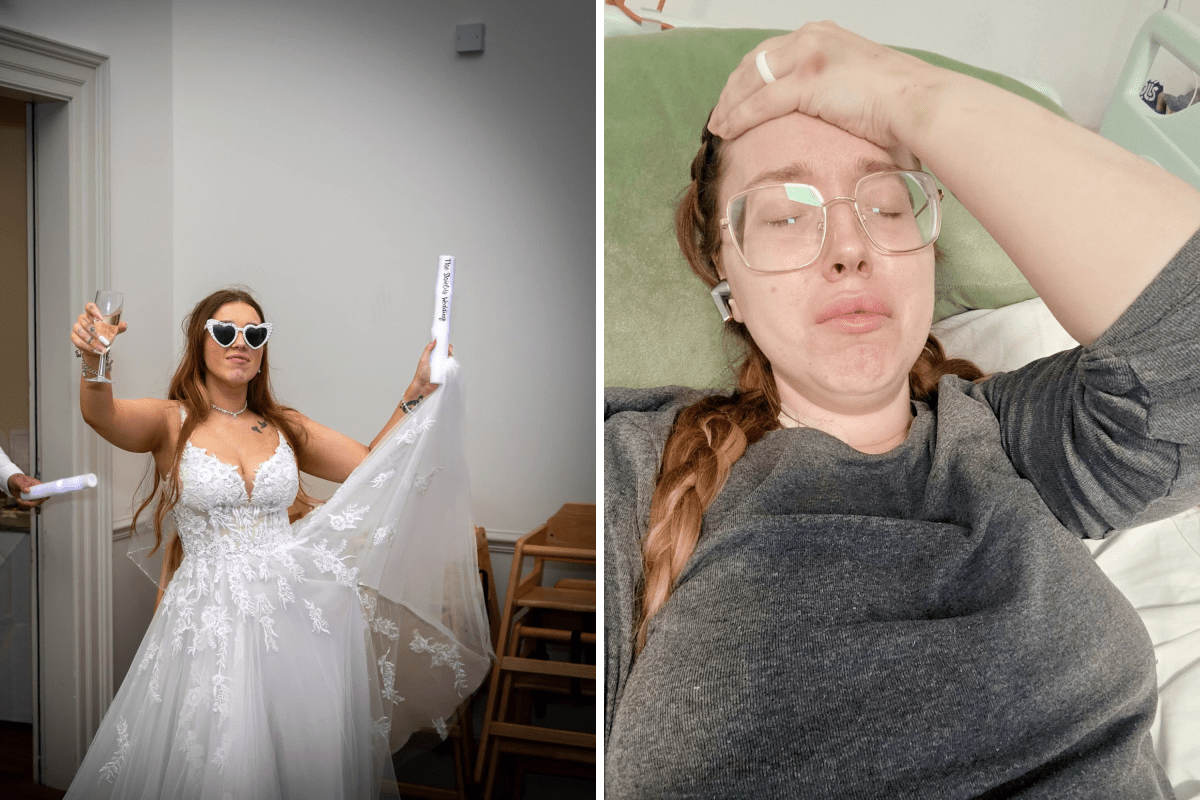
The traditional marriage vow "in sickness and in health" was tested just five days into Chelsea Shields’ marriage when she woke up without vision in one eye.The terrifying moment, which occurred in September last year, finally led to answers after more than a decade of unexplained symptoms. Shields, 29, from Doncaster, England, married her husband on August 30, 2025, describing the day as "perfect," with the days that followed filled with happiness. But, less than a week later, she woke up unable to see out of her right eye.She told Newsweek: "It was completely black. I thought it might be from wedding stress as I had just planned the biggest day of my life."When her sight failed to return hours later, Shields collapsed with a thunderclap headache."I have given birth three times naturally without pain relief and I’d rather do that again back to back than experience that again," she said.Unable to speak clearly, Shields called out to her eldest daughter, who was 4 at the time."I asked her to get my phone so I could call my husband," she said. "I wasn’t making sense—my words were jumbled, and my daughter had to speak to him."Shields was admitted to the acute medical unit, where she spent a week as her condition rapidly deteriorated."I couldn’t walk, my body was swelling, I couldn’t eat," she said. "My body was in a constant battle.""I was terrified," she added. "I thought I was going to die. Every time I spoke to my family, I said goodbye like it was the last time."Doctors initially suspected Multiple Sclerosis (MS), but, six weeks later—following MRI and CT scans as well as a lumbar puncture—Shields was diagnosed with functional neurological disorder (FND)—a neurological condition that affects how the brain sends and receives signals throughout the body. This explained a host of debilitating symptoms she had experienced since her teens.According to one study, at least 50,000 to 100,000 people in the U.K. are living with FND, with figures potentially rising to around 1 million using higher-prevalence estimates. In the United States, researchers estimate a minimum of 265,000 to 480,000 people have FND, with the number possibly reaching up to 5 million.While her symptoms worsened significantly last year, including the onset of seizures, Shields said she had been unwell since her early teens.‘I Was Always Told It Was Stress or Hormones’"I have had random issues, but it was always put down to hormones or stress," Shields said. "Nothing ever came up on tests."Her symptoms began when she was around 13 or 14 and included chronic fatigue, severe pain, and episodes of sudden weakness. "The left side of my body would be weak when I woke up," she said. "I couldn’t walk properly, my leg would give up and I’d fall down. I thought I was just clumsy."Shields said years of unanswered questions made her doubt herself. "I started thinking maybe I was manifesting stress," she added. "Then I’d be doubled over in pain, calling an ambulance, and still there was no diagnosis."According to The National Institute of Neurological Disorders and Stroke (NINDS), FND can cause a wide range of symptoms, including:Seizure‑like episodesMovement and coordination problemsSpeech difficultiesVision or hearing issuesDizzinessChronic pain such as migraines and extreme fatigueNumbness or loss of sensation.Misdiagnosed for YearsAt one point, Shields was told she was experiencing anxiety attacks—a conclusion that later proved wrong."For two years, I had gallbladder issues," she said. "A year before it was removed, they said it was anxiety. Then I needed emergency surgery to have it taken out."After years of inconclusive tests, Shields said she learned to live without answers. "I just got on with it and thought, ‘This is me now.’"That changed days after her wedding, when her vision suddenly disappeared.At hospital, Shields was told she had a viral eye infection and was prescribed antibiotics. Her husband was unconvinced. "He wasn’t happy with that answer," she said.Shields was referred to an eye clinic the following day, where doctors found nothing visibly wrong with her eye and referred her to neurology."I didn’t know if I’d get my eyesight back or if the other eye would go," Shields said. Four weeks later, her nightmare came true."My left eye started blurring and I had double vision," she added. "It wasn’t possible for me to see properly."‘It Was Never in My Head’Shields, a mother of three aged 5, 3 and 1, said her diagnosis brought both relief and frustration."It proved it was never in my head," she said. "But there’s no cure and no medication."Now unable to work, Shields relies on a walking aid and support from occupational therapists. She experiences seizures, tremors in her arms, legs and head, and periods where she is unable to speak."If I’m stressed, don’t sleep enough, or even just get a cold, I can go completely mute," Shields said.Eating has also become difficult. "I choke when I eat, like my body doesn’t want me to," she added. "I’ve lost weight and my hair. I’m surviving on fizzy drinks."Shields believes her experience reflects a wider issue, particularly for women. "Doctors can’t treat what they can’t see," she said. "And, as a woman, everything is put down to stress or hormones."Shields is now encouraging others with unexplained symptoms to speak up. "People with chronic illnesses aren’t treated properly," she said. "The quicker you push for answers, the quicker you can get the diagnosis and support you need."