Is Montreal ready to host the Olympics again?
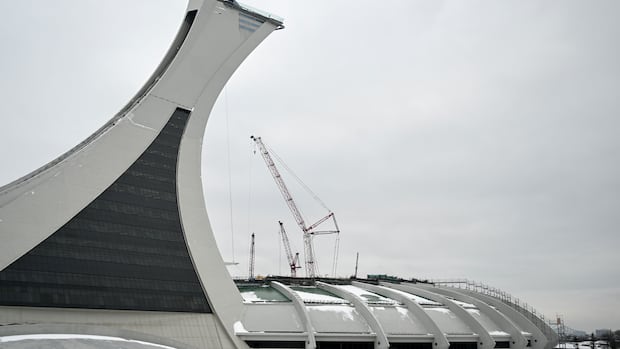
As the world tunes in to the Winter Olympics in Italy, talk is heating up about Canada’s next shot at hosting the Games — this time with a focus on sustainability and shared costs. And Montreal certainly isn’t off the table, according to Andrew Baker, the Canadian Olympic Committee’s chief external affairs officer, who said, like the Milano-Cortina Games, it would likely be a joint venture.A bid for the Summer Games might be in partnership with Toronto, he explained, or a winter bid might be with Quebec City or even Lake Placid, N.Y. — a small village about 170 kilometres south of Montreal that has already hosted two Winter Olympics.After years of leaving debt and abandoned infrastructure in its wake, the International Olympic Committee (IOC) is aiming for a more sustainable approach of using or upgrading existing facilities rather than encouraging massive projects like Montreal’s Olympic Stadium.“You can envision a significant number of venues in Montreal, using existing infrastructure, with just some small upgrades,” said Baker, who also suggested the possibility of using venues across Quebec for the Winter Games.“Our experience in Canada has been that hosting the games can be transformative for the country and it can be transformative for the host communities.”WATCH | Not everybody is ready for Montreal to bring back the Olympics:As the Canadian Olympic Committee hopes to bring the Olympic Games back to Canada, could Montreal play a role? Some financial experts and locals say the city is in no position to be thinking of another Olympics.High costs of hosting Games in 1976Montreal certainly tried putting its name in contention several times to host the Winter Olympics before finally landing the 1976 Summer Games.After those Games, however, the city and province were left with a considerable amount of debt. More than a billion dollars, in fact, and it took about 30 years to pay off. Much of the cost overrun was because of the Olympic Stadium that has no permanent tenant these days and has had its fair share of issues over the last five decades. In July 18, 1976, Nadia Comaneci, of Romania, dismounts from the uneven parallel bars during a perfect '10' performance at the Summer Olympic Games in Montreal. (Paul Vathis/The Associated Press)But most of the infrastructure built for the 1976 Games was repurposed. The Olympic Velodrome became the Biodome, the Olympic Village became housing and the Olympic Basin is still used for sporting events today.Bruce Kidd said he likes the idea of two cities sharing the cost. He is a retired sports policy professor from the University of Toronto who is also a former star athlete, having competed in the 1964 Olympics in Tokyo. “It will not bankrupt the cities, it will provide a lasting legacy not only for athletics but for others,” he said. “It will address other social needs.”But John Furlong, former president and CEO of the Vancouver Olympics, said hosting the Games is a massive undertaking and it’s important to have purpose. In Vancouver’s case, he said, it came down to nation building — to bringing the country together and using "the Olympics as a unifying force.”Montreal indisputably has the needed facilities, according to Daniele Malomo, a civil engineering professor at McGill University.“We have a number of infrastructures, including the Olympic Stadium, that have been there for a long time and they have the capability of hosting,” he said.Hosting Games would be 'terrible idea'Still some, like Concordia University economics professor Moshe Lander, say Montreal is in no position to be hosting another Olympics. “The Olympics of the 21st century are not like the Olympics of the 20th century. This would be a terrible idea,” he said.There are far cheaper ways to attract the world’s attention or potential economic benefits, if any, of hosting the Games, he said.Canadian Steve Podborski speeds down Whiteface Mountain on his way to a bronze medal at the Winter Olympics in Lake Placid, N.Y., in 1980. (The Associated Press)The Oxford Olympics Study 2024 found costs of hosting the Games routinely outpace benefits and that projected rewards are often overstated.The study notes that the Olympics are unique among megaprojects in that they have never stayed within budget, with cost overruns at each Games since 1960. For the Summer Games, the largest cost overrun was found for Montreal 1976 at 720 per cent, followed by Rio 2016 at 352 per cent.For the Winter Games, the largest cost overruns are Lake Placid 1980 at 324 per cent, followed by Sochi 2014 at 289 per cent.Even recent efforts to control spending have not reversed the trend. The study estimates the cost of the Paris 2024 Games at roughly $8.7 billion USD, representing a substantial real-term increase from the original bid. WATCH | Looking back on the opening of the 1976 Olympics:Sandra Henderson and Stéphane Préfontaine were teenagers (16 and 15, respectively) when they were chosen to light the Olympic cauldron at the 1976 Olympics.The study says high cost overruns for the Games may be related to the fixed deadline for delivery and fixed scope, forcing host cities to pay premium fees for rushing to completion. The study concludes that hosting is unlikely to become financially viable unless the International Olympic Committee (IOC) shifts away from a revenue-maximizing approach and adopts a cost-minimizing model to reduce the financial burden on host cities.Lake Placid-Montreal Games less likely, expert saysJeffrey Segrave is a professor emeritus at Skidmore College in Saratoga Springs, N.Y. and a scholar of Olympic history when it comes to the cultural, political and economic dimensions of international sport. And being in New York, not far from where the Winter Olympics were held twice in Lake Placid, he’s heard renewed talk of holding the Games there once again as well. The problem, he explained, is that Lake Placid, a village of about 2,000 residents, doesn’t have the capacity to host the entire modern, mega-sized Games there. It was hard enough in 1980 to get people to and from venues with limited roads, not to mention the needed lodging and other infrastructure.Being in the Adirondack Park, there are also legal limits on construction in protected wilderness areas, and even then, developers would need to consider the long-term viability of building commercial real estate there, Segrave said.Now, he said, there are discussions about hosting Games alongside New York City. It’s a plan that makes sense given the amount of state tax dollars that have been invested in modernizing Lake Placid Olympic facilities already, but this would still be decades in the future, he said.Having two cities share the costs and using existing infrastructure makes sense, he explained, and sustainability is part of the IOC’s agenda. “I think everybody recognizes that Lake Placid cannot go at it alone. It has to have some sort of urban partner,” he said.“Politically, New York City is a more viable option, but there’s something very appealing about Montreal. One because it's so close. And two because I really like the idea of two cities from two different countries fulfilling this Olympic promise of celebrating our common humanity.”