Prisons watchdog expresses 'deep reservations' about how inmate was restrained before his death
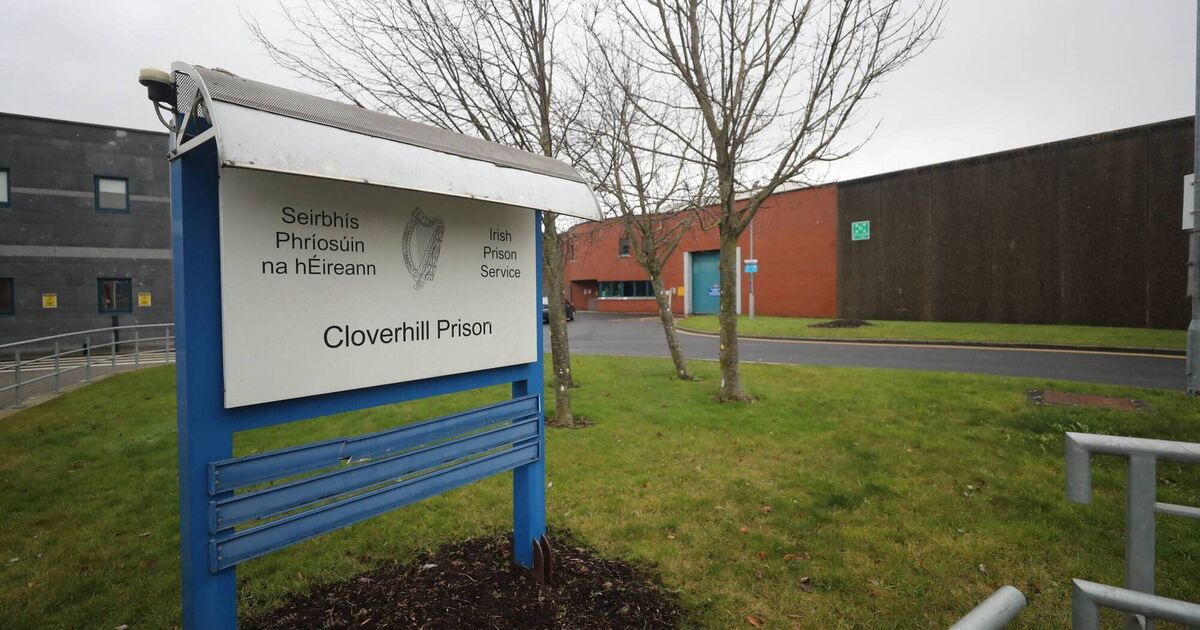
The Office of the Inspector of Prisons has expressed “deep reservations” over the manner in which a mentally ill inmate was restrained by prison officers prior to his death in 2020.The watchdog also raised concerns about the extent of internal and external injuries revealed by a post mortem following the death of 36-year-old Ivan Rosney at Cloverhill Prison.The father-of-four had been committed to the prison on remand on September 23, 2020, and was due to appear in court via video link from the facility five days later, according to a report by the OIP published today.Mr Rosney suffered from schizophrenia and had been arrested outside his home in the midst of a mental health crisis. He was accommodated on the D2 landing at Cloverhill, which is for vulnerable prisoners.An investigation into the circumstances of his death by the OIP found that a number of prison officers went to his cell around 10:36am on September 28 to bring him to the video link booth for his court appearance.He initially refused to go with the officers and held onto the bed frame. However, he subsequently became compliant and was led from the cell with prison officers lightly holding his arms.Ivan Rosney, 36, suffered from schizophrenia and had been arrested outside his home in the midst of a mental health crisis.An assistant chief officer (ACO) joined the escort and they descended a stairwell from the D2 landing and emerged at the main circle of the prison, near the video link booth, around 10:45am.As they approached the booth, Mr Rosney refused to enter and grabbed the metal bars of an entrance gate. A work training officer who was a control and restraint instructor saw this happening and took the lead in the situation.Mr Rosney was carried to the centre of the circle by nine officers and placed in a prone position on the floor. The work training officer secured the prisoner’s hands behind his back using handcuffs.At 10:50am, he was raised to his feet but refused to walk, according to the OIP report, so he was placed on the floor again. He struggled and kicked at officers, and one officer reported that “at this stage, he was spitting”.A spit hood was placed over Mr Rosney’s head and velcro straps were placed on his legs. He was surrounded and one officer spotted mucus and a small amount of blood coming from his nose and mouth.CCTV footage Officers lifted him and carried him in a prone position towards the stairwell leading back to the D2 landing. The stairs were a CCTV “blindspot” as there was no camera in the area.Mr Rosney and the officers were two minutes and 37 seconds in the stairwell before they emerged on the landing. By contrast, they had taken just 32 seconds to descend the same stairs.CCTV footage showed him being carried in a prone position on the landing. His grey tracksuit bottoms appeared to have been soiled at the front, the OIP noted in its report.At the landing, one of the officers noticed that “something wasn’t right with him”. The officer told everyone to stop and Mr Rosney was placed on the ground.“His head got very heavy and didn’t seem to be supporting itself. I also couldn’t feel him breathing on my hands. When I turned his head, it was blue,” the officer told the OIP investigators.A nurse was called and a Code Red medical emergency was declared. CPR commenced and a defibrillator machine was used. Doctors arrived around 11:05am, followed by paramedics from the National Ambulance Service and Dublin Fire Brigade.He was transferred to Tallaght University Hospital but was pronounced dead at 12:12pm.OIP report In its report, the OIP said it had deep reservations about the manner in which Mr Rosney had been restrained, and the extent of the internal and external injuries to his body revealed by a subsequent post mortem.It appeared that some prison officers may not have complied with the correct control and restraint procedures, it added.The OIP said staff should have sought healthcare advice when blood and mucus was observed coming from Mr Roseney’s mouth and nose, and failure to do so was contrary to guidance in the C&R manual.The same manual also highlights the dangers of positional asphyxia, and factors that increase this risk, including sedative drugs and obesity. Mr Rosney had been on Olanzapine and had a BMI of 40.2.It also stated that velcro straps should only be used in exceptional circumstances. The OIP also noted that the WTO who was a C&R instructor had been certified in 2013 and was last re-certified as long ago as 2017.It made five recommendations, including that the Irish Prison Service (IPS) should review its control and restraint training programme, and officers should have to pass technical and written exams to be certified in control and restraint.It also recommended that healthcare staff should be sought before control and restraint techniques are applied in the case of uncooperative prisoners with mental illness. The IPS should also accelerate its CCTV upgrade to eradicate “blind spots”, the report added.