Canada, Denmark deepen defence ties after Greenland annexation threat
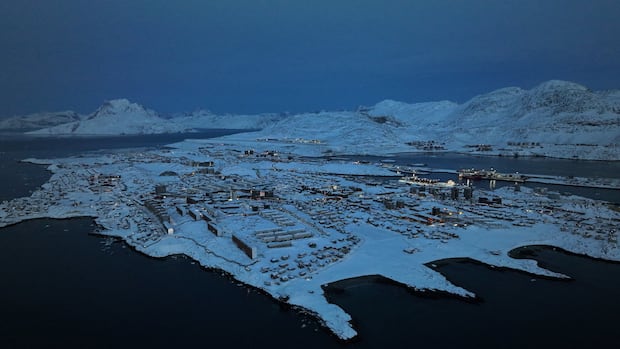
Listen to this articleEstimated 4 minutesThe audio version of this article is generated by AI-based technology. Mispronunciations can occur. We are working with our partners to continually review and improve the results.Canada and Denmark signed a defence co-operation agreement on the sidelines of the Munich Security Conference, setting the stage for a deeper partnership after the Trump administration threatened to annex Greenland.The agreement was signed by Defence Minister David McGuinty on Friday. Originally Prime Minister Mark Carney was supposed to be present and have a one-on-one session with his Danish counterpart, Mette Frederiksen. But Carney opted to remain in Canada following the school shooting in Tumbler Ridge, B.C.Denmark has sought to bolster the defences of Greenland, a semi-autonomous territory, in light of the annexation threats of the United States. In tandem, NATO this week launched what's being called the Arctic Sentry initiative, which will co-ordinate military exercises and the alliance's response to threats in the region."Canada is an Arctic nation — and we will defend the North," McGuinty said in a statement following the signing in the southern German city."Today, this defence co-operation agreement with Denmark, Greenland and the Faroe Islands strengthens our collective deterrence and our ability to operate seamlessly with our NATO partners in the High North. Today, we send a clear message — the Arctic is secure, and we will keep it that way."The co-operation agreement is not a formal treaty and doesn't commit Canada to defending Danish sovereignty over and above the commitments that already exist under NATO's Article 5, that an attack on one is an attack on all. WATCH | Why does Trump want Greenland?U.S. president-elect Donald Trump has long been fascinated with owning and controlling Greenland, spanning from his interest in buying the country in 2019, to his recent refusal to rule out taking it by military force. Andrew Chang explores four potential reasons why Trump calls ownership of Greenland 'an absolute necessity.'
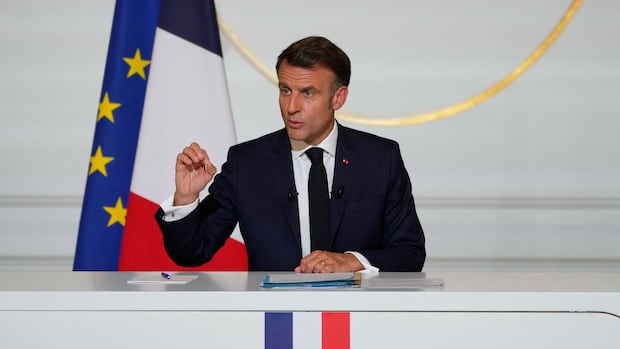
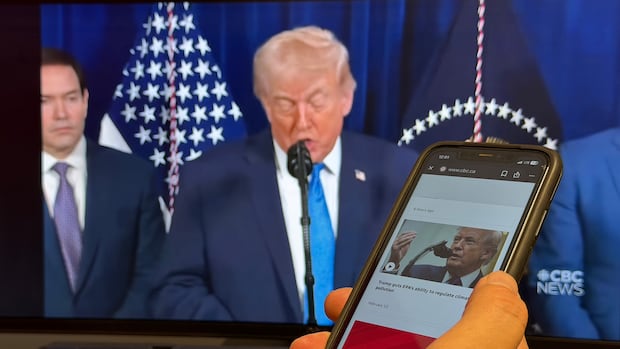
Images provided by Getty Images, Reuters and The Canadian Press.Senior federal officials, speaking on background at a technical briefing this week, said the new agreement captures and improves upon many of the aspects of defence co-operation that already exist between Canada and Denmark.For example, Denmark contributes a significant number of troops to the Canadian-led NATO multinational brigade defending Latvia. Separately, the Danish defence acquisition ministry is a big customer for Canadian-made assault rifles, signing last September a multimillion-dollar contract for 26,000 C-8 MRR (modular rail rifle) carbines.The agreement signed Friday increases co-operation in the areas of surveillance and joint operations, the Danish Ministry of Defence said. Senior Canadian officials, who spoke earlier in the week in a briefing intended to set up the prime minister's trip, said negotiations toward the agreement predate U.S. President Donald Trump's drive to annex Greenland."The text of the agreement has not changed" as a result of the increased tensions over Greenland, said one senior official.Trump has long had an interest in asserting U.S. "ownership and control" over the Arctic island, saying it was an "absolute necessity" for national security. The U.S. administration reportedly ordered plans for a "possible invasion," prompting Denmark and eight NATO allies to deploy defensive forces to the Arctic island.Trump went into the World Economic Forum in Davos, Switzerland, restating his demands. But hours after a speech at the forum, Trump met with NATO Secretary General Mark Rutte and later announced he would not use force to take the island and there's a framework of a deal to meet U.S. security concerns.Although no details have been released, published reports suggest the agreement centres on updating the 1951 Greenland Defense Agreement to grant the United States "total access" and "infinite" security rights in Greenland and possibly sovereign control over specific "pockets" where U.S. bases are located — similar to the British Sovereign Base Areas in Cyprus or the U.S. Guantanamo Bay lease in Cuba.The political hangover of the fight is still being felt in Munich where French President Emmanuel Macron spoke Friday about Europe becoming more assertive."If we want to be taken seriously on the European continent and beyond, we must show the world our unwavering commitment to defend our own interests," Macron said, following up with a reference to disagreement over Greenland."It starts, of course, with continuing to extend our support to Ukraine, but it could nicely follow with fanning off unjustified tariffs and politely declining unjustified claims on European territory."