Sweden will build CV90 prototypes for its fleet renewal
Sweden’s Defence Materiel Administration (FMV) hope to extend the life of its CV90 fleet until at least 2045
To that end, the FMV awarded a $37.5m contract to HB Utveckling AB
One of the contractor’s responsibilities is to manufacture prototypes for updated CV90 variants
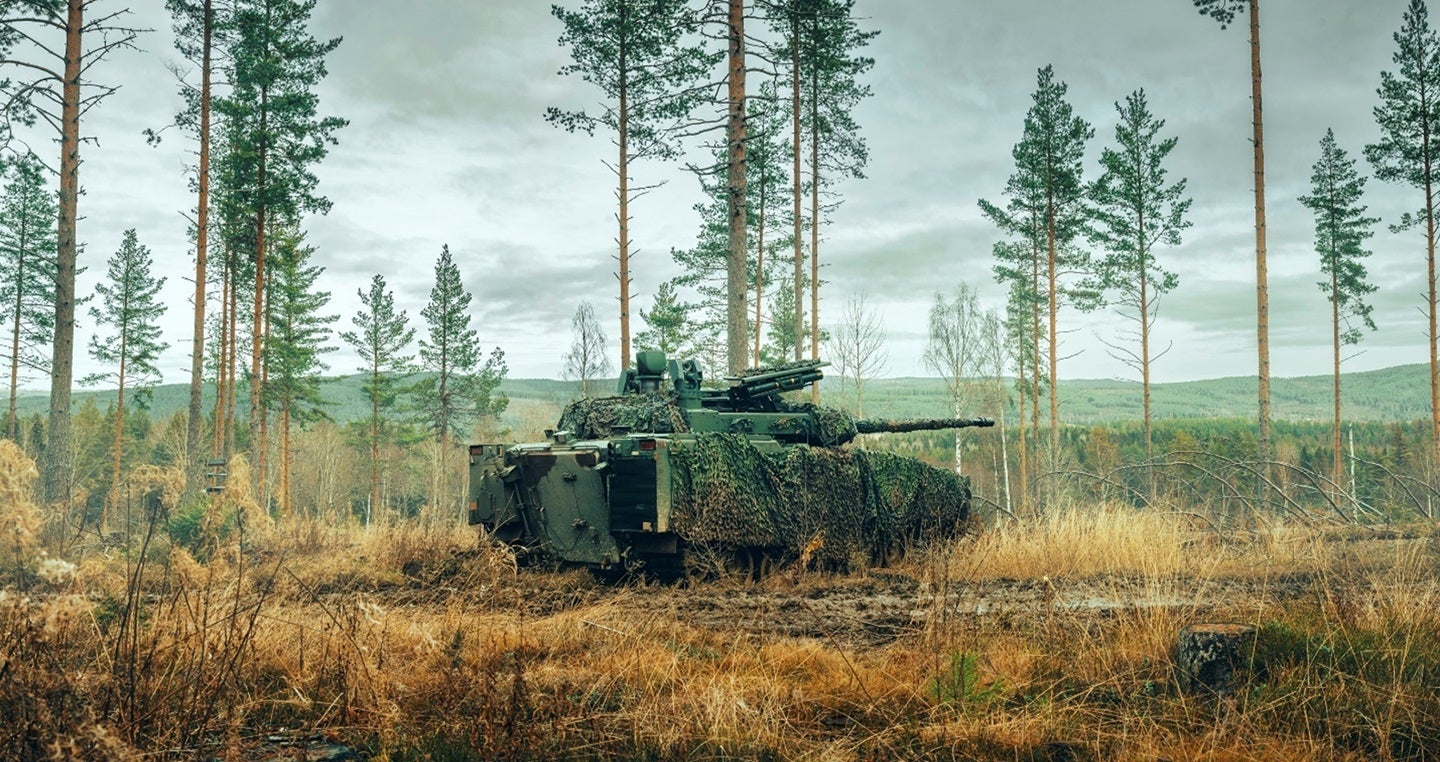
Sweden’s FMV is looking to extend the life of its CV90s – or the Swedish designation: Stridsfordon 90 (Strf 90) – some of which have been in service for up to 30 years.
Under HB Utveckling AB (a joint venture between BAE Systems Hagglunds and Bofors) work will take place until 2031, ensuring the Combat Vehicle system continues operating until at least 2045. Discover B2B Marketing That Performs
Combine business intelligence and editorial excellence to reach engaged professionals across 36 leading media platforms.
Find out more
“Maintaining and developing existing equipment is crucial if the Armed Forces, and not least the army, are to be able to grow as planned,” commented Jonas Lotsne, head of the FMV’s army equipment business area.
In doing so, the FMV will need to update the different variants of the vehicle in service with modern capabilities. Therefore, part of the contractor’s responsibility will be to manufacture updated prototypes of the system for evaluation before serial production.
Swedish Strf 90s at present
In the Swedish Army, the Strf 90 is predominantly fielded by mechanised infantry companies that form part of an armoured battalion. Currently, there are up to 500 Strf 90 units in active service.
Each armoured battalion typically consists of two mechanised infantry companies and two tank companies fielding the Stridsvagn 122 main battle tank.
GlobalData Strategic Intelligence
Don’t let policy changes catch you off guard. Stay proactive with real-time data and expert analysis.
By GlobalData
In a mechanised infantry company, the standard troop carrier variant is the type with a 40mm L/70 Bofors gun, known as Strf 9040, others include:
a forward command variant (Stripbv 90);
forward artillery observation element (Epbv 90);
anti-aircraft variant (Lvkv 9040);
120mm mortar carrier (Grkpbv 90);
and an armored recovery variant (Bgbv 90)
But having donated some units to Ukraine, the FMV resolved to purchase 50 more modern CV9035 MkIIIC vehicles in a joint procurement effort with Denmark in December 2024.
This particular variant replaces the 40mm Bofors with Northrop Grumman’s 35mm Bushmaster III automatic cannon for higher ammunition capacity and modern firing capabilities, such as programmable and airburst ammunition needed against drones and entrenched infantry.
Army Technology contacted the FMV to confirm whether the 35mm MkIIIC would be changed in any way as part of the Strf 90 life extension programme but received no response before the time of publishing.
Nevertheless, GlobalData defence analyst Callum Kaye was assured that “this operational layout of a mechanised infantry company will likely remain largely unchanged in the long term”.
A prototype for a new era?
While the FMV does plan to update existing variants, future requirements in a new age of warfare could prompt Sweden to consider yet another variation.
“In terms of the future planned prototypes, older plans may be drawn upon,” Kaye considered. The most likely of these is the electronic warfare (EW) variant (Störpbv 90).
“This took an original CV90 hull and fitted a LEMUR weapon station and a retractable mast with the intention that the vehicle be fielded by a dedicated EW platoon. This variant was originally anticipated to enter service in 2006 but was put on hiatus due to financial constraints at the time,” explained Kaye.
European countries, whose military units and civil infrastructure are vulnerable to Russian drone incursions, have continually struggled to deter the drone threat in the second half of 2025, with their efforts proving an unmitigated failure.
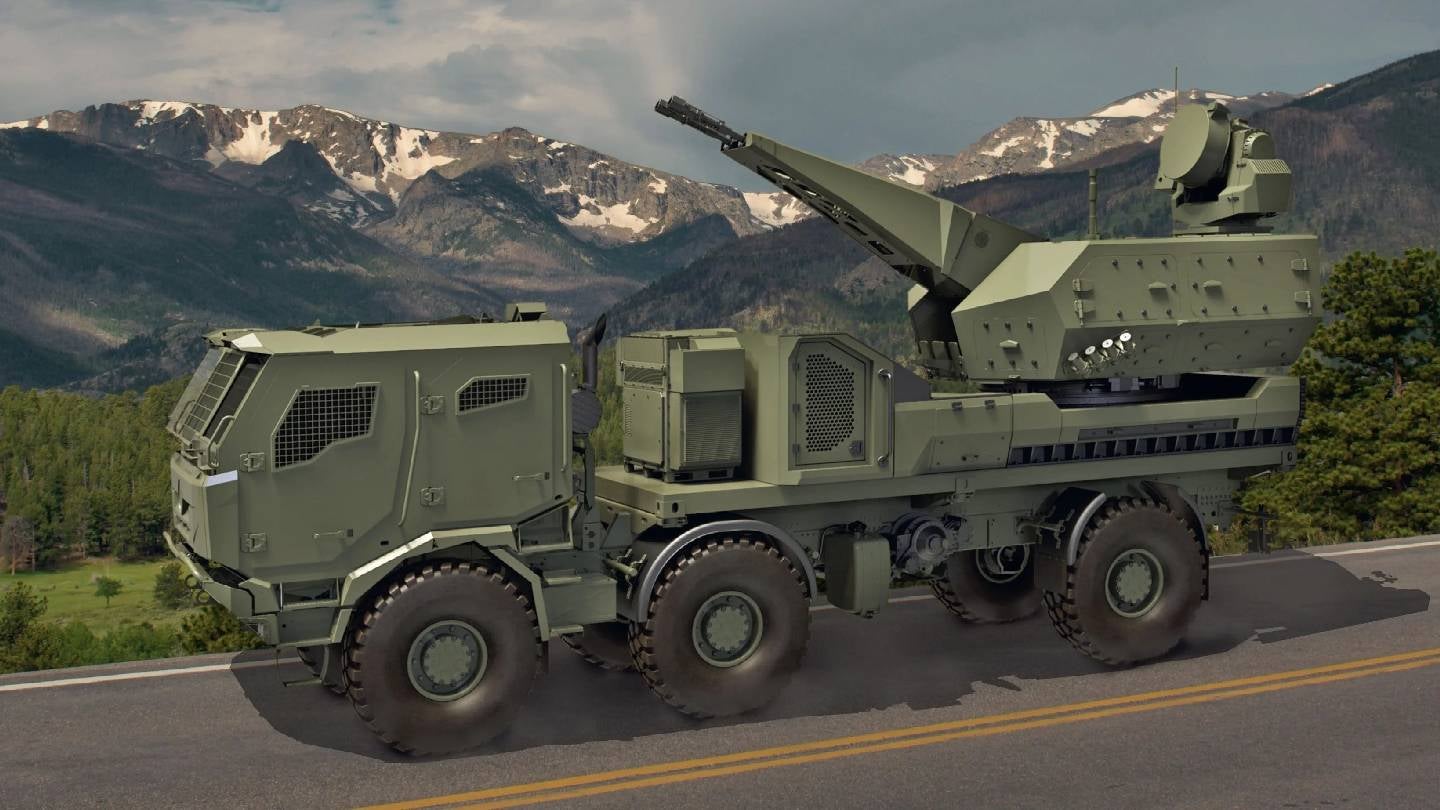
The market for mobile, short range air defence (SHORAD) and counter-uncrewed air system (C-UAS) capabilities are on the rise as the global defence industry offer modular open systems in which any contractor can integrate their sensors or effectors. At the AUSA exhibition in Washington last October, Army Technology reported on a growing trend toward lighter, more manoeuvrable vehicles carrying an assortment of such capabilities.
In the same way, Kaye continued, “it is a significant possibility that a future [Swedish] prototype similar to the Störpbv 90 would be fitted with radio frequency jamming to provide an anti-drone capability.”
A laser weapon system may also be considered, but tests by the US Army on the Stryker platform highlighted such system’s power levels are difficult to maintain while mobile in addition to being inhibited by environmental conditions.
But there is a strong demand signal: Sweden plan to deploy anti-aircraft Lvkv 90s, which feature layered SHORAD, to Latvia as part of its contribution to the Nato multinational brigade. Not only will Sweden need to replace these units in 2026, but the deployment also provides a sense of the impending requirements in the new drone age.
Sign up for our daily news round-up!
Give your business an edge with our leading industry insights.