Frankfurt to dethrone London as colocation king by 2031
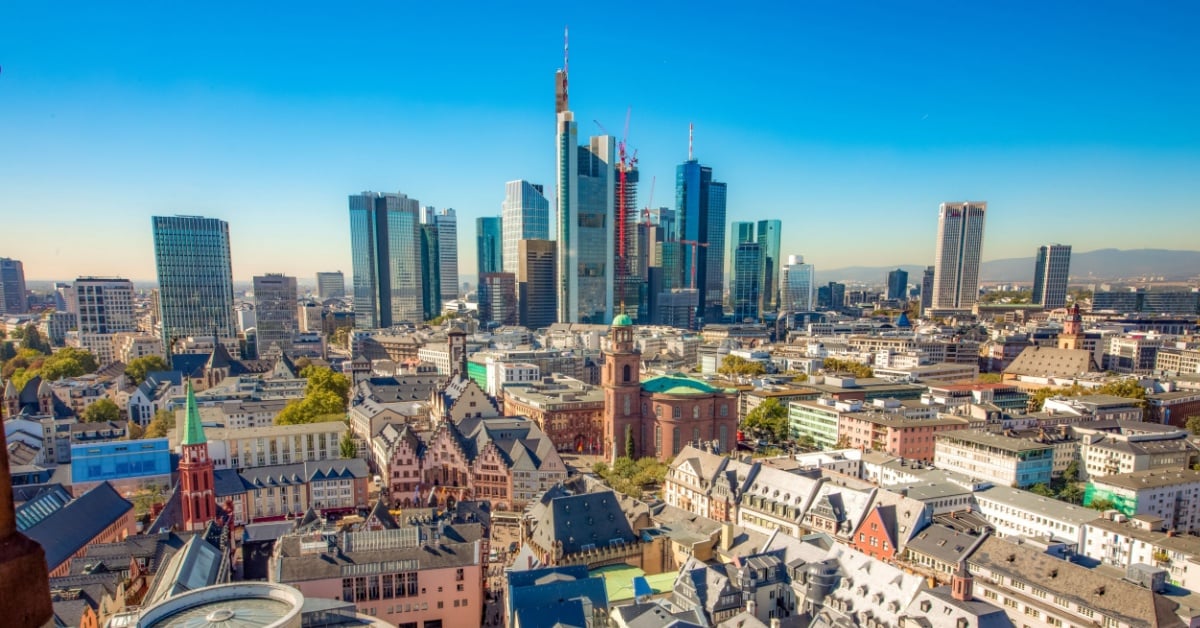
London will lose its dominance in colocation datacenters this decade with Frankfurt claiming the top spot by 2031, according to the EU Data Centre Association (EUDCA).
At a national level, Germany will overtake the UK, though Ireland will far outstrip both in hyperscale capacity, we're told.
EUDCA secretary general Michael Winterson told The Register that growth forecasts were revised upward from 14 percent to 17 percent CAGR between 2025 and 2031 – "an extra five or six gigawatts of capacity on top of last year's forecast." This shows "geopolitics and energy access have not slowed down the animal spirits of our industry," he added.
However, the sector faces challenges around power access, land availability, and acute skills shortages. "We're going to need 2.6 times the number of staff," Winterson said.
The "FLAP-D" countries – Frankfurt, London, Amsterdam, Paris, and Dublin – will continue dominating colocation, the EUDCA report states, growing from 5.3 GW in 2024 to 11.5 GW in 2031.
The UK, however, is projected to slip from first place to second, rising from 1.7 GW to 3 GW. Germany is forecast to surge from 1.45 GW to 4.2 GW. London's 1.2 GW is on track to grow to 2.1 GW, but Frankfurt will overtake it with 2.5 GW if estimations in the report are accurate.
For hyperscale capacity, Ireland leads decisively, growing from 1.2 GW to 1.8 GW by 2031, compared to the Netherlands' 0.641 GW and the UK's 0.629 GW.
Winterson cited Germany's industrial support, financial strength, and central European location as key advantages.
He told us companies are responding to "clear signals from the European Commission," reallocating capital toward EU territory. The shift also reflects moves toward resilience and sovereignty, particularly as fiber route diversification becomes critical.
Katie Davis, Head of Energy and Infrastructure Policy, techUK, said in a statement sent to The Register: "Power, digitalization, and economic growth are inseparable. If the UK moves decisively to fix energy costs, grid access and regulatory fragmentation, it can unlock a cycle of investment in datacenters and decarbonization that will lead to national growth, creating a modern digital economy and securing our position as a global AI maker." ®