Nio's EV Drivers Really Love This One Signature Feature
Nio has performed 100,000,000 battery swaps since 2018.
In all, Nio has 3,790 swap stations across the globe. It plans on adding 1,000 more by the end of 2026.
Nio claims that it has delivered 5.28 billion kWh of energy since it started its swap stations.
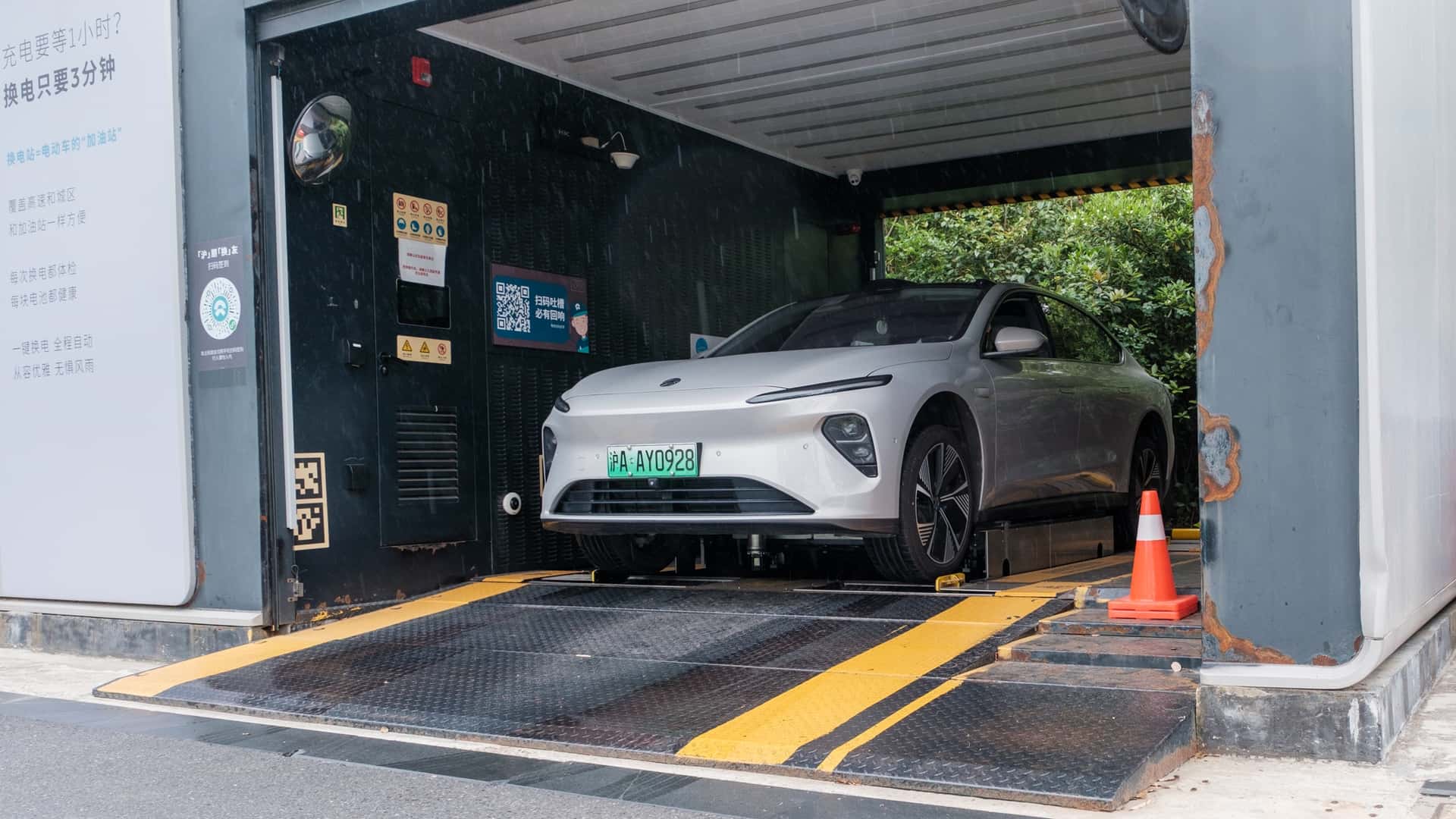
I love battery swapping. Sure, the electric-vehicle revolution tends to focus on charging speeds and charging times, but the fastest DC fast charger can’t compete with the speed of taking one battery out and replacing it with a fresh one. I would know: I’ve personally used Chinese automaker Nio’s battery swap several times. Its cars can go from flat to full in about three minutes.
EV battery swapping is the signature feature of Nio's EVs, and I'm clearly not the only person who'sbeen impressed. In China, the startup automaker just celebrated its 100-millionth swap. A Nio ET5 Touring driver in Haining was the person to hit the milestone.
The event came with a great deal of fanfare: Nio CEO and Founder William Li hosted a livestream event with owners, employees and Nio's business partners to celebrate.
Photo by: Nio
Cumulatively, Nio claims that it has delivered 5.28 billion kWh since it started doing its battery swaps in 2018. In all, Nio has 3,790 swap stations across the globe, including Norway, Germany, Sweden and Denmark.
At the same time, Nio’s battery swapping tech has taken criticism both in and outside of China. Some insist that the real estate necessary, as well as the complicated logistics and planning required to manage the battery packs themselves, aren’t worth the effort compared to simply maintaining a charging network—which Nio also does. But the swapping infrastructure is a draw for a certain customer.
For starters, in most countries, the battery itself can be leased separately, with a substantial credit taken off the vehicle price. In China, opting for Nio’s battery-as-a-service can take a whopping $10,000 from the purchase price. In its place, these Nio drivers now have access to the swap machines for a monthly cost.
Each battery is assured to be in good health. Drivers can also upgrade battery sizes; if your car was originally purchased with a 75 kWh battery, you’re able to change out to a 100 kWh or 150 kWh (for a limited-time rental only) when you need more range.
It’s a clever system that’s clearly won the hearts of many Chinese drivers who may not have the space for Level 2 home charging, or don't want to be inconvenienced by comparatively slow DC fast charging. While China is pioneering EV charging that can take as little as five minutes, those systems aren't especially widespread yet.
Battery swapping itself has proven to be somewhat mainstream, at least in China. In 2025, CATL and other manufacturers partnered with Nio to potentially create a standard for battery swap models in China. And Nio says it still plans on continuing to grow its swap station network. In 2026 alone, it plans on adding at least 1,000 more stations. No doubt, these stations are meant to accommodate Nio’s vehicles, but also cars from its Firefly and Onvo brands as well.
Moreover, Nio claims that its battery swapping network has been a win for the environment, too. The automaker claims its electric cars have reduced carbon emissions by 4,169 tons, compared to similarly-sized combustion-powered models. While it's unclear how Nio arrived at that figure exactly, the fact that it's racked up 100 million battery swaps in less than a decade shows that plenty of people can break up with gasoline if they don't have to deal with traditional charging headaches.
Contact the author: kevin.williams@insideevs.com
We want your opinion!
What would you like to see on Insideevs.com?
Take our 3 minute survey.
- The InsideEVs team