A California Company Just Kicked Off Solid-State Battery Pilot Production. Now Comes The Hard Part
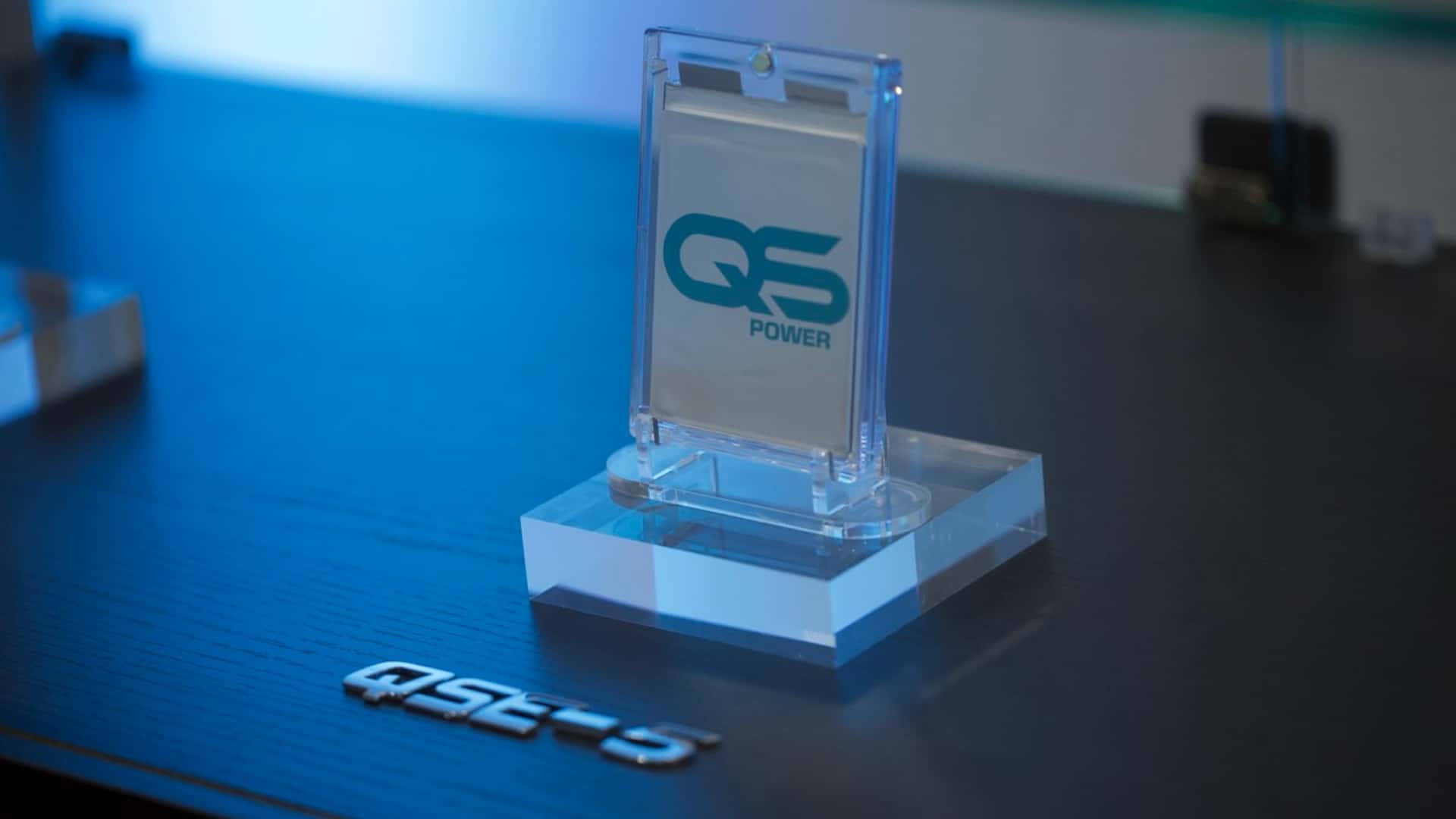
Fifteen years after its founding, California-based QuantumScape believes it has cracked the code to solid-state batteries. Roughly the size and shape of a silvery deck of cards, the company’s anode-free, lithium-metal cells promise to address virtually all of the shortcomings of today’s lithium-ion batteries. That means higher energy density, quicker charging, more power, safer operation and, theoretically, vastly better electric vehicles.
Now comes the next big challenge: proving that its batteries can be cranked out at scale.
On Wednesday, QuantumScape took a significant step toward commercializing its tech by kicking off pilot battery production at its San Jose offices. “This is our Kitty Hawk moment,” QuantumScape CEO Siva Sivaram said on stage at an event marking the launch of the so-called “Eagle Line.” “This is our Apollo mission launch.”
InsideEVs in an interview. But the company envisions its batteries hitting low-volume, high-performance vehicles by the end of the decade. And, eventually, products from household robots to stationary energy storage systems.
“Batteries are coming online everywhere," he said. "The long-term vision is [that QuantumScape becomes] competitive in a lot of big markets."
QuantumScape installed its batteries in a Ducati motorcycle last year, in the first real-world demonstration of its solid-state technology.
Photo by: Ducati
Volkswagen is a significant backer, and the two companies rolled out a demonstration vehicle, a Ducati motorcycle with QuantumScape cells, at Germany's IAA Munich auto show last year. The company has said it’s working with other unnamed large auto manufacturers as well.
QuantumScape has targets in mind for increasing the performance of the Eagle line, and it is planning upgrades to the factory, Holme said. But even getting to automated production is a big milestone, he said.
“You might recall Tesla's manufacturing hell,” he said, referring to the famously difficult ramp-up of Model 3 production in 2018. The EV maker introduced too much automation too early and was forced to rip out the robots in favor of more human input. “If you automate too early, then the robots aren't flexible enough to do the process you actually need, so you end up reworking, which takes a long time. It's an important marker in the maturity of our process that we felt we knew enough to automate it,” Holme said.
cheaper lithium-iron-phosphate—the company can take advantage of strides in cost and scale realized across the industry.
Where will QuantumScape batteries debut first in the marketplace? According to Holme, the Ducati project shouldn’t suggest that it will be a motorcycle. He does say that the technology will probably start out in “specialized, lower volume vehicles that are ultra high-performance.”
“Just like Tesla introduced the Roadster first at high-end, but higher cost-areas, and then the Model S, and then the Model 3, I think likely new battery technologies would follow a similar pathway,” he said.
QuantumScape is eyeing more mass-market cars for battery deployment as well, Holme said. But he doesn’t think solid-state will necessarily take over everywhere. He expects lithium-ion and solid-state technology to coexist, but for different applications with different requirements.
“It’s not going to be like, one battery takes all markets,” he said. “If you look at things like stationary energy storage, they don't really care about volume or mass. They care about cost and longevity. If you look at mobile applications, they care a lot about volume and mass.”
But while many solid-state promises have gone undelivered, the race seems to be heating up as of late. I asked Holme if he cares about being first to get solid-state batteries onto the market.
“That’s not the way I think about it. Like, who made the first smartphone? It wasn't Apple. Who made the first social network? It wasn't Facebook,” he said, adding that winning the battery market will mean beating competitors year after year—not once. “We want to go fast for a bunch of reasons. It’ll help our market cap, it’ll help the world to get better batteries. There’s a lot of reasons we want to go fast. But I don’t think race is the right framework.”
Contact the author: Tim.Levin@InsideEVs.com
We want your opinion!
What would you like to see on Insideevs.com?
Take our 3 minute survey.
- The InsideEVs team