Japan elects Sanae Takaichi on a landslide but some fear a Liz Truss moment, says ALEX BRUMMER
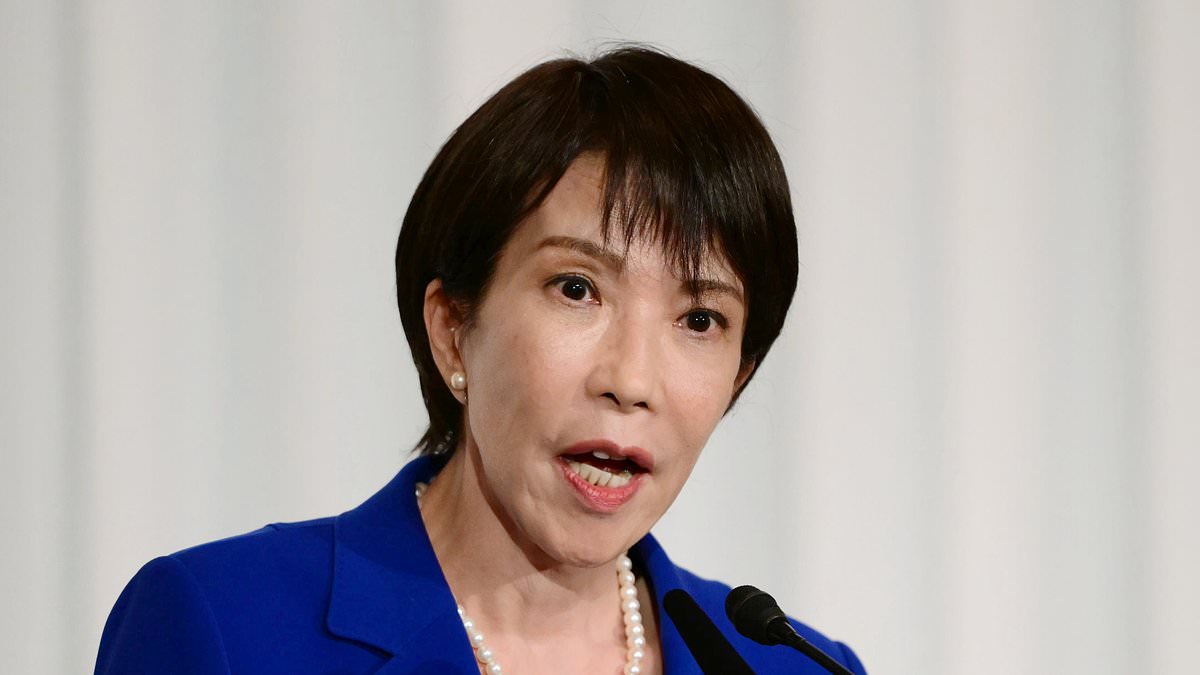
The outcome of the snap election in Japan was in little doubt, with its first female prime minister, Sanae Takaichi, cruising to victory on a populist wave. The 12-day election campaign, the shortest in Japan's history, has been accompanied by an outbreak of what has become known as 'Sanamania'.Voters of all ages are buying versions of the 64-year-old's trademark pink pen, and £650 Hamano black leather handbag, and queuing for her favourite snacks.On Friday she received not just support but 'total endorsement' from Donald Trump, who calls her Japan's own 'Iron Lady' – an echo of Mrs Thatcher.But it is not clear that financial markets will share the joy once they absorb the expected victory of her Liberal Democratic Party. She has promised to rebuild Japan's defences to prepare for aggression by China and shake up the all-powerful Ministry of Finance to end its stern, fiscal conservatism.Her ideas for pumping up public spending, reducing food prices and bolstering the military have raised fears that Japan is heading for a 'Liz Truss' moment with bond investors dumping Japanese government bonds and the yen. Sanamania: Sanae Takaichi, dubbed Japan's very own 'Iron Lady' by US President Donald Trump, is set to be swept to victory in the electionMarkets could draw comfort from a flash forecast showing that Japan's economy grew by 1.6 per cent in the final months of 2025, driven by business investment and resilient consumers.But the interest on Japanese government debt has soared to levels last seen in the late 1990s, an era known in Japan as a 'lost decade' when shares, property prices and asset values plummeted.The interest rate on Japan's benchmark ten-year-bond has risen by half in the past six months to 2.23 per cent. That might not seem high when our own ten-year bond yields 4.25 per cent, but it is eyepopping to economists and central bankers in Tokyo.It is worrying because Japan has the highest debt to national output ratio of any G7 country at a whopping 240 per cent. By contrast, the UK's debt level seems manageable at 95.5 per cent. Japan today is among Britain's biggest inward investors with £92 billion committed to the UK Japan has sustained this level of debt because of the willingness of the Japanese to hold government bonds in their savings – a matter of patriotic duty – alongside a massive bond-buying programme from the country's central bank.But there are concerns that this delicate balance may not last.'Over time Japan's elevated gross government debt level means that rising rates will necessitate higher interest payments,' JP Morgan's senior economist Benjamin Shatil said last week.In other words, if market mood were to turn nasty Takaichi might face her very own doom loop similar to the bond market crisis that turfed Truss out of No.10 in 2022. The rise of China, as the world's second most important economy, means Japan's critical place as an economic, manufacturing and innovation powerhouse is easily overlooked.With a gross domestic product of £3 trillion its national output is almost as large as Britain and France combined.In the 1980s US politicians feared Japan's economic rise with almost the same dread as they regard China today. The scare gave rise to hostile fiction and movies such as Michael Crichton's Rising Sun.But Japan today is among Britain's biggest inward investors with £92 billion committed to the UK. Ownership ranges from the Nissan factory in the North-East to Fuller's brewery in London.Given these deep trade and investment links, a debt crisis could quickly hit the UK economy.Takaichi's campaign promises – a consumption tax holiday on food, boosting defence and ending austerity-first policies – may play well with the voters. But they are likely to worsen a perilous fiscal, monetary and currency position.The food tax relief may please consumers, but it is estimated that it will cut tax revenues by 1 per cent. With the uplift in defence spending, potential reductions in contributions paid by citizens into the welfare system, and a shake-up of spending controls, markets are preparing for a fiscal shock.Such worries are piling pressure on the yen, which is at 213 to the pound – meaning one yen is worth 0.47p – its weakest level since 2008, echoing the recent decline of the dollar on European markets.For better or for worse, it appears radical change is on the way in the land of the rising sun.AJ BellAJ BellEasy investing and ready-made portfoliosHargreaves LansdownHargreaves LansdownFree fund dealing and investment ideasinteractive investorinteractive investorFlat-fee investing from £4.99 per monthFreetradeFreetradeInvesting Isa now free on basic planTrading 212Trading 212Free share dealing and no account feeAffiliate links: If you take out a product This is Money may earn a commission. These deals are chosen by our editorial team, as we think they are worth highlighting. This does not affect our editorial independence.Compare the best investing account for you