'My confidence took a big hit': Cork stroke victim calls for more mental health supports for survivors
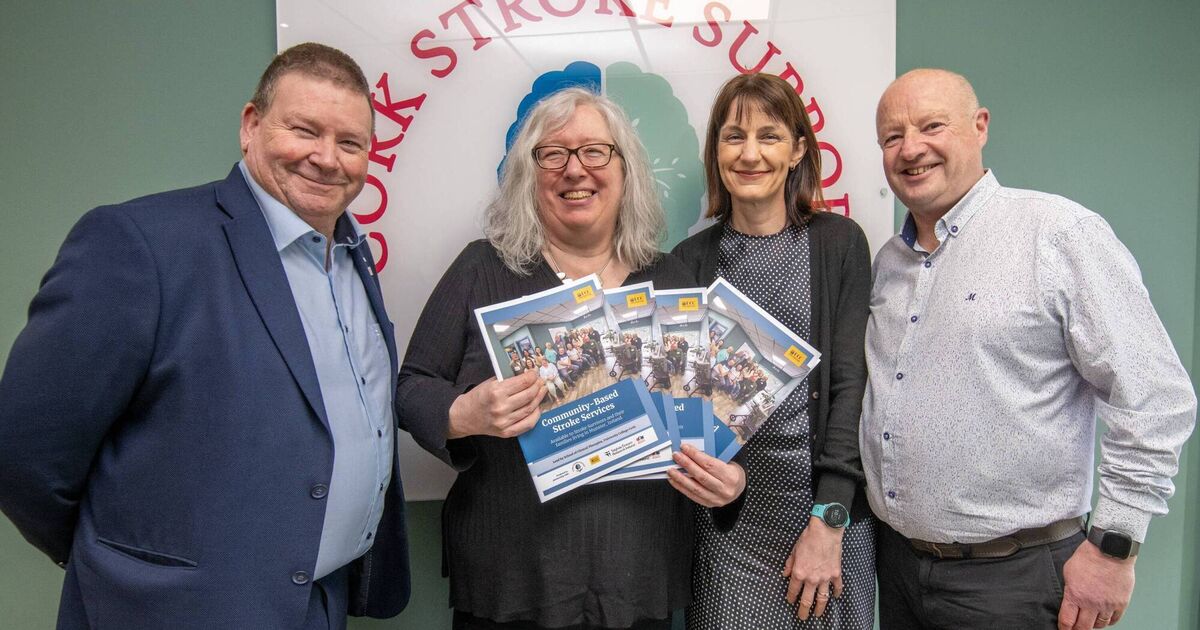
More services are needed to address mental health challenges after a stroke, and to support families, a stroke survivor has said.A new report from Cork Stroke Support (CSS) and University College Cork (UCC) found there were eight individual organisations/volunteers that provide stroke support services in Cork, and 20 in Munster, but identified gaps in service provision, with survivors surveyed noting supports for their mental health are often lacking.Chris Murphy, a 51-year-old from Millstreet who had a stroke nearly five years ago, said: “There is a lot of emphasis on physical recovery but not enough on the mental side… my confidence took a big hit.” He told the Irish Examiner when he had his stroke: “It was all a big shock. It happened during covid, so my wife dropped me at the hospital and didn’t see me again for a month. I was lucky that I had two daughters working in CUH so I could see them, but a lot of people there had nobody.” After spending a month in hospital, he went home: “Mentally, it was a struggle. The hospital dealt a lot with the physical side, but they didn’t deal with the mental. When you’re at home, sitting in a chair all day, the head worries you the most.“You feel your legs and your hands coming back, but you can’t feel your head. My short-term memory would still be poor, I struggle remembering people’s names."He said he never went back to work, and went from being a keen runner to needing his wife to walk him around the house, but now he is able to walk 10-15km a day.Building relationships with other stroke survivors through Cork Stroke Support helped him hugely, he said: “I didn’t know this place was here for the first year, and I struggled a lot — when I came in I realised there was life after stroke.” Dr Helen Kelly, senior lecturer in speech and language therapy at UCC, who led the report, agreed mental health support for stroke survivors was lacking.“The support people receive in hospital is fantastic, but when they go home, it’s a chronic condition that needs long term support," she said adding a lot of people did not know about the long-term impairments such as communication difficulties, which have a negative impact on mental health.Dr Kelly added: “There definitely needs to be more family support. Some organisations provide that support, many don’t. It has a huge impact on family life.”
There needs to be more stroke-specific supports for families, “and there is no organisation that provides support for children” in the region.More younger people are having strokes, and they often have younger children, she said. “Their parent can be in hospital for months, and when they come home they might be a different person, they might have mobility or communication struggles. “How do they deal with that, if their parent can’t speak to them or bring them places or play football? There definitely is a need for support there.”