NASA bosses are grilled as the Artemis II moon mission is pushed back yet AGAIN following a failed dress rehearsal - 'how can you still be having the same problem three years later?'
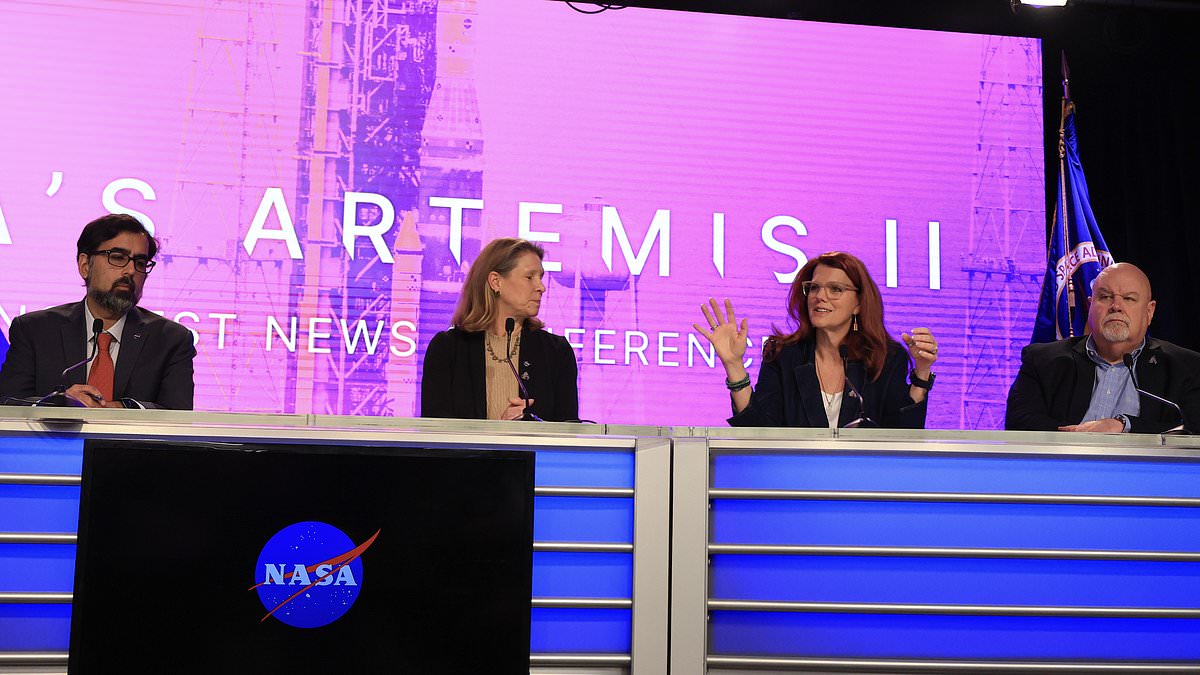
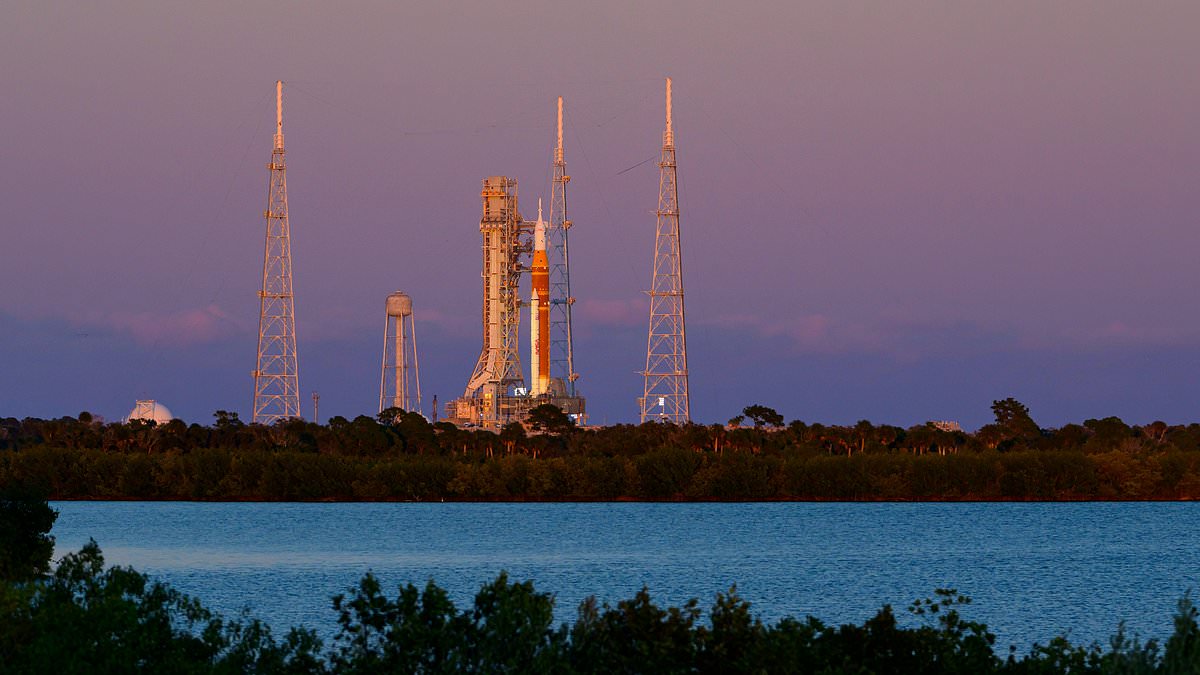
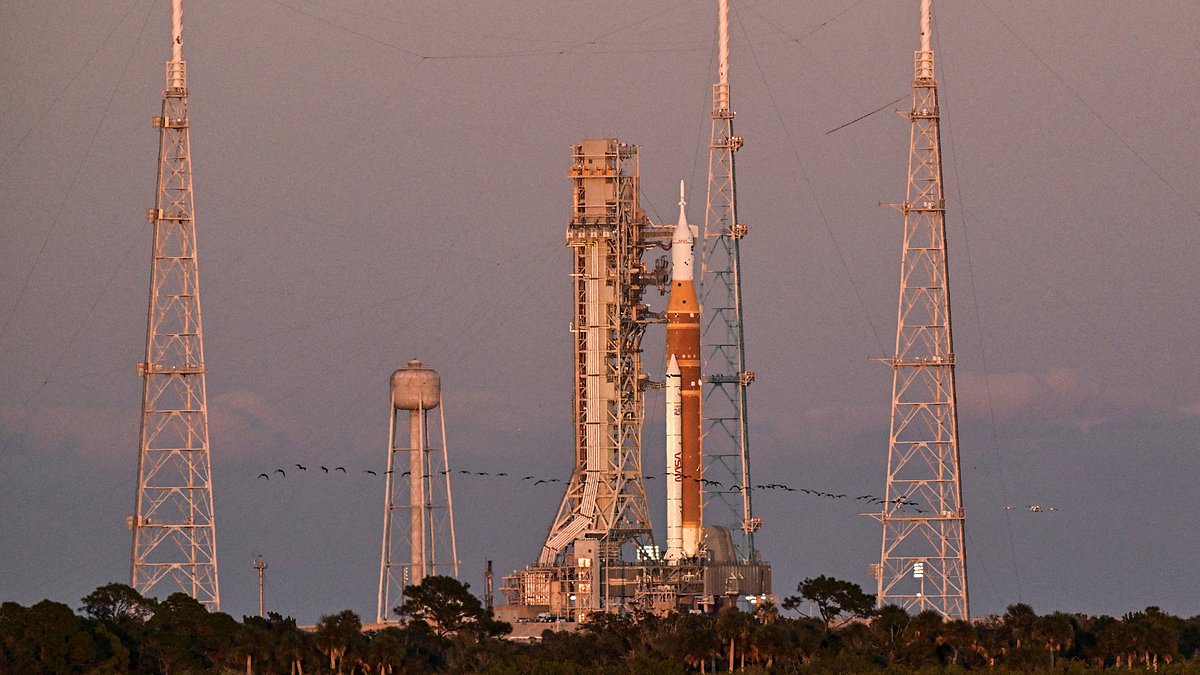
NASA's bosses have been grilled after the Artemis II moon mission was pushed back following a failed wet dress rehearsal.The decision to delay until March at the earliest was made when ground crews were unable stop the rocket's super–cooled hydrogen fuel leaking.This same problem has plagued every single hydrogen rocket since the Apollo Era, and was a well–known issue during the launch of Artemis I in 2022.At a press conference discussing the aborted test, Marcia Dunn, of the Associated Press, pressured NASA to explain: 'How can you still be having the same problem three years later?'In response, John Honeycutt, Chair of the Artemis II Mission Management Team, admitted: 'This one caught us off guard.'He added: 'The technical team felt like we either had some misalignment or some deformation or debris on the seal.'Lori Glaze, NASA's Exploration Systems Development Mission Directorate acting associate administrator, added: 'Everyone's aware of some of the challenges with the hydrogen tanking from Artemis 1.'We really did learn a lot from the Artemis 1 mission, and we implemented a lot of the lessons learned yesterday through wet dress.' NASA bosses have been grilled after the Artemis II moon mission was pushed back to March following a failed wet dress rehearsal. Pictured: (left to right) Amit Kshatriya, Lori Glaze, Charlie Blackwell–Thompson, and John Honeycutt The dress rehearsal failed just five minutes from completion after a hydrogen leak spiked beyond safe levels as ground crews filled the Space Launch System (SLS) rocket with over 2.6 million litres of liquid hydrogen and liquid oxygenDuring the wet dress rehearsal, NASA simulated a launch by filling the Space Launch System (SLS) rocket with over 2.6 million litres of liquid hydrogen and liquid oxygen.The operation began at 01:13 GMT (20:13 EST) on January 31, and the fuelling operation initially went smoothly.However, the space agency soon found a major hydrogen leak in a component called the 'tail service mast umbilical quick disconnect'.These are roughly nine–metre–tall pods which attach to the base of the rocket and route propellant lines up into fuel tanks, before disconnecting during launch.What is most concerning is that this is the exact same place where the SLS rocket used in Artemis I experienced leaks during its wet dress rehearsal three years ago.Those leaks ultimately required the SLS to be removed from the launchpad three separate times for repairs, pushing back the eventual launch of Artemis I by six months.This raises the question of why NASA hadn't managed to fix this well–known issue ahead of the Artemis II wet dress rehearsal.On social media, space enthusiasts were outraged that the space agency had failed to get a handle on its hydrogen problems. The leak came from a component called the 'tail service mast umbilical quick disconnect' (pictured), which attaches the rocket to the tower. This is the exact same place that caused hydrogen leaks during Artemis I John Honeycutt (pictured), Chair of the Artemis II Mission Management Team, admitted: 'This one caught us off guard' On social media, space enthusiasts bemoaned the fact that NASA had not fixed an error, which had been well known since Artemis I in 2022 One social media user complained that hydrogen leaks have been an issue since the Apollo era, and NASA still has not managed to get them under control Why does NASA use hydrogen fuel? The SLS rocket uses a mixture of liquid hydrogen and liquid oxygen.Since hydrogen is such a small molecule, it is extremely prone to leaking.However, hydrogen is also cheap, naturally abundant, and produces a phenomenal amount of energy.According to NASA this mix gives the 'highest specific impulse, or efficiency in relation to the amount of propellant consumed, of any known rocket propellant'.Another important factor is that the SLS rocket inherits a lot of its hardware and systems from the Shuttle era rockets.These engines were built to run on hydrogen, so NASA can't change fuels without an expensive redesign of the entire rocket and engine system. One commenter wrote: 'Couldn't fix it in three years, how can they fix it in three weeks?''In essence – the three year issue has no solution in the near future. This is all a sham,' complained another.Meanwhile, one frustrated commenter added: 'You would think by now they would realize, hydrogen is very difficult to seal plumbing for.'Mr Honeycutt told reporters the issue stemmed from the fact that NASA hadn't been able to test the entire rocket stack in more realistic conditions.He said: 'After Artemis I and the challenges we had with the leaks, we took a pretty aggressive approach to do some component–level testing with these valves and the seals.'But on the ground, we're pretty limited as to how much realism we can put into the test.'Likewise, Amit Kshatriya, NASA Associate Administrator, pointed to the fact that the SLS rocket is a highly complicated machine that has only been flown a handful of times.Mr Kshatriya said: 'This is the first time this particular machine has borne witness to cryogens, and how it breathes and how it vents and how it wants to leak is something we're going to have to characterise.' Amit Kshatriya, NASA Associate Administrator, said the issues came from the fact that the SLS rocket is a very complicated machine that has only been flown a few times This is an opinion shared by NASA Administrator Jarred Issacman, who wrote in a post on X that 'the flight rate is the lowest of any NASA–designed vehicle, and that should be a topic of discussion'.To NASA's credit, the Artemis II rocket performed significantly better than its predecessors.Hydrogen is such a small molecule that it can pass through the microscopic pores in welds and is, therefore, almost impossible to contain.However, since liquid hydrogen and oxygen provide so much power, NASA tolerates an acceptable amount of hydrogen leaking on the ground.These leaks proved debilitating for Artemis I after multiple wet dress rehearsals failed to fill the fuel tanks.Likewise, during the Space Shuttle era, a particularly bad run of hydrogen leaks in 1990 shut down NASA's launch operations for more than six months.Even the Apollo 11 mission was nearly scuppered after a massive hydrogen leak sprang in the rocket's second stage, with engineers working to seal it even as the astronauts boarded.During the Artemis II wet dress rehearsal, ground crews were able to completely fill the SLS's fuel tank while keeping the leak just about within these safe limits. Unlike during Artemis I, NASA bosses also maintain that these problems can be fixed on the launchpad and won't require bringing the Artemis II rocket (pictured) back to the hangarIt was only with about five minutes left in the countdown, as crews started to pressurise the fuel tanks, that the lead spiked beyond this threshold.Charlie Blackwell–Thompson, Artemis Launch Director, said: 'As we began that pressurisation, we did see that the leak within the cavity came up pretty quick.'However, Ms Blackwell–Thompson also insists that: 'If we were within our parameters on launch day and you had not had the issue when you pressurised during terminal count, you would have been within your launch commit criteria and certainly could have been go for launch.'Unlike during Artemis I, NASA bosses also maintain that these problems can be fixed on the launchpad and won't require bringing the rocket back to the hangar.If true, this means Artemis II might be able to iron out its hydrogen problems in time for the next scheduled wet dress rehearsal.NASA officials didn't specify when this next rehearsal would take place, adding that it would take time to go through the data from this week's test.However, Artemis II is currently targeting its second launch window from March 6 to March 9 and March 11.If the launch is delayed again, the mission will be pushed back another month to the final proposed window between April 1 and April 6.Artemis II: Key facts Launch date: NASA has identified three possible launch windows for Artemis II in the coming months: From February 6 to February 11, from March 6 to March 11, and from April 1 to April 6.Mission objective: To complete a lunar flyby, passing the 'dark side' of the moon and test systems for a future lunar landing.Total distance to travel: 620,000 miles (one million km)Mission duration: 10 days Estimated total cost: $44 billion (£32.5 billion)NASA Space Launch System rocket: $23.8 billion (£17.6 billion)Orion deep–space spacecraft: $20.4 billion (£15 billion)Crew: Commander Reid WisemanPilot Victor GloverMission Specialist Christina KochMission Specialist Jeremy HansenMission Stages:Launch from Kennedy Space Centre Launch Pad 39BManoeuvre in orbit to raise the perigee using the Cryogenic Propulsion StageBurn to raise apogee using the Cryogenic Propulsion StageDetach from Cryogenic Propulsion Stage and perform translunar injectionFly to the moon over four daysComplete lunar flyby at a maximum altitude of 5,523 miles (8,889 km) above the moon's surfaceReturn to Earth over four days.Separate the crew module from the European Service Module and the crew module adapterSplashdown in the Pacific Ocean