Trans athletes have NO advantage over women, controversial study claims
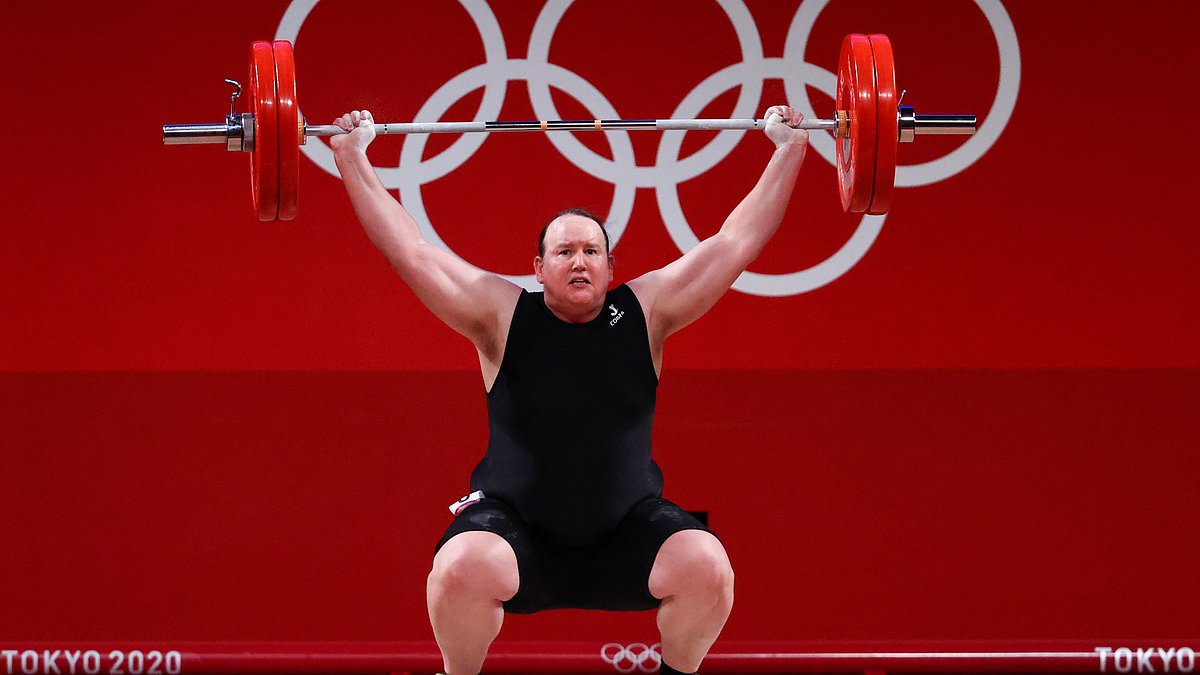
Transgender women possess no physical advantage over those who were born female, a controversial study claims.Researchers from the University of Sao Paolo in Brazil analysed the strength, fitness and body composition of transgender people undergoing hormonal treatment compared to cisgender individuals.Their findings suggest that while transgender women still have greater muscle mass following hormone therapy, their physical fitness is 'comparable' to other females.Based on the findings, the team claims their data 'does not justify blanket bans' on trans women taking part in women's sport.However, several scientists have slammed the study, and say it 'suffers from several problems'. Alun Williams, a professor of sport and exercise genomics at Manchester Metropolitan University, argues that fitness levels were not tracked over time and before treatment began, and that it is 'almost worthless to compare groups without tight assessment of training history'.'Furthermore, hormonal treatment after puberty doesn't change skeletal dimensions like height, limb length, or shoulder width, so those advantages to men in many sports remain in transgender women regardless of hormone changes,' he added.'I don't agree with the authors that the studies published to date, or their review of them, overturn the evidence for inherent athletic advantage in transgender women.' Current and former athletes say trans athletes like Lia Thomas (left), the swimmer who enjoyed modest success in male categories before becoming a national champion in women's events after she transitioned, highlight the physical advantages of trans women Analysis revealed that trans women had more lean mass – a proxy for muscle – compared to cisgender women, as shown in this chart The question of whether transgender women should be allowed to compete in female sports, and under what conditions, remains hotly contested. Multiple sporting bodies in the UK banned trans women from taking part in women's sport last year after the Supreme Court ruled that the legal definition of a woman under the Equality Act is based on biological sex.US President Donald Trump has also issued a crackdown on strict definitions for male and female competitors, after transgender swimmer Lia Thomas won a major women's freestyle title.For their study, the scientists scoured databases for research comparing the body composition of transgender people before and after hormone therapy with that of cisgender people.In total, they included 52 studies involving more than 5,000 transgender people and more than 1,000 cisgender individuals, all aged between 14 and 41.Analysis revealed that trans women had more lean mass – a proxy for muscle – but no observable differences in body strength or maximal oxygen consumption compared to other women.Writing in the British Journal of Sports Medicine, which is part of the prestigious British Medical Journal group, they argue their evidence 'does not support theories of inherent athletic advantages for transgender women'.The team admits that most of the studies included in their comparison did not involve elite athletes. A ban on transgender women in Olympic sports is edging closer and is expected to be in place for the LA Games in 2028 (Pictured: Transgender athlete Laurel Hubbard of New Zealand) Trans women participating in sports benefit from a whole host of physiological advantages, which are largely due to testosterone exposure early in life, a previous study claimed What do transgender and cisgender mean? Transgender: A person whose gender identity does not correspond with the sex registered for them at birth. For example, a trans woman is someone who was assigned male at birth, but identifies as female.Cisgender: A person whose gender identity corresponds with the sex registered for them at birth. For example, a woman who was assigned female at birth and still identifies that way. And their findings contradict previous studies that have exposed a gulf between trans athletes and women in sports.Research, published in 2022, found that male–to–female transitioners were faster, stronger and fitter than most women – even after taking hormone drugs.The authors of the new study admit their evidence was of mixed quality and lacked a range of ages, sports and competitive levels.'Although the current data do not justify blanket bans, critical gaps in literature were found, notably the under–representation of transgender athletes who may retain more "muscle memory",' they wrote.The report has prompted criticism from academics and sex–based rights charities for flaws in how it was conducted.Fiona McAnena, the director of campaigns at sex–based rights charity Sex Matters, said: 'Men do not shrink or magically lose all their male advantages when they identify as women, no matter what hormones they take.'Everyone knows no one can change sex, and no academic analysis or statistical data tricks can prove that men should be allowed to compete in women's sport based on a claimed female identity,' she said.'The males in this study may have hobbled their own athletic prowess voluntarily by suppressing their testosterone but that is not an argument for forcing female athletes to compete with them.' World Rugby's policy states trans women who transitioned after puberty cannot compete in women's rugby. French rugby player Alexia Cerenys (centre), who transitioned at age 25, is still able to compete in France after its rugby federation voted in favour of trans participation Bigger bones in a trans woman athlete also allow for a greater surface area for muscle, scientists have previously argued. For instance, broader shoulders in men mean the potential build–up of more muscle, which would increase upper body strength, a study foundFollowing last year's Supreme Court ruling, many sports in the UK banned trans women from taking part in games involving those whose biological sex is female, including cricket and football.Some sports – such as cycling and triathlon – had already introduced an open category for trans athletes.The International Olympic Committee also set up four working groups last summer, including one for the protection of women's sport.Dr Blair Hamilton, research associate in applied sport and exercise physiology at Manchester Metropolitan University, welcomed the study.'Overall, the findings make sense and are consistent with what we've seen in the wider scientific literature and in my own research, although there is fierce debate in this area,' Dr Hamilton said.'The review also highlights something important: you can't assume that having slightly more muscle automatically means having better sporting performance, because the studies measuring muscle size and those measuring performance weren't always done on the same groups of people.'These conclusions match what we found in our 2025 systematic review, where transgender women had more body fat, less fat‑free mass, and lower strength than cisgender men, meaning that comparing transgender women to cisgender men isn't a fair or meaningful comparison.'However, Dr Hamilton said to know how something affects elite athletes, 'you really need elite athletes to study, and at the moment, there are very few openly transgender elite athletes anywhere in the world'. The LGBTQIA+ flags and their meanings Rainbow: Familiar Gay Pride flag launched in 1978Progress: Gay pride flag including Transgender, Black and Brown peopleBisexual: Those who are attracted to both men and women Pansexual: People who are attracted to all genders Nonbinary: Those who do not identify as male or female Transgender: People who identity as a different gender to their birth sex Asexual: Those who do not feel sexual attraction to anyone Intersex: Person born with a combination of male and female biologic traits Gay man: A man attracted to another man Lesbian: A woman attracted to another woman Polysexual: Sexual or romantic attraction to more than one gender Agender: Person who rejects gender identity and has none Androgyne: Someone who does not look masculine or feminine Genderfluid: Being more than one gender or having it change Genderqueer: Person who does not follow binary gender norms Neutrois: Person who lacks a specific gender identity Aromantic: Someone who has little or no romantic feeling towards others Demisexual: Sexual attraction to someone only after emotional closeness Demiromantic: Romantic attraction to someone only after becoming emotionally close Polyamorous: Having multiple relationships with multiple people at once Straight Ally: A person who is straight but supports the LGBTQ+ community