Turn on the style: Pick the the perfect taps for your kitchen
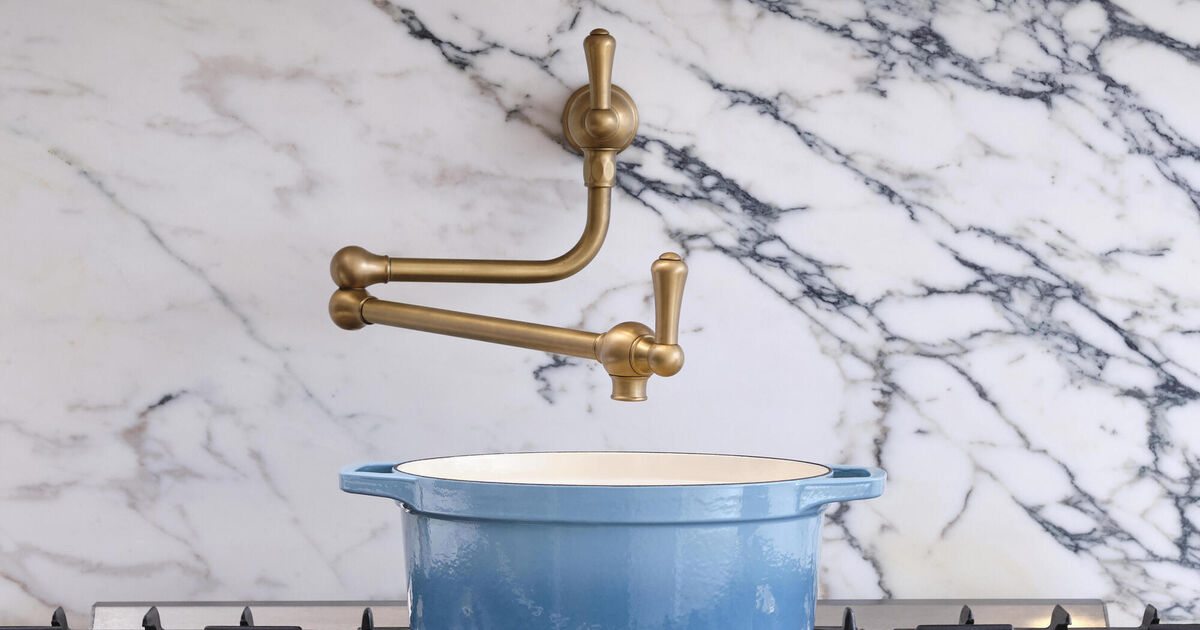
Your kitchen tap is part of the brightwork of the space, and with a pert vertical presence, its plumbing is made to be noticed. With the rolling challenges of having a new kitchen installed, this kitchen jewellery is a relatively light relief. But we still need to get it right. Of everything you’re touching in the kitchen, it’s the tap that’s drifting under your fingertips more than anything else. Its performance, pressure, versatility, and ease of operation will really count. Imagine using any tap with heavily greasy hands. What about the aesthetic? We don’t want an anachronistic, visual interrupter poking up its head, spoiling those silken planes of quartz or porcelain. Here are some vital tips to go with the flow.Good ceramic sealing discs, a solid brass or stainless-steel base, flexible connecting hoses as standard, and longer guarantees are a great start. Let’s begin with the overall physical design. Mixer taps combine hot and cold water in the body of the tap. The market leader, the single-lever thermostatic monobloc mixer, has a striking vertical form. Perrin & Rowe pot filler tap set directly over the stove area (your plumber should carefully detail this inclusion); from €664, Taps4Less.ie. For cheaper models in brushed brass, try Amazon.ie.Operated by one or two levers (dual-lever) in a restrained style, they suit most kitchens. Single-levers move in every direction, up and down to control flow, and left and right to control temperature. The control will be on the top, or to the side at the base. With a few days of muscle memory, they glide easily to the right setting.Let’s talk levers If you have found that tall, single-lever monoblocs become unsteady on the deck over time, a deck-mounted, dual-lever mixer with a wider, stable mount is a good option. I personally find some single-levers too sensitive for my clumsy antics. Double-lever monobloc mixers, or even double-pillar taps on a two-hole sink with paddle or prong-levers, are preferred by some householders. They can be nuzzled with the heel of a hand to set flow and temperature. Spouts will appear as swooping U-shapes or a more angular F-shape on all models. What they must all do is leave clearance for filling larger pans. For serious foodies, a pot-filler tap right over or by the stove top is a sumptuous extra.This economical Blanco Carena in white elevates the white sink and cabinets in this kitchen, from €206 with models with a covered pull-out dual-spray hose with change-over function. Suppliers include Buyitdirect.ie. For other coloured taps, look into Etal Sorrento models from €128 at Screwfix.ie.Depending on the design, you will need between one and four holes in the sink. Spray taps and pull-out heads set beside the sink will need an extra counter mounting point. Be extremely careful to match the tap to the sink model number. Check three times for a new sink or retrofit. For classic looks, investigate styles with Edwardian-inspired crossheads on a traditional mixer unit, with a housing perched across the wall, or a deck mount. These also come in monobloc single-lever examples (a good compromise for modern performance and character in brass, for instance). The tactile operation of a tap is a highly personal thing. What feels most fluid to you? Include the safety of a thermostatic tap if you can afford it. Bumping a one-tap monobloc control is an easy thing to do, and accidental scalding is a real-life issue for anyone with a sensory or mobility issue. There are cheaper taps with temperature regulators, but thermostatic mixer taps offer ultimate precision and are specified in quality kitchens.Static taps Static taps just deliver water and swing through 180 degrees. For a greater investment, spray heads held in place by a holster are extremely useful for focused work even beyond the bowl. Anything that moves (spring necks and pull-outs) should return with a pleasing clunk-click. Magnets are a real plus here — pulling the element back into perfect position. If your fixed-tap spout swivels, it will have a range of movement that should be limited left and right to prevent it from deluging the deck.Get your hands on those showroom examples and look out for degradation caused by repeated, rough handling.Pressure points Now, with the fascination of style down the plug, we have to talk about pressure. Some taps are made to cope with high and/or low pressure, some are high-pressure only, while others are dedicated to creating the experience of greater pressure with clever spray patterns and a little aeration (saving you on hot water bills). Putting a high-pressure tap on a low-pressure supply will deliver a fitful spit.Clearwater Morpho flex-n-stay mixer tap in tall American faucet style, with bendable spout that comes to your position for awkward pans sizes. In a choice of finishes from Ä190, kitchenfittingsdirect.ie.Without true pressure, it’s difficult to use any tap, including a pull-out or pull-down downspray variety, to blast food off atrophied pans or to power-wash the sink. Bar pressure is bar pressure. An integrated trigger spray will still be disappointing with feeble pressure. High-pressure taps generally require 1bar pressure or more. You may find all you have is 0.3bar with a gravity-fed open hot water/central heating system. You can guesstimate your pressure with a jug and a stopwatch, but let your plumber take a proper look with a pressure gauge tool. Introducing a dedicated whole-house water pump could revolutionise your usage all over the house.Super taps So, to the super-tap division. Boiler taps have shifted up to the must-have division, according to David Dempsey, design director for Wicklow firm Noel Dempsey Design. “They are rarely left out with our customers, regardless of the kitchen’s style,” says David. Operating independently of your primary sink tap, set on a second sink to the island or peninsula or serving as your master tap, boiler taps are not just about topping tea and coffee. They can fill a pan with near-boiling water (just under boiling), blast the area clean and scald the skin straight off a tomato. With safety operation to ensure a child does not have the required dexterity to use them, boiler taps suit both adult-only and family homes.Zip Hydrotap C5 Celsius Plus, €6049, as shown at Harvey Norman. Prices for less splashy models start at around €4100.Near-boiling water (around 98C) moved onto the hob will quickly reach boiling — getting a jump on pasta and potatoes. You will need some extra room under the counter for the boiler unit (2l minimum) and will have to allow for the expense of occasional maintenance and on-going filter costs.Filter units Don’t neglect the filter aspect for any supply, but especially for boiler taps. Any mineral load in water, and the tap, and any stainless-steel or darker composite sink will be clouded with a thin scum in the tap area. A filter unit will condition the supply, removing rough particles (dirt, sand), heavy metals (lead and copper from old pipes) and chlorine for fresher tasting water. Franke demands primary filter changes in as little as four months. A filter-life indicator light is a real help. I have not found any tap that claims to remove nano-particles of microplastic in any convincing way.Grohe K7 with 360-degree swivel spout and pull-out spray arm. From €704, various suppliers. Budget alternative, the Crosswater Cook Dual-lever from €240, various suppliers, and models by Tapron.If you stick with a unit of 2.5l-3l storage with standard filters, a boiler tap will add no more than €300 to a top-flight thermostatic mixer. An example would be the gorgeous Fusion Square Quooker boiler-tap in gold, €2610 plus the price of your tank, filtering, and accessories, Quooker.ie. Choose a black or coloured model, limescale-control, a combi-boiler, water filtering plus installation, and the price for a top branded four-in-one boiling/sparkling/digital tap, with annual maintenance costs will escalate. There is a €6059 price tag on the magnificent, all-singing, all-dancing Zip Hydrotap C5 Celsius Plus at Harvey Norman, which (pardon the irony) they claim is more economical to run than a typical boiler, removing microplastics and micro-biological cysts. Yikes. That seems like a thirst trap. Prices for less splashy models start around €4100.