My TikTok Is Overrun With Fake Cheating Exposés
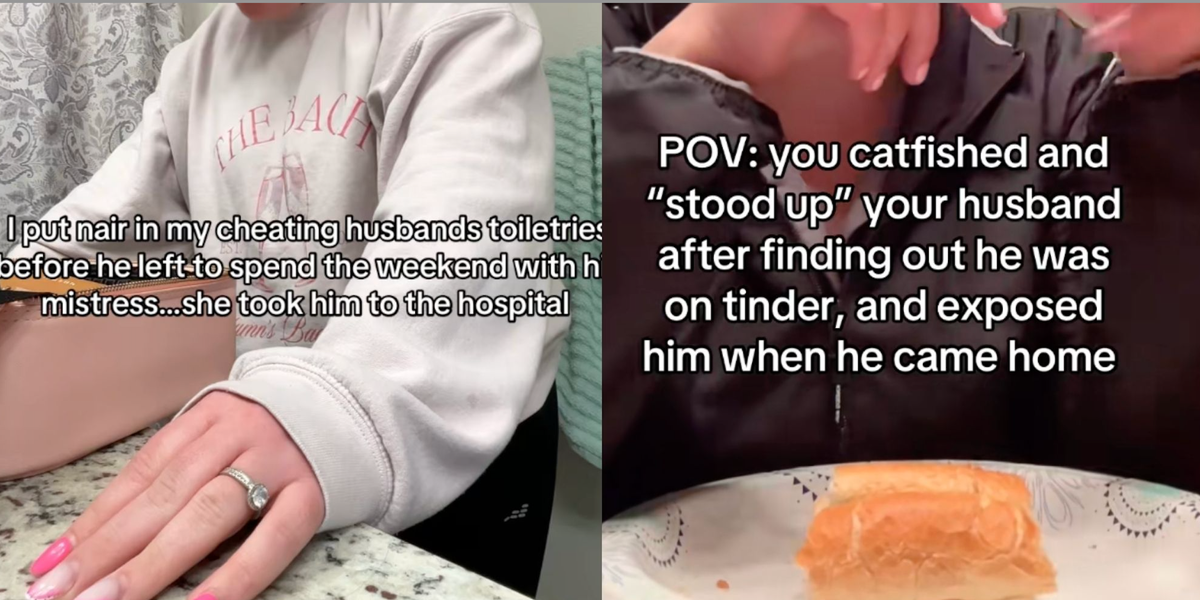
“POV you put divorce papers in the mailbox to confront your cheating husband.” Like fresh bait, this brand of text-on-screen video will always earn my full, undivided attention during a doomscroll. I, like generations of nosy women before me, live for justice being served—for the sweet righteousness of no-good strangers being forced to face consequences. My algorithm knows this.But I’ve reached quite a frustrating point where many of my cherished cheater-confrontation videos—the ones in which scorned lovers replace shaving cream with Nair, burst in on the hotel room where their husband and his mistress are rendezvousing, or stage some other outlandish encounter plucked straight out of a Tyler Perry script—are not real-life confrontations at all. Instead, they’re mere skits that are often undisclosed ads for AI “cheater finder” apps.View full post on TikTokView full post on TikTokBefore these videos dominated my FYP, it would take me longer than I’d care to admit to realize the couples in them are likely paid actors. In my defense, the signs aren’t always clear until the very end. Some videos close on a shot of the app CheaterBuster, implying that the fake cheater’s nefariousness was uncovered using the site’s facial-recognition feature. It claims to parse through dating-app profiles to determine whether someone in a relationship has a secret active Tinder account. Other fake cheating ads are more upfront when namedropping the service they’re promoting. Those for TruthSeek, another AI-powered data search app, usually include on-screen text that reads something like “I thought my boyfriend loved me until I looked him up on TruthSeek.” Apparently, the app scans the web for evidence of your partner’s unfaithfulness via hidden social media activity. But the telltale signs of advertising at work are the cheating victims who seem to “catch” their partners (thanks to the apps’ help) in multiple different videos.TwitterView full post on TikTokAccording to several online reviews, the success of these platforms’ search functions is inconsistent. One scorned TruthSeek reviewer wrote: “On TikTok this is advertised as a ‘cheater finder’ however…it won’t look up your exact person…all the information they make you pay for you can just find on Google.” The app currently charges $19.99 per month for full access to its services. In response, the app’s developer said that its search assistant is “designed to analyse information patterns rather than provide definitive conclusions.” They added, “We’re actively improving how results are presented so that expectations are clearer.”CheaterBuster AI’s Tinder-sweeping service will cost you $7.99 weekly, and its App Store reviews similarly warn suspicious lovers to keep their wallets closed. “The pic search is a great idea, but the AI needs to be developed more. It returns a whole slew of people that look nothing like the pic at all.”AppleThese customers, dissatisfied as they may be, do suggest that the platforms’ choice advertising strategy is working, at least to some degree. The ads prey on both our innate desire for juicy tea and the vulnerabilities of suspicious people in relationships. They’re engineered to elicit an emotional reaction—and maybe a visit to the App Store. It’s either someone profusely crying in their car (“Me after I looked him up on TruthSeek”) or a dramatized gotcha confrontation that people in relationships fear, and people who’ve been burned dream of.We like watching train wrecks; we know we should not look, but we can’t help ourselves.Psychologically, the “cheating exposés” video genre is popular because it manages to both satisfy and soothe. We meet the perpetrator, and the victim is immediately vindicated—precisely why these AI platforms are trying to profit from the formula. “People love salacious content. There’s a reason the Jerry Springer Show and Maury are some of the most popular television shows in history,” says relationship psychologist Dr. Karen Stewart. “We like watching train wrecks; we know we should not look, but we can’t help ourselves.”“By watching and even interacting with these cheating exposures, some viewers can feel a tribe mentality. [When we] condemn the cheater publicly and as a group, the viewers and the victim can bond, which ultimately reinforces relationship values of trust, connection, and loyalty…Seeing someone else going through something we’ve gone through can soothe unresolved betrayal and trauma because the nervous system responds to emotional truth, not factual accuracy.”But are these apps even allowed to exploit human emotions without disclosing that they’re promoting a product? According to TikTok’s official policy, not quite. TikTok did not respond to a request for comment, but the platform’s guidelines specify that any content promoting a brand, product, or service must be clearly disclosed as an advertisement. “This ensures that you’re transparent about the type of content you’re posting and helps build and maintain trust between the TikTok community and advertisers,” the site says. And yet, very few of the cheater exposés in question feature a clear ad label.As these videos proliferate and more users catch on to their tactics, an honestly cathartic countertrend has emerged: people hating on the ads. “It’s genuinely every 8 videos for me, I’d rather see normal ads [at this point,]” said one viewer. Some exasperated users have taken to comment sections to suggest ways to combat the influx, like filtering out the names of the promoted apps in content preferences or blocking each account that advertises a cheater-finder service.View full post on TikTokWe (myself included) can shame these apps for using human pain as a sales tactic, but it’s hard to ignore my own role in sustaining the culture that allowed these videos to thrive. Apps like Cheater Finder and TruthSeek observed what their target demo (the slightly paranoid, hyper-surveillant online crowd) responds to and have whipped up a format that reliably captures our attention.But the sheer volume of their ads, and the fatigue they’ve caused, has inspired me to consider whether our consumption of these videos (real or fake) is, at its core, invasive…even when heartbroken people willingly offer up the content. Maybe these videos needed to start appearing on my FYP in a grifting promotional format for me to fully reckon with how seedy my fascination with them can be.Related StoriesDoes TikTok Still Care If Your Boyfriend Sucks?What Exactly Is the “Homewrecker Law”?