Q&A: Should you worry about TikTok’s new terms of service?
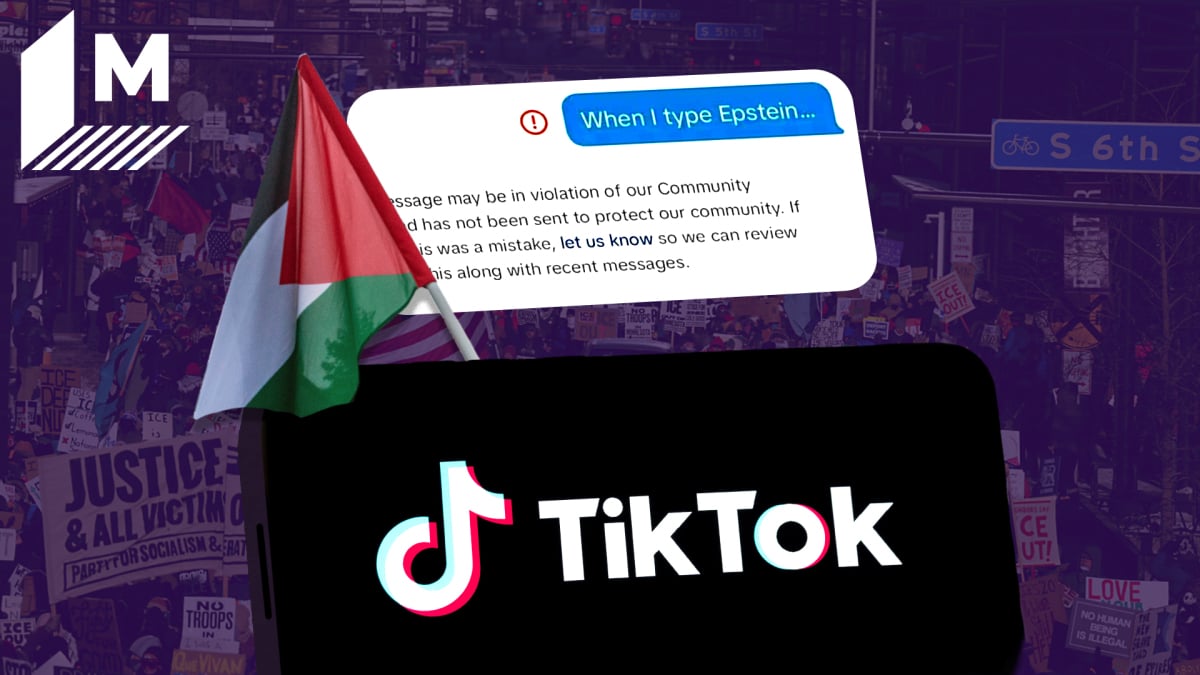
As American companies assumed majority ownership of TikTok, users across the United States were forced to accept new terms of service. The popular short-form video platform is already facing scrutiny for allegedly suppressing political content critical of ICE, censoring messages mentioning convicted sex trafficker Jeffrey Epstein and presenting users with a take-it-or-leave-it privacy agreement offering no option to opt out.TikTok blamed the alleged censorship on a power outage at a data center, but users continue to sound the alarm. People decried the new terms across other social media platforms, with some promising to delete their TikTok accounts. UVA Today talked to University of Virginia McIntire School of Commerce associate professor Chris Maurer, a cybersecurity expert, to see whether TikTok users should be worried about potential invasions of privacy.Q. What’s new about the new terms of service?
A. One of the biggest changes relates to location data. Previously, TikTok was only collecting approximate location based on your IP address, which generally is only accurate at the city level. The updated terms now permit TikTok to collect more precise location based on GPS, which can be accurate to within several meters.Another major update relates to advertising. Previously, TikTok’s terms only mentioned using personal data to tailor in-app advertising, but the new terms extend to advertising outside of the app as well. Some explicit guidance around data usage for generative AI purposes was also added to the new terms.While there has been some uproar about how the updated terms explicitly mention the collection of personal data, including citizenship/immigration status, sexual orientation and mental/physical health diagnoses, these were already in TikTok’s privacy policy before the spinoff as a U.S.-based entity.Q. Do you think people’s alarm is warranted?A. Yes and no. I think some of the responses are a bit of an overreaction, given that a lot of the things in the updated policies were already happening in the old TikTok app and are happening on other social media platforms. However, most users are not fully aware of the extent to which social media companies collect data and use it for different purposes. So, when new terms are released and there is a public outcry, it’s not necessarily a bad thing for people to question whether they want to share this data with companies.Q. How might a company use data like a user’s health, political affiliation or exact location?A. Personal data is traditionally used in two primary ways: to provide targeted advertising and to increase engagement. These are often documented in privacy policies because companies are legally obligated to disclose how they use your data. From an advertising perspective, the combination of many types of personal data paints a clear picture of who we are and what types of ads we may be more likely to click through. For example, a new mother may be shown ads for diapers. But if I also know that this new mother is posting content from her home that is 25 minutes from the nearest big box store, it may be better to send her ads for a subscription diaper delivery service instead.




Comments (0)