Me+Em Hasn’t Raised the Price of Its Hero Product for 17 Years. Here’s How.
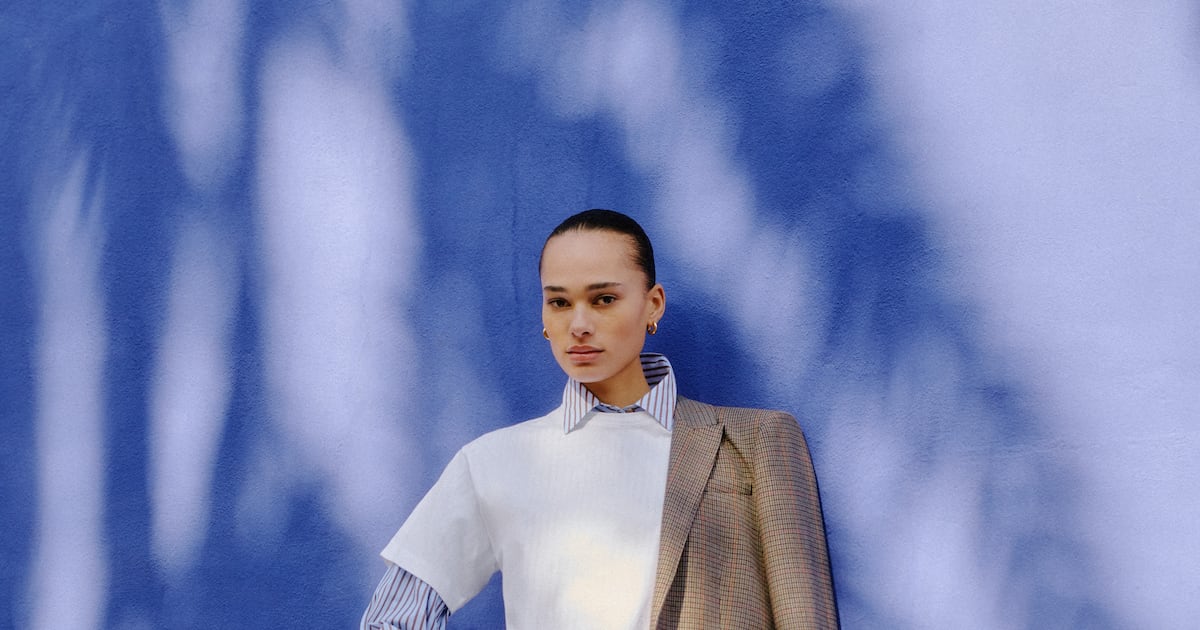
For consumers, years of sticker shock at soaring prices have given way to weary acceptance. Hikes that once sparked outrage on social media — such as the cost of Prada’s mini nylon bag zooming from $725 in 2019 to $1,270 today — are so common they rarely draw attention anymore. Then there’s the curious case of Me+Em’s Palazzo trousers. The London-based brand’s signature wide-legged bottoms retail for £59 ($99), the same price as when they were introduced nearly two decades ago. In that time, Me+Em has grown from a single store to an increasingly global enterprise with 15 locations, looking to double its footprint in the US this year with five new stores. But it’s those £59 trousers that best exemplify what founder and chief executive Clare Hornby calls the brand’s most compelling proposition: its “quality-price ratio.” The idea is to give customers a choice between a £35 T-shirt and a £600 suede top to pair with her £59 Palazzo pants. Every shopper comes away feeling like she got her money’s worth, whether the suede top was a splurge item or one of a dozen like it in her closet. “Our commitment to outfit building gives you so much choice across price points, and it also means that the investment they’ve made in that trouser has so much more legs to it,” she said. The pitch around value is landing at a moment when luxury prices have alienated many consumers. They’re gravitating towards brands that make a clear case for what shoppers will get in return for their prices, offering strong design, reliable quality and pieces that feel worth returning to. Hornby said everything about Me+Em is designed to signal good value, even if the prices of many products are solidly in the contemporary range, well above mass apparel. The brand has avoided wholesale, for instance, so it can pour more investment into materials, construction and fit without passing the bill on to shoppers. “We commit wholeheartedly to direct-to-consumer so we can just push the quality for the price,” she said. At the same time, Me+Em is able to maintain its competitive prices by adjusting for higher costs elsewhere in its business model. For instance, the brand has been able to negotiate lower cost of goods by paying its suppliers upfront. It also swapped its delivery partners last year to get a better deal on logistics. Me+Em's new Los Angeles store on North Beverly Drive. (Bridgit Beyer) “We weathered the storm last year and we’ve got tariffs baked into our numbers,” she said. “We’ve done an awful lot of work behind the scenes on improving efficiencies in other areas.” Me+Em has increased the assortment of options in every price bracket, from entry products to what Hornby calls “exit-price” products. So while the brand sells more items priced in the low four figures, made from luxury materials and commanding higher margins, it’s increased its assortment of more affordable items too. Often, that range encompasses a single category: Me+Em’s lowest-priced cardigan, made from merino wool, is on sale for $171 currently, while its priciest, composed of 100 percent cashmere, sells for $595. The same goes for the Palazzo trousers: The original still has its 2009 price, but if you want the dressier silk-and-wool version, it will set you back $395. Retail is another critical component in the value equation. While Me+Em makes use of the typical marketing stable of social media ads, email campaigns and mail-out catalogues to reach consumers, stores are also vital in driving awareness. It’s the aggregate effect of online and offline visibility that together reins in the customer, Hornby added. Me + Em will open five stores in the US in 2026, doubling its footprint in the market. It also has 10 stores in the UK and plans to open its first store in Paris this autumn. In 2024, the brand generated £150 million ($200 million) in sales, a 24 percent increase from the year prior. “It’s only when you see our product that you really get the quality-price ratio, and therefore seeing it physically for us is very important because then you can shop with confidence online,” she said. Its focus on direct-selling has also enabled the brand to be precise in its product development. Me+Em combines overall sales data with in-store customer anecdotes to inform its design strategy. For instance, store associates were able to relay feedback that shoppers were searching for a jacket that goes specifically with its “fit + flare” dresses, a best-selling category with a dozen different styles. “The data was telling us that a jacket would do well because it would follow the same pattern as the dress, but we wouldn’t have committed to it had we not had the feedback from customers,” said Hornby. The vast majority of Me+Em’s product variety — 80 percent — is composed of hero items such as its Palazzo pants and adaptations of best-sellers in new colourways or fabrics. The latter category the company calls “re-spins” is its primary driver of growth, reflecting an important point of differentiation from traditional luxury.Whereas a label like Dior or Loewe unveils an entirely new collection every season, successful contemporary brands today are driving their business on monthly drops that not only include but also are meant to be styled with hero items. The idea is that new pieces, which make up 20 percent of Me+Em’s product catalogue, are designed to go with evergreen styles that a customer may have had in her closet for years. “Ultimately, our business always starts with product,” said Hornby. “We’re constantly joining the dots across what customers are saying in store and marrying that up with what we’re seeing in the data.”