Twitter manager subject to ‘direct dismissal in which he played no part,’ court told
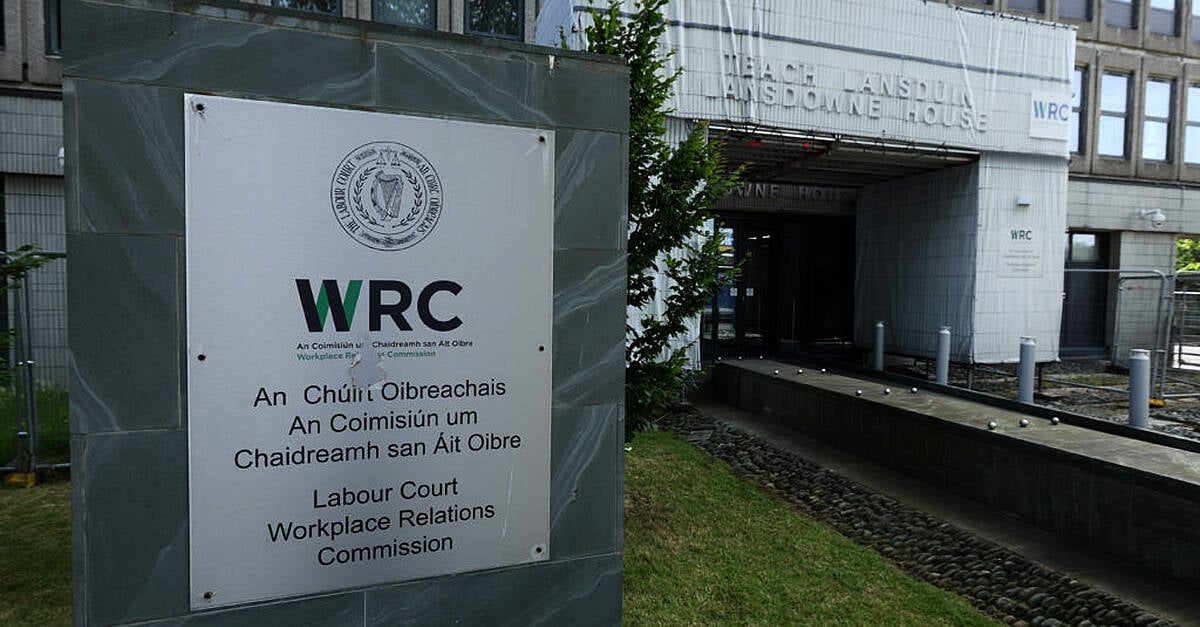
The departure from Twitter of senior Dublin-based manager Gary Rooney in late 2022 was “a paradigm example of direct dismissal in which he played no part,” the Labour Court was told by his legal team on Tuesday.Padraic Lyons SC said the company’s decision to treat his failure to tick in a box in an email, titled Fork In The Road, from Elon Musk, asking employees to sign up to a new “hard-core” version of the company following the billionaire’s takeover wanting to leave was “factually absurd and legally unsustainable”.Mr Musk told employees that the failure to tick the box would be regarded as indicating the employee did not want to remain with the company but Mr Lyons said Mr Rooney had not served any notice of his intention to resign on the company as “notices are not served by silence”. The court was hearing an appeal by Twitter, now X, of an award of €550,131 made at the Workplace Relations Commissions to Mr Rooney for unfair dismissal.READ MORE‘Things went horribly wrong’: How life changed for former TD Colm Keaveney Storm Chandra: ‘Devastation’ in Enniscorthy after flooding as Met Éireann warns ‘we’re not over the worst’Who is Gregory Bovino, the US border patrol’s would-be Napoleon with a viral ‘SS’ coat? If Trump goes after Ireland, he will also destroy a lot of US wealthCathy Smith SC for X, told the court Mr Rooney had not been dismissed but had rather made a decision, the consequences of which were clear.“Everybody accepts the email was unusual but it is not unclear ... there was a choice to be made. The choice was for Mr Rooney to make and the consequences were clear, that the employer would treat his failure to click the box as a resignation.”She told the court the reality was “Mr Rooney simply didn’t want to work for a company that was owned by Mr Musk. He didn’t want to work there but he wanted the money.”The WRC award was made up of Rooney’s remuneration losses of €350,131 from January 2023 to May 2024 and estimated future remuneration losses of €200,000.The remuneration losses included €151,225 in pay and €172,335 in deferred cash considerations, the latter a key element in the case as the company contended these should not be considered part of his pay and so should not be taken into consideration when calculating any award of compensation.Mr Lyons, who was briefed Barry Kenny of Kenny Sullivan Solicitors, pointed to the Mr Rooney’s P60 which did count these sums as part of his gross income and cited High Court case law which, he said, suggested the court should consider all of an employee’s losses in a way that was “just and equitable in all of the circumstances”. He said the deferred cash considerations, arising out of what had been a regulated share unit (RSU) scheme, would have continued to vest for three years after he left the company. He said any move to exclude this element of the award was at odds with the Unfair Dismissals Act.He put Mr Rooney’s losses to date at €731,000 but that as the maximum amount the court could award in this case, was capped at €689,406 he asked that the court should award that full amount.Ms Smith, briefed by Mason Hayes & Curran for X, said it was clear from both regulation and case law that in the event of compensation being awarded, this should be based on remuneration paid for hours worked during a given look-back period, not on any bonus or other payments intended to serve as a retention measure. Ms Smith added that the maximum Mr Rooney should be awarded in the event there is an award should be €316,118.40Earlier, the court had heard from Anna Berry, a London based senior HR executive with the company, that X now has fewer than 100 people working at its Dublin office, down from a peak of about 400 and 270 at the time of the Fork In The road email, 235 of whom had indicated their desire to stay with the company.The court retired to consider its decision.