'It's going to be catastrophic': The inside story of the Challenger disaster
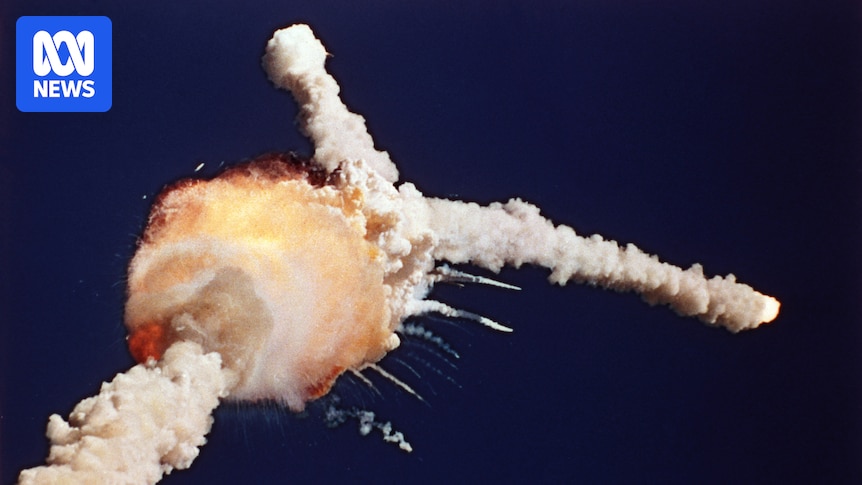
The two solid rocket boosters flew in different directions as the external fuel tank became a fireball.()Forty years ago, the Challenger space shuttle disintegrated just after lift-off, killing its crew and changing the history of spaceflight. A small team of engineers tried to prevent the tragedy — but they were overruled.January 28, 1986 was an unusually crisp winter morning at Cape Canaveral in Florida. When the sun rose at 7:12am, the air temperature was about -5 degrees Celsius. Icicles hung from parts of the launch pad as preparations were made to send the Challenger space shuttle into orbit. After subzero overnight temperatures, the shuttle launch would be NASA's coldest to date.() The launch tower was so icy at dawn that some NASA staff thought the launch would be immediately called off.()Thousands of spectators were gathering along nearby roads and shorelines. This was a special launch: the tenth for the Challenger spacecraft and the 25th of shuttle era — but most important of all, a newly minted celebrity was on board. In an effort to reignite public interest after nearly five years of successful, increasingly routine shuttle flights, NASA had thrown open applications to send a teacher into space. The winner, Christa McAuliffe, was selected from more than 11,000 hopefuls. She was a social studies teacher from New Hampshire with two young children of her own, and a knack for inspiring others. Packed in her bag for the voyage was a T-shirt that said: "I touch the future. I teach." Christa McAuliffe spent the second half of 1985 undertaking intensive training.() Public interest in the mission, especially Christa McAuliffe, was enormous.() The seven Challenger crew was led by Commander Dick Scobee (right).()But within the ranks of technical specialists responsible for making the shuttle fly, all was not well.Four years of behind-the-scenes troubleshooting and simmering doubt was boiling over as anger — and fear.One engineer exclaimed: "They're gonna die!"None of this concern had reached beyond a small group of insiders.By the time Challenger thundered off the ground at 11:38am, the air temperature had risen to just over 2C. After years of declining public interest in space shuttle launches, Challenger was watched by larger crowds than usual.() Spectators of all ages had gathered to watch the "Teacher in Space" mission commence.()The shuttle hoisted itself into a clear sky on its customary pillar of flame, smoke and steam.Spectators — families, colleagues, students — clapped and shouted. On the other side of the continent in Promontory, Utah, engineer Bob Ebeling whispered grimly: "It's not over yet."ComplexityThe engineering flaw that would destroy Challenger that cold winter's day in 1986 can be traced to the beginning of the space shuttle era.Challenger Legacy: The Five LepersFive people tried to stop the Challenger launch. Listen to their story on The Challenger Legacy.NASA's ambition was to build a reusable spacecraft and make flying to space routine. "We couldn't afford to build a billion-dollar rocket and throw it in the ocean every time," says John Tribe, an engineer who worked on the shuttle program for 39 years.Instead, the new design would take off as a rocket and land like an aeroplane.The first operational shuttle, Columbia, flew to space and landed again in April 1981. It was soon joined by three others in regular service: Challenger, Discovery and Atlantis. Shuttles were rolled to the launch pad along the Kennedy Space Centre's 40m-wide "crawlerway".() Columbia, seen here on its fifth launch in 1982, was the first space shuttle sent into orbit.() Astronauts sometimes left the shuttle on a "manned maneuvering unit", affording a unique view of the spacecraft.()The shuttle's design was a triumph — but people close to the program knew it was always sailing close to the wind."It was a test vehicle all the way through its life," Mr Tribe tells ABC Radio National's The Challenger Legacy.Among numerous advances, this was the first space vehicle propelled by solid rocket boosters: two white columns fixed on either side of the shuttle itself, and its giant orange fuel tank.Each booster was filled with 600 tonnes of solid rocket fuel the consistency of rubbery clay. Together, they contributed most the momentum required to leave Earth — before detaching after two minutes and falling into the sea to be reused. From that point the shuttle's own engines took over, fed by the fuel tank, which was itself thrown away once the craft made it to space. And after its well-trained crew had unloaded a satellite, fixed a telescope, or helped to build a space station, the shuttle could glide back down to Earth and land on a runway.Rinse off, repair, refuel … and repeat. Shuttle astronauts did work such as releasing or repairing communications satellites. () After up to two weeks in space, the shuttles would coast down through the atmosphere and land on a runway.()On top of the gargantuan technical challenge of completing this cycle, there was the time pressure. NASA wanted multiple launches every year, with a lofty aspiration of fortnightly flights by the 1990s.Anxiety The solid rocket boosters were made by Morton Thiokol, a NASA contractor based in Utah.They were so large — 15 storeys tall and nearly 4 metres across — that they were built in sections.Brian Russell was in his late 20s when he was assigned to a team of engineers joining the sections together."They [the others] were all old enough to be my father," he says, now 71."We were very proud to be part of the NASA program."But there were already concerns before he arrived. The space shuttle's reusable solid rocket boosters were the largest ever built.()] NASA had its own trains for hauling the solid rocket booster segments (round containers) from Utah to Florida.() The booster segments were unloaded in the assembly building at Kennedy Space Centre. ()The team was particularly focused on the O-rings inside each joint: very thin, 12-metre-long ropes of synthetic rubber that helped create a tight seal between the sections of the solid rocket boosters.That closure was crucial because the solid fuel inside the combustion chamber, once lit, would become fiery gas — burning at over 3,000C — intended to shoot out of the nozzle at the bottom of the booster and create enormous thrust.But if the seal leaked and the scorching gases reached the steel casing on the outside of the rocket, it would quickly start to fall apart."The consequence we knew would be disastrous," Mr Russell says. Each O-ring was just 7 millimetres thick but stretched 12 metres around the rocket booster's circumference.() Once assembled, each booster weighed 590 tonnes, including 500t of solid propellant.() NASA's "Vehicle Assembly Building" at Cape Canaveral is the tallest single-storey building in the world.()On the second shuttle flight in 1981, the Morton Thiokol engineers spotted damage to the O-rings and reported it to NASA.In the intervening years, they investigated the problem and monitored it closely. But the shuttles kept launching — and landing. "No-one wanted to shut down the national space program," Mr Russell recalls. "There were times we felt we ought to, but in reality all of us, including myself, accepted those results and the analysis as having a safety factor sufficient to keep flying."There were five engineers who were most concerned about the O-rings and tried to raise the alarm. Mr Russell is the only member of that group still alive today.EscalationIn January 1985 — one year before the Challenger mission of 1986 — the Morton Thiokol team's worries deepened.The Discovery space shuttle launch was successful, but when its solid rocket boosters were fished out of the Atlantic, the partial leaking of the O-rings was worse than before."That was most alarming," Mr Russell remembers.It had been a chilly day. The coldest shuttle launch to date, in fact, at just under 12C. Discovery launched during what was dubbed Florida's "freeze of the century" in January 1985.()The engineers feared the cold had made the rubber O-rings less rubbery; less able to do their job of sealing the joints tightly as the rocket flexed during launch.Morton Thiokol formed a taskforce to study the problem. Meanwhile the launches kept rolling: eight more that year, all in comfortably warmer weather.But the next winter, on January 27 1986, Challenger was finally poised to launch for its "Teacher in Space" mission — and the overnight forecast was another 10 degrees colder than the previous January launch.Late in the morning the Morton Thiokol engineers gathered in the office of Bob Ebeling, Mr Russell's boss."[We talked about] whether we were all as concerned as Bob and I initially were," Mr Russell remembers. "And it was, 100 per cent, yes." Brian Russell was just short of his 31st birthday on the day of the Challenger disaster.() Leslie Ebeling (left) loved working at the same company as her father Bob (centre). Her sister is shown on the right.()As Mr Russell left Bob Ebeling's office that morning to start collecting charts and data, determined to call off the launch, there were roughly 24 hours left before lift-off.Stand-offMr Ebeling's daughter Leslie also worked at Morton Thiokol, in the communications department. She remembers the sense of urgency as her dad got on the phone. "He called his boss, who was already down in Florida and he said, 'We can't launch. It's going to be a catastrophic event.'"Eventually a plan was made for an evening teleconference, where the Morton Thiokol engineers and managers could present their argument to NASA. It didn't go well.There had already been multiple delays to the launch and NASA managers didn't want it to slip further. NASA's project manager for the solid rocket boosters, Larry Mulloy, had his own interpretation of the engineers' data and argued that temperature was not such a critical factor. He also responded sharply when they recommended waiting for a launch temperature of 12C: "My God, Thiokol. When do you want me to launch? Next April?"Under pressure, the Morton Thiokol representatives left the call to confer for five minutes, which stretched to 35.In the end, the company's managers overruled their engineers and reversed their position. The last manager to concede was head of engineering Robert Lund. "Bob hummed and hawed," Mr Russell remembers. "He was in a real tough position. He had three of the leaders of the company saying that it's OK to launch. And he had his engineers who said no, it's not. "As he was hesitating to answer, that's when [general manager] Jerry Mason said to him, 'Bob, it's time to take off your engineering hat and put on your management hat.'"Shortly after 11pm Florida time, Challenger got the go-ahead for launch.FireballBob and Leslie Ebeling used to carpool to work in Utah with three other staffers. On the morning of the Challenger launch, Bob's distress was obvious."He was swerving in and out of people and was so angry," Leslie says."He was beating his hand on the steering wheel and saying … 'They're gonna die!'"As Bob and Leslie parked the car and walked in, she remembers her father saying: "This is going to be a horrible way to end my career."They joined a few of Bob's fellow engineers and senior managers in a private conference room to watch the launch."It was very, very quiet … I will never forget it, it was so eerie," says Leslie who was sitting in front of her dad.There was some short-lived jubilation when the shuttle got off the ground, she recalls. That was when Bob bent down and whispered in her ear, "It's not over yet." After surging past the launch tower, Challenger tilted to one side and twisted around so that the shuttle itself sat almost upside down: its most efficient route to orbit."Good roll program confirmed," came the call from NASA's flight commentator.Then, 73 seconds after lift-off, something changed. Many spectators on the ground were confused about what they were witnessing.()From the ground, observers squinting up at the lengthening exhaust plume saw a puff of extra smoke and a flash of flame.Aware that the rocket boosters needed to detach at some stage, many initially thought it was part of the plan; some cheered. For anyone watching on a TV screen……like NASA staff at Mission Control… …or students in classrooms, watching the first teacher head for space… …or the roomful of engineers in Utah… the horror arrived much faster."When I saw it explode, I couldn't believe it," Brian Russell says. "I don't know why. I just couldn't believe that it happened."Forty years later, his voice still cracks remembering the scene. He saw Roger Boisjoly, another of the five engineers who had sounded the alarm, leave the room. "I went down to his office and we were both in tears. We just knew that it was our [booster] and that the joint had failed." The space shuttle disintegrated 73 seconds after lift-off.() As reality sank in, spectators reacted in horror — they had witnessed NASA's first ever loss of life in-flight.() To begin with, staff at NASA mission control only knew that they had lost contact with the shuttle.()Bob Ebeling, sitting behind his daughter Leslie, sat with his head in his hands. "He just started crying," Ms Ebeling says. "He sobbed and sobbed. Nobody was talking."He went right back to his desk and started redesigning the O-rings."ReckoningFor the American public and people around the world, the events of January 28 1986 etched themselves into collective memory. A memorial for the seven dead crew members was held three days later, on January 31. "Across America we are reaching out, holding hands, and finding comfort in one another," then-president Ronald Reagan said to the crowd. Families of the Challenger crew sat beside President Reagan and the first lady for a memorial service at Johnson Space Center in Houston.() The memorial in Houston (shown here) was broadcast live and other services were held across the US, including in Christa McAuliffe's home town of Concord, New Hampshire.()Three days after that, Mr Reagan announced a presidential commission into the cause of the disaster. Released in June 1986, its report confirmed the O-rings on one of the shuttle's solid-rocket boosters had failed, causing Challenger to disintegrate at 46,000 feet.But the commission also heard from all five of the engineers who had spoken up and tried to call off the launch: Brian Russell, Bob Ebeling, Roger Boisjoly, Al McDonald and Arnie Thompson.It was their testimony that revealed the history of the problem and the calamitous teleconference on the eve of the launch. The commissioners included Neil Armstrong, the first human to step on the Moon; Sally Ride, the first American woman in space; and Nobel-winning physicist Richard Feynman. () Brian Russell says giving evidence to the Rogers Commission was "heart wrenching".() Debris from Challenger was collected from the ocean and assembled for the investigation.() The commissioners inspected a shuttle up close, including its solid rocket boosters.()As a result, the report recommended a complete overhaul of NASA's management.The solid rocket boosters were redesigned. Shuttle flights stopped for two-and-a-half years.After they recommenced in 1988, 87 missions went without a major hitch.Then in 2003, returning to Earth after 16 days in space, the space shuttle Columbia fell to pieces in the sky above Texas. Seven more astronauts never came home. Debris from Columbia could be seen streaking through the sky.()The technical cause, a damaged heat shield caused by debris during take-off, was different. But again, insider accounts revealed this sort of damage was a known issue. Warning signs had been ignored.Jon Clark worked at NASA for many years. His wife, Laurel, was one of the astronauts who died on board Columbia."When you dig deep enough, there's no question that the organisational culture was implicated in both Columbia and Challenger mishaps," Dr Clark says.LegacyNow in 2026, as soon as next month, NASA is preparing to send astronauts around the moon for the first time since the Apollo era. They will be pushed off the planet by familiar solid rocket boosters, still made in Utah, including casings that were flown on shuttle missions.Meanwhile the agency has been staring down significant budget cuts from the Trump administration. It's a pertinent time to remember that spaceflight is never exactly safe. The Challenger crew were NASA's first seven lives lost in flight: (back row) Ellison Onizuka, Christa McAuliffe, Gregory Jarvis, Judith Resnik; (front row) Michael Smith, Dick Scobee and Ron McNair.()In the weeks after Challenger, the five engineers found themselves sidelined within Morton Thiokol. Brian Russell says it was Bob Ebeling who coined their new nickname: the five lepers. "He was quite outspoken," Mr Russell says."I loved him. He was one of my favourite bosses."Some of the five left the company; all were haunted by the disaster."The four months after the incident, in my mind's eye, right in my forehead, I could not get the image out of my mind of that exploding vehicle," Mr Russell says. "I was depressed; I was angry. I was a lousy husband and a father … and I wondered if I was ever going to come out of it."The fog eventually cleared and he carried a new resolve into the remainder of his career. "I said, 'I'm never going to be in that position again.' "I am never going to be afraid to speak up when I believe that that a different view needs to be expressed." Bob Ebeling retired soon after the disaster — pictured here marking the occasion with Al McDonald.() Brian Russell continued working on the solid rocket boosters for three more decades.()Leslie Ebeling says her dad never quite returned to his former self. "He felt personally responsible."Shortly before his death in 2016, Mr Ebeling was interviewed on the 30th anniversary of the disaster by US National Public Radio about the guilt he had carried for those three decades. Hundreds of listeners wrote to express sympathy and to thank him for doing the right thing.At long last, Leslie says, her father was able to find some degree of closure."He was able to forgive himself because he felt like the world forgave him."Three weeks later, he was gone."Credits:Written and produced by Jonathan WebbReported by Fiona PepperAdditional reporting by James BullenEdited by James Purtill and Genelle WeuleHear more about the space shuttle era on Science Friction: The Challenger Legacy from ABC Radio National.