Surrogate mother lifts lid on 'loneliness' of surrogacy - as the practice faces renewed controversy
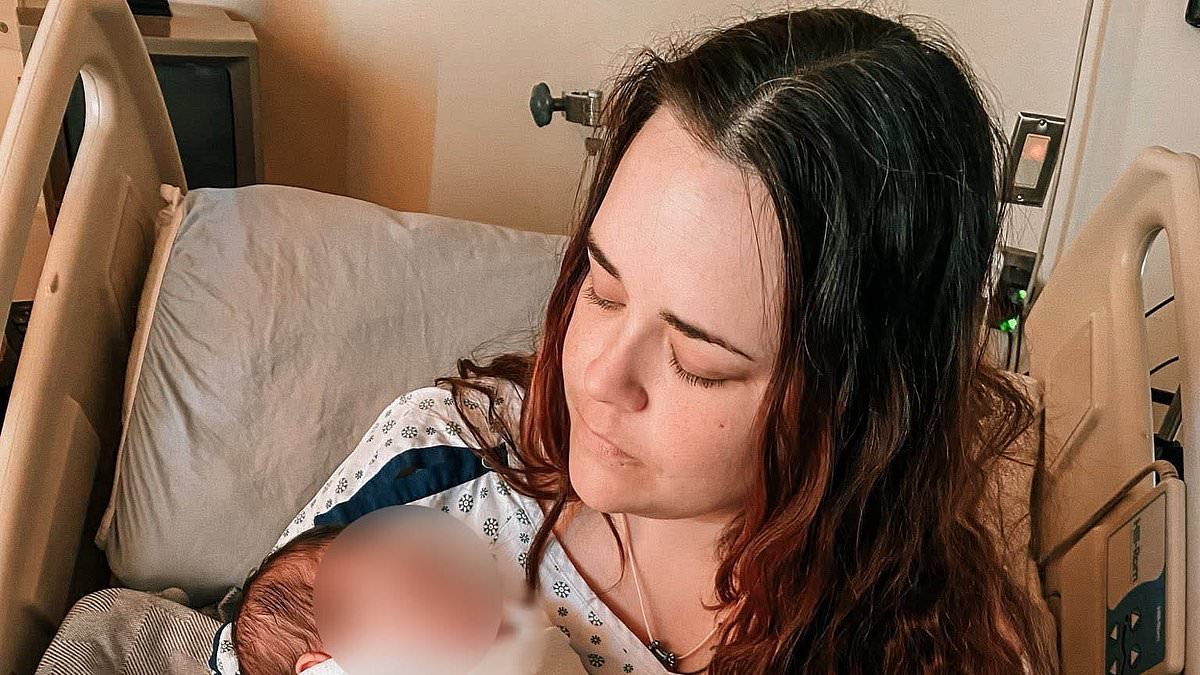
A single mother-of-five who carried babies for two gay couples has opened up about the emotional toll of surrogacy – admitting she often felt 'invisible and lonely'.Dawn Wickhorst, 33, first decided to become a surrogate in 2019 after discovering how many couples struggle to conceive naturally, but warned the process can be challenging.The photographer, who also fosters, went on to carry babies for two different couples – but said doing it alone left her feeling incredibly isolated.Dawn, from Alberta, Canada, said: 'As a surrogate, you're such an important part of the process, as you're the vessel that brings this child into the world.'But you're also not part of the family.'Whilst the couple is getting excited and preparing to expand their family, you're on your own.'I was trying to manage all of my kids on my own whilst being pregnant, feeling sick and managing all these changes in my body.'Because you're a surrogate, there's this unspoken expectation to just 'handle it' quietly, because it's something you chose to do, and I think it can make pregnancy symptoms feel heavier when you're dealing with them mostly on your own. Dawn,33, first decided to become a surrogate in 2019, after discovering how many couples struggle to conceive naturally but warned that the process was challenging She said she struggled with feeling invisible and lonely during the process 'The hardest part was actually the loneliness; there were moments where I felt completely invisible.'I remember sitting in waiting rooms alone, managing big feelings quietly, or going home afterward to regular responsibilities as a single mum, with no pause to process what I was carrying, literally and emotionally.' Dawn's story casts a stark light on the growing number of high-profile celebrities who have turned to surrogacy in recent years – often out of the public eye – with little attention paid to the emotional toll on the women carrying their children.Most recently, US pop star Meghan Trainor revealed she and her husband, actor Daryl Sabara, welcomed their third child via surrogate, after she was advised not to carry another pregnancy herself for medical reasons, yet faced criticism for doing so.Other celebrities who have used surrogates include Kim Kardashian, who welcomed her third and fourth children this way after suffering life-threatening pregnancy complications, as well as Paris Hilton, Priyanka Chopra and Nick Jonas, and Rebel Wilson.While celebrity parents have spoken openly about the joy of welcoming their children, far less is heard from the surrogates themselves – a contrast Dawn says can leave women feeling overlooked during a physically and emotionally demanding process.She said that while the recipient couples were preparing to welcome the babies she was carrying, she struggled to juggle caring for her own children while battling pregnancy symptoms including intense nausea and back pain.Dawn warned other would-be surrogates to make sure they have a close-knit support network to avoid feeling isolated. Meghan Trainor revealed she and her husband, actor Daryl Sabara, welcomed their third child via surrogate, after she was advised not to carry another pregnancy herself for medical reasons Paris Hilton also used a surrogate for her pregnancy'I would advise would-be surrogates to make sure you build up your support network, and remember that feeling lonely doesn't mean you regret the journey,' she said.Dawn decided to become a surrogate after interviewing an author for a magazine about infertility.Since she didn't want any more children of her own and was only 27, she decided to help couples unable to conceive naturally.'I decided to become a surrogate after my eyes were opened to how many people struggle to conceive,' she said.'I didn't realise how lucky I was because I have five children of my own and all of my pregnancies went really well.'I just felt like my body could do good for somebody.'A lot of people say they could never be a surrogate because they could never give up the baby, but you go into the process fully aware that you aren't coming out with a baby.' Dawn decided to become a surrogate after interviewing an author for a magazine about infertility.After signing up to an agency, Dawn was given a list of intended parents to look through and said she chose a gay male couple to carry for.'They had a big red label on their profile that said HIV positive, and when I looked at what they'd written about their values and how they fell in love, I couldn't imagine them not being able to have a baby just because of that red label,' she said.After getting to know the couple for a while, they decided to become an official match and Dawn began preparing for the embryo transfer in March 2020.However, due to the pandemic, she was unable to do the actual transfer until August.'Being pregnant with a child that wasn't mine was definitely interesting,' she said.'The doctor implanted the embryo so fast and then looked at me and said 'congratulations, you're pregnant'.'It felt natural because I had been pregnant so many times before, but it was strange knowing that I wasn't going to have a baby at the end of it.'It is illegal to pay surrogates in Canada, so Dawn completed the process altruistically without financial gain. Dawn warned other would-be surrogates to make sure they have a close-knit support network to avoid feeling isolated.She said she found the experience incredibly rewarding – and didn't struggle with giving the baby up after giving birth.Dawn revealed that although many people think handing the baby back would be the hardest part, she didn't feel that way at all.'The moment when I got to hand the baby to his parents was actually the highlight of the whole experience,' she said.'It was so emotional and beautiful to watch.'However, she admitted she still grieved the journey coming to an end.'My whole life revolved around having a baby for this couple, and then all of a sudden it was over,' she said.Dawn added that being a single mother meant she didn't have a partner to help her through the most difficult parts of pregnancy – and since the intended parents didn't live near her, they weren't able to support her in person either.Despite the emotional strain, Dawn, who is currently writing a memoir about her experiences and shares her story on social media at @onceupona_daw, said she doesn't regret becoming a surrogate because it gave her a sense of purpose – and decided to do it for a second time in 2024.But while she would love to help another couple, she admitted that after seven pregnancies, she thinks her body is 'done'.'I think it would be amazing if there were more services out there for surrogates, such as support groups, so that it doesn't feel so lonely,' she said.