Carney Liberals return to House of Commons still short of a majority
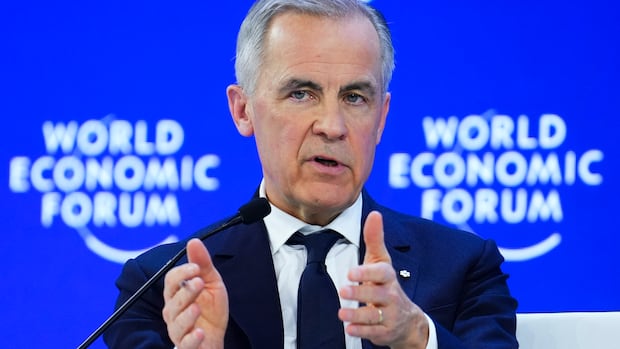
Depending on who you ask, the Carney Liberals could be on the cusp of securing a majority — or triggering a general election.Senior Liberal sources say the upcoming sitting of the House of Commons has no clear outcome, as they try to advance their legislative agenda in a minority Parliament with no obvious support from the Conservatives, Bloc Québécois or NDP.Despite diplomatic efforts, the Carney Liberals have so far been unable to woo any additional floor-crossers over the break and are now returning to the House of Commons two seats shy of a majority following the resignation of Chrystia Freeland.Nor was there a much-rumoured shake-up of Carney's front bench over the break, leaving Quebec MPs Joël Lightbound and Steven MacKinnon holding additional portfolios conferred to them after the cabinet departures of Freeland and Quebec MP Steven Guilbeault.And at least one more Liberal MP, Bill Blair, is expected to step down for a diplomatic appointment. Twelve senior Conservative and Liberal sources shared their views on what is set to happen in the upcoming parliamentary sitting. CBC News is not naming the sources because they are not authorized to discuss internal party strategy.All eyes on Poilievre's leadership reviewThough MPs will be back in Ottawa as of next week, expect all eyes to be in Calgary the following weekend.Conservative Leader Pierre Poilievre's leadership review is set to be held during the party's convention — and three Liberal sources say they believe the results could matter.During the last sitting, Poilievre's caucus lost three MPs. Nova Scotia MP Chris d'Entremont and Ontario MP Michael Ma crossed the floor to the Liberals. A third MP who sources say was considering joining the Liberals, Matt Jeneroux, announced he would be vacating his seat altogether.Carney raises the hand of Michael Ma, who crossed the floor from the Conservatives last month. (Justin Tang/The Canadian Press)Jeneroux is still a member of Parliament for Edmonton Riverbend, but has abstained in voting since announcing he would be resigning. He hasn't announced an exact departure date, saying it is "likely this spring."For a time, Liberal sources say they were in discussions with other MPs from multiple parties — including Conservative MPs. The depth of those discussions ranged, and so did the people involved in the courting. But the sources say, as of last week, those talks have stalled.NDP MP Lori Idlout and B.C. Conservative MP Scott Anderson have both said they were approached by the Liberals.However, some Liberals are hopeful that if Poilievre achieves a high level of support at the Conservative convention, that could push some MPs unhappy with his leadership to make the leap. They say if Poilievre is perceived as being locked in as leader for the next election, that might push MPs who have been hesitant to cross the floor. But Conservative House leader Andrew Scheer told CBC's Power and Politics that the party and its caucus stand with Poilievre.WATCH | Scheer questions Carney's 'track record':Power & Politics talks to Conservative Party House leader Andrew Scheer as the House of Commons is set to reconvene next week. He weighs in on Pierre Poilievre’s upcoming leadership review and the Conservatives' own pitch to boost Canada’s sovereignty. "Our caucus is united. We're focused," he told guest host J.P. Tasker on Friday. "People are struggling to provide the basic necessities of life. Pierre is their champion, and members see that in him."The Liberals would need more than just one other floor-crosser to have true control of Parliament. They need the majority of votes — not just the majority of seats — in order to pass a change to the standing orders to reshape the committees that are currently under Opposition control.The Liberal Speaker, Francis Scarpaleggia, would be expected to vote to break a tie in favour of the status quo — meaning the Liberals need a majority plus one vote to make it happen. Legislation, including the government's anti-hate bill, C-9, has not been able to pass through the committee stage because the Liberals don't have control of committees.In December, government House leader Steven MacKinnon accused the opposition parties, particularly the Conservatives, of holding up legislation."Their partisan strategy is simple: obstruct, obstruct, obstruct," he said.But the Conservatives blame the Liberals for trying to push C-9 through committee, despite concerns from some religious leaders that it could criminalize some religious practices. Poilievre's proposalsIn a letter to the prime minister shared with CBC News, Poilievre proposed working with the government to fast-track some bills and help diversify Canadian trade while also trying to preserve Canadian jobs that rely on trade with the U.S.The letter, which calls on Carney to turn "rhetoric into reality," calls on the prime minister to move faster on issues of affordability, defence and sovereignty."You have been in power for almost a year. You have passed only two bills and you have convened Parliament for the fewest sitting days since 1937," he wrote.He said the Conservatives will fast-track the Liberal bail-reform Bill C-14 — if the justice committee agrees to pause debate on C-9. So far, Liberals on the committee have refused to do that. WATCH | Can Carney deliver on his Davos speech?:At Issue this week: Prime Minister Mark Carney outlines a new era of global politics in an address to the World Economic Forum, but can he deliver on his vision? And Ontario Premier Doug Ford fires back at the Canada-China EV deal. Poilievre's letter says if the Liberals agree, Bill C-14 could pass all stages of the House of Commons by Wednesday.He also said they would support whatever legislative changes are needed in order to approve a pipeline or other major projects. The Conservatives will be using their Opposition day on Tuesday to debate their proposed "Sovereignty Act." It includes proposals to end capital gains tax on reinvestment in Canada and repeal laws the party views as anti-pipeline.Poilievre said Conservatives would work with the government to draft legislation, or would welcome the government to adopt the Sovereignty Act as government legislation.And he said Conservative MPs are ready to pass bills enacting trade deals negotiated before Carney took office, and to travel to the United States or other markets to encourage the expansion of exports. Budget vote reduxIf the Liberals don't take Poilievre up on his offer to fast-track the bail-reform bill, this sitting would include much debate over three crime bills. Two — C-9 and C-14 — are at the committee stage. A third, which seeks to protect children and victims of gender-based violence, is set to be debated in the House on Monday. Another Liberal priority will be passing the budget implementation act (BIA), which puts aspects of last fall's budget into law. That bill is now at committee stage, and is set to be a confidence vote when it returns to the House — meaning if it doesn't get some opposition support, it could trigger an election. It could be a repeat of last November's budget vote, which narrowly passed.Four Liberal sources say the party isn't keen to go to an election. The sources, including two who attended this week's cabinet retreat in Quebec City, say the prime minister is singularly focused on what he sees as a war-like moment relating to the changing world order and the need to diversify Canada's trading partners. Most of that work happens outside of the House of Commons.Unlike the Conservatives, the Liberals have not yet appointed a national campaign manager. But the Liberal sources concede, at this point, it's unclear how the BIA will pass, setting the stage for another dramatic budget vote, and a potential spring election. A senior Conservative source says they support aspects of the budget bill, but not the measure that would give cabinet ministers the power to exempt any company from non-criminal federal laws.The source said they believe talk of an election is Liberal spin, intended to pressure potential floor-crossers to join the Liberals to avoid going to the polls.