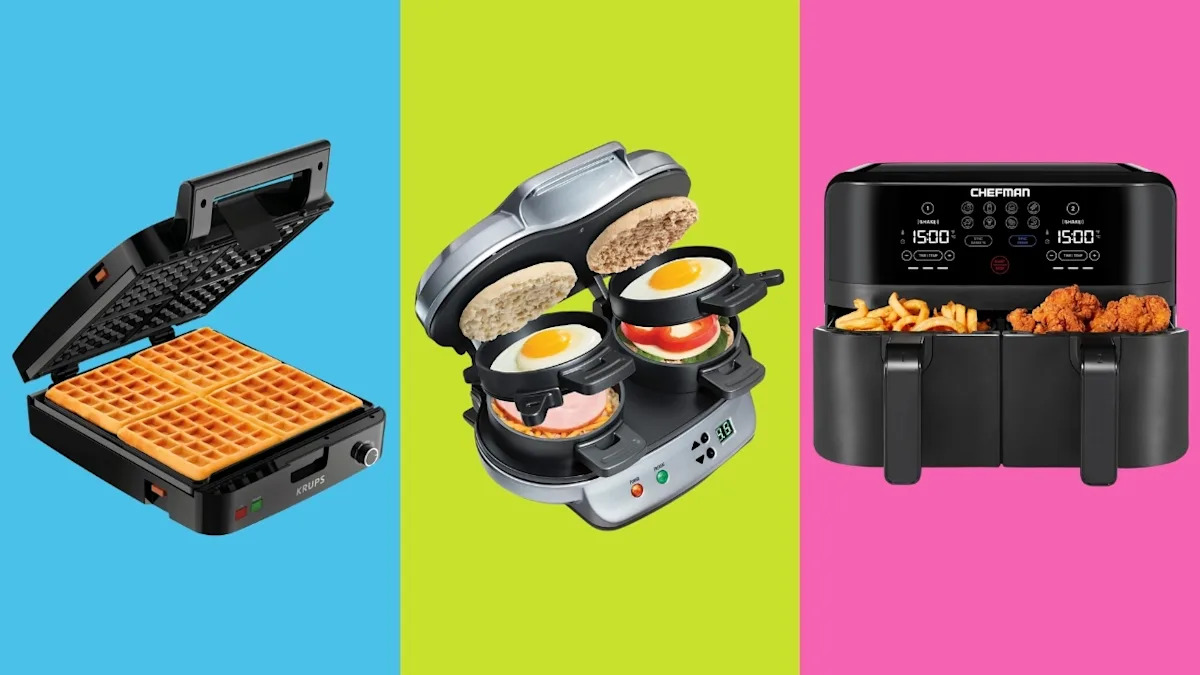
Goodbye Air Fryer : This New Kitchen Gadget Goes Far Beyond Frying, Offering 9 Different Cooking Methods in One Appliance
The air fryer is still buzzing on the countertop when Léa opens another cupboard, hoping to find space. Inside: the grill she bought during a clearance sale, the slow cooker she once believed would save her evenings, and the rice cooker that now doubles as a cat step.
Her kitchen feels less like a workspace and more like an appliance archive, complete with blinking LEDs and tangled power cords.
Top 10 Yoga Workouts to Quickly Tone Your Legs and ThighsShe lifts a heavy box marked “multi-cooker” and sighs.“Perfect,” she says. “Another machine that excels at exactly one thing.”
That frustration is surprisingly common. Most of us want food that’s fast, healthier, and satisfying—but instead, we end up surrounded by devices that each solve only a tiny part of the problem.
Then comes a new kind of appliance.And it doesn’t just air fry.
Enjoying Your Own Company More Than Being with Others Might Reveal Inner Qualities That Challenge What Society Calls NormalIt replaces almost everything.
From Air Fryer Hype to True All-in-One Cooking
Open any social media feed and you’ll see it: air fryers proudly displayed like prized pets. Crispy potatoes, frozen snacks, sometimes salmon cooked a little too long.
The trend is undeniable. Yet many households use their air fryer for the same two or three meals, while the rest of the kitchen still works overtime.
Psychology Says People Who Have a Strong Personality Often Use These 8 Phrases in ConversationBehind the hype, a more practical question is emerging:Instead of owning multiple machines, why not rely on one appliance that genuinely cooks?
One that can bake, grill, steam, roast, reheat, dehydrate, slow cook—and still deliver that crisp, “fried” texture people love.
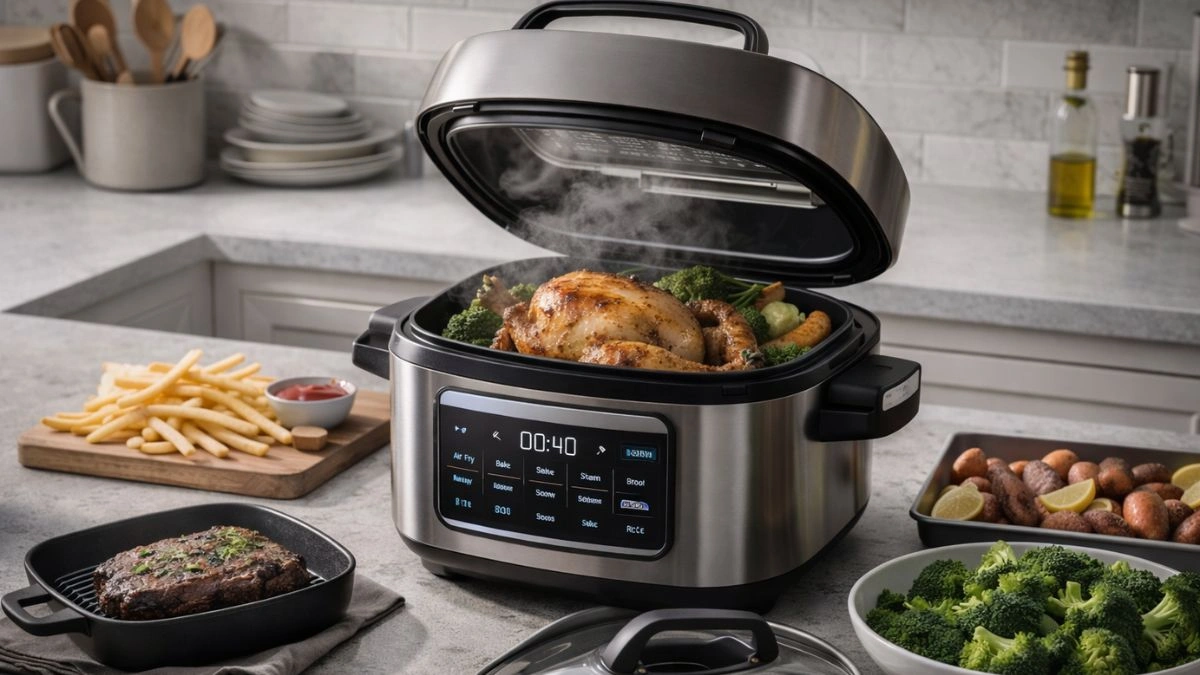
That’s exactly what the new generation of 9-in-1 multi-cookers promises.
Real-Life Impact: Cooking Smarter, Not Harder
Emma, 34, lives in a 40 m² apartment with a kitchenette so compact she can touch both walls at once. Her setup included an uneven oven, a worn toaster, an air fryer, and a mini panini press reserved for rough mornings.
When a friend recommended a 9-mode multi-cooker, she assumed it would be “just another gadget.”
Three months later, her oven is rarely used. She makes lasagna on Tuesdays, yogurt on Thursdays, grilled vegetables on Sundays, and reheats leftovers—all in the same bowl.
Her electricity bill dropped. Batch cooking now takes two hours instead of half a day. And she eats fewer ready-made meals—not because she became a better cook, but because one appliance finally does most of the work.
Why the Classic Air Fryer Now Feels Limited
The air fryer solved a real problem: quick, crispy food with less oil. But its design remains restrictive—a small basket, one dominant cooking method, and a tendency to dry out anything that isn’t frozen or breaded.
Modern multi-cookers go much further by combining air frying with eight additional cooking functions inside one chamber:
Convection baking
Grilling
Steaming
Sautéing
Slow cooking
Roasting
Reheating
Dehydrating
All controlled through precise temperature settings, airflow management, and sometimes adjustable moisture.
The shift is subtle but powerful:From “I reheat fries” to “I plan my entire weekday menu in one appliance.”
How a 9-in-1 Multi-Cooker Works in Daily Life
There’s no mystery involved. These appliances rely on a flexible heating system that blends top heating elements, circulating hot air, and—in some models—steam or humidity control. You select a mode, set time and temperature, and the machine adjusts airflow and heat to mimic other appliances.
Air frying uses high fan speed and dry heat.
Slow cooking relies on low temperatures and gentle circulation to retain moisture.
Baking distributes steady heat evenly so cakes rise instead of collapsing.
A Typical Weeknight Scenario
You arrive home tired. The fridge is half full. Instead of juggling the oven, stove, and microwave, you add frozen salmon and vegetables to the main bowl, choose steam + roast, and walk away.
On a second rack, diced potatoes with a spoon of oil go in for the final ten minutes on air fry mode.
The result: moist fish, tender vegetables, crispy potatoes—nearly ready at the same time. One container to clean. No preheating the oven for twenty minutes. No burnt pans.
Presets guide you through the process, eliminating the guesswork that makes traditional ovens intimidating.
Space and Energy: Two Practical Advantages
Countertop space is already crowded in most homes—kettles, coffee machines, toasters, and air fryers included. While multi-cookers are larger, they replace several single-purpose devices at once.
One appliance doing nine jobs is easier to justify than five appliances doing one job each.
Energy efficiency also matters. A compact, insulated cooking chamber heats faster and often uses less power than a full-size oven running for an hour. It’s not magic—but for everyday meals, it’s frequently faster, more efficient, and less wasteful.
Using a 9-Mode Cooker Without the Frustration
To get real value from a 9-in-1 appliance, start simple. Choose just two or three modes—for example, air fry, bake, and steam—and rely on them for a week.
Use familiar recipes first:
Roast chicken → roast mode
Frozen vegetables → steam, then air fry for texture
Leftover pizza → reheat with low fan speed
Only once these basics feel comfortable should you experiment with advanced options like overnight slow-cook oats or homemade yogurt.
A common mistake is treating the device like a fully autonomous robot. It isn’t. It’s powerful—and sometimes too powerful.
Two habits help avoid disappointment:
Reduce traditional oven cooking times by 20–30%.
Check food halfway through during the first few uses.
Once users adapt, many find this appliance becomes their default cooking method, with the oven reserved for holidays or large gatherings.
What Each Mode Is Best For
Air Fry: Frozen foods, homemade fries, tofu, chicken wings
Bake: Cakes, muffins, gratins, lasagna, small bread loaves
Steam: Fish, dumplings, vegetables that stay vibrant
Slow Cook: Stews, lentils, pulled meats
Grill/Roast: Whole chicken, vegetables, kebabs
Reheat: Leftovers without rubbery textures
Dehydrate: Fruit chips, herbs, granola
Sauté: Onions, quick stir-fries (model-dependent)
Keep Warm: Holds food at serving temperature
Key PointDetailValue for the Reader9 cooking modes in oneAir fry, bake, steam, slow cook, roast, grill, reheat, dehydrate, keep warm/sautéReplaces multiple appliances and simplifies daily cookingSpace and energy efficiencyCompact size, quick preheating, smaller chamber than a full ovenLower energy bills and a less cluttered kitchenEveryday versatilityFrom frozen snacks to full meals, yogurt to healthy snacksFits different lifestyles and skill levels
A Quiet Shift in How We Cook at Home
A subtle change is happening in kitchens everywhere. We’re moving away from the “one appliance, one function” mindset toward one appliance that supports an entire cooking routine.
The air fryer opened the door by proving compact cooking could change habits. The 9-in-1 multi-cooker walks through that door with far greater ambition.
For some, it means cooking more at home without sacrificing evenings. For others, it means reclaiming countertop space and mental energy. It helps students in small studios, families cutting back on ultra-processed foods, and older adults who struggle with traditional ovens.
The real question is no longer, “Do I need an air fryer?”It’s, “Which single appliance truly deserves a permanent place on my counter?”
For a growing number of households, the answer is clear: a compact box that finally cooks the way modern life actually works.
FAQs
Is a 9-in-1 multi-cooker better than an air fryer?
For many users, yes. It offers air frying plus multiple other cooking methods in one appliance.
Does a multi-cooker replace a traditional oven completely?
For everyday meals and small to medium portions, often yes. Large baking days may still require an oven.
Are multi-cookers energy efficient?
They usually consume less energy than a full-size oven for daily cooking due to faster heating and smaller chambers.