10 Kitchen Organization Habits To Steal From Pro Chefs For Stress-Free Cooking
Here's some food for thought: What did your last cooking session look like? Were you able to hop smoothly between tasks, find all the essential ingredients you needed, and minimize clean-up later? Or did you spend the majority of your time weeding your way through unnecessary clutter and general chaos? If you answered yes to the latter, the disorder might be bleeding the joy from what should be a creatively fulfilling ritual.
This is where developing the right kitchen organization habits can help. When you have everything in its place and a place for everything, you'll be able to focus on developing new flavors and exploring new techniques — rather than locating a missing ladle. The fallout of routinely making kitchen organization mistakes, meanwhile, results in more than just physical inconvenience: These creativity busters can also silently erode your mental peace.
The good news is that you don't have to overhaul your kitchen habits on your own. Why not take notes from the chefs who work in professional kitchens? Sufyan Marikkar, executive chef at the JA Hatta Fort Hotel, and Pasquale Rufino, executive chef at Novecento Dubai, are happy to help. Every single aspect of their everyday workflow is optimized to negate mid-cooking chaos, minimize micro-decisions, and reduce cognitive overload. Here, they share their best tips and tricks and how to bring them to life in busy households.
Set the mise en place before you start
Know that feeling when the pot is boiling over on the stove while you are desperately rummaging in the pantry for the right ingredients? It's a less common experience for chefs because of their attention to mise en place. A common practice in French kitchens, this phrase literally translates into "putting everything in place." For chef Pasquale Rufino, mise en place is a mindset rather than just prep work. "This allows me to cook with confidence and precision, without rushing or searching," he says.
Chef Sufyan Marikkar's preferred method for setting up mise en place starts by mentally visualizing what the final plate would look like and then reverse-engineering his workspace accordingly. This means that sauces, garnishes, proteins, and vegetables are arranged in the precise order that they'll be used. When all the core ingredients are pre-portioned and laid out at arm's reach on an uncluttered surface, he finds that he can devote his energies to techniques and flavors.
If you are looking to recreate the same restaurant-like efficiency at home, it helps to start by perusing your chosen recipe thoroughly. Ingredients can then be washed, portioned, chopped, and grouped together according to order they will be used. Smaller quantities can be laid out in individual bowls or ramekins for ease of access. "It removes stress, prevents mistakes, and lets you enjoy the cooking process rather than react to it," Rufino says.
Adopt a zone-based approach to minimize overlap
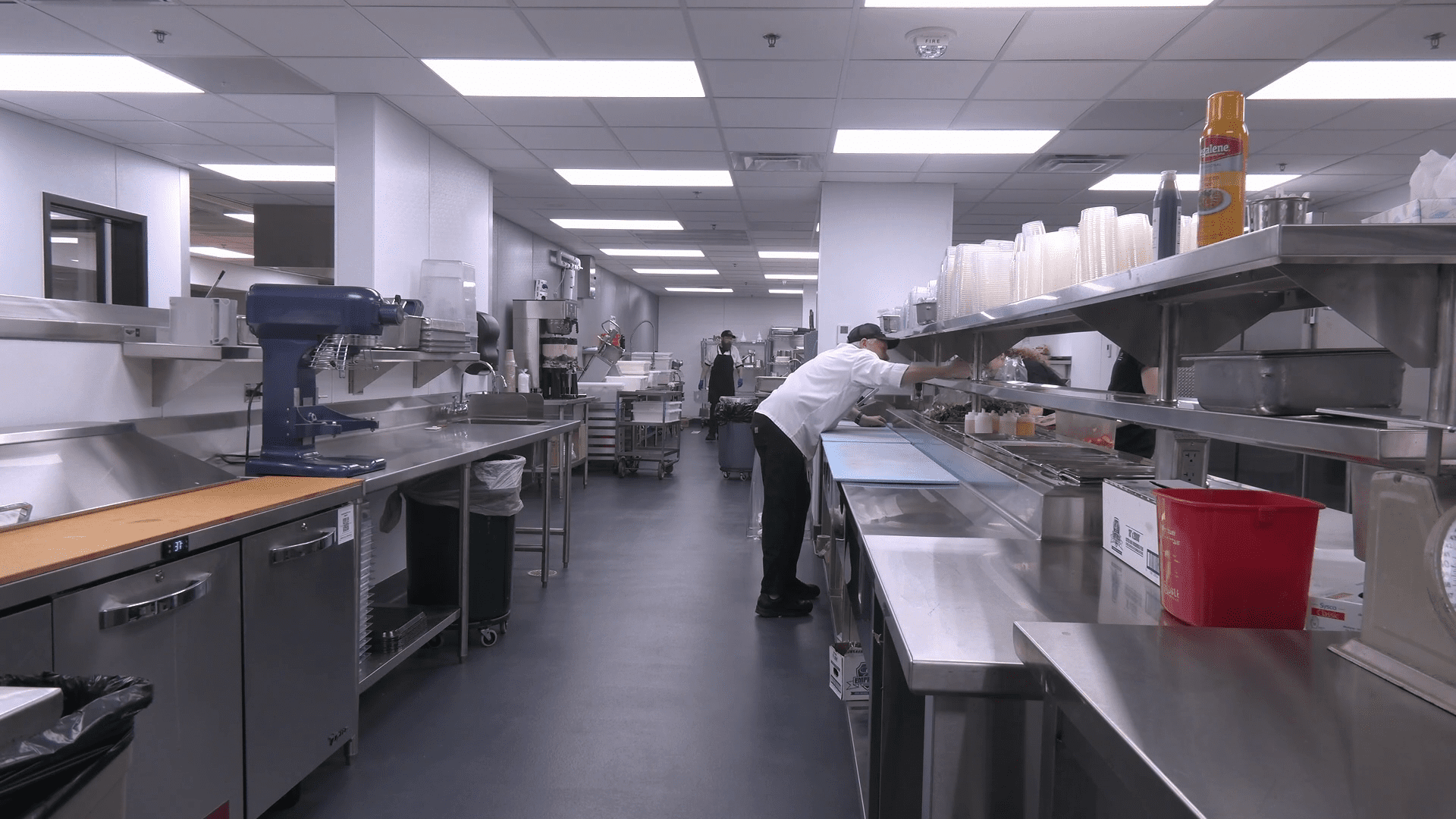
After the work triangle fell out of favor, zone-based organization became a popular candidate for bringing order to chaotic kitchens — and it is easy to see why. This theory posits dividing the kitchen into distinctive zones for prepping, cooking, and cleaning. Within his professional kitchen, Sufyan Marikkar has an easy formula: "Prep areas sit upstream from the cooking line, finishing and plating are positioned closer to the pass, and cleaning zones are deliberately separated so they don't interrupt service flow." This same approach can be adopted in home kitchens to reduce overlap between different tasks and unnecessary back-and-forth across the kitchen. When every cooking chore has a dedicated location, you can prevent items from piling up and interrupting your flow.
You may not have a sprawling commercial kitchen at your disposal, but Pasquale Rufino believes that it is possible to bring the same approach to life in smaller spaces as well. Start by maintaining separate, distinctive areas for essential tasks, such as preparation, cooking, cleaning, and storage. Then, work on equipping each zone with the necessary support crew: Knives and cutting boards will be stationed near the prep area, pots and oils will be positioned closer to the stove, while cleaning agents will be grouped together. "When your kitchen follows your natural cooking rhythm, everything feels intuitive and far less stressful," Rufino says.
Treat spices with the same care as fresh ingredients
Spices have that "always the bridesmaid, never the bride" energy in most recipes. But if you were to ever peek into a professional kitchen, you'd find chefs treating spices with the same attention as the proteins. "Spices are powerful, but only when they're treated with respect," Pasquale Rufino says. There is usually a finite window of time for adding your preferred seasoning to any meal — if your spice rack is in disarray, it can lead to wasted time searching for the right candidates. Duplicates and dried-out options can further slow down your process and lead to decision fatigue.
Both chefs follow some universal basics of spice maintenance. Since spices are vulnerable to heat, they are among the items you should never store above the stove. Besides being stored away from direct sunlight and heat, chefs often store their spices based on their frequency of use rather than in alphabetical order. "In our kitchens, everyday essentials like black pepper, cumin, coriander, cinnamon, and dried herbs are always within arm's reach, while more delicate or less-used spices are stored separately," Sufyan Marikkar says.
Another common pitfall that both chefs agree on is the danger of overstocking. "My advice is to keep fewer spices, but keep them fresh," Rufino says. Once you have whittled down your selection to the essentials, there are several ways to organize your spice rack. The right organizers and a labeling system will keep your spice rack streamlined and efficient.
Keep only the essentials next to the stove to minimize clutter
If you are wondering why those professional chefs on TV shows cook with impeccable efficiency while your cooking routine spirals into a mad jumble of spoons, tongs, and general mayhem, consider common clutter culprits. The area around the stove can be especially prone to chaos because it's often reduced to a catch-all zone for sauce-covered ladles and unnecessary tools. By purging any distractions and interruptions from this area, you can lighten the cognitive burden and focus freely on the joys of cooking.
"A clean stoveside helps you focus on timing and technique, especially when cooking multiple elements. When the space is clear, your movements become smoother and your cooking more controlled," Pasquale Rufino says. In professional kitchens, you'll find that only the essentials are offered a coveted spot near the stove. These generally include heatproof tongs, spoons or ladles, and a spoon rest. "Anything beyond that becomes a distraction or a safety risk," Sufyan Marikkar says.
Both chefs also have a list of items that are consciously kept away from the stove, since many cooking essentials can lose flavor when exposed to heat. This includes oils, spices, paper towels, and plastic containers, among other flammable and heat-sensitive items. "A good rule at home is simple: If you don't need it immediately, it doesn't belong next to the flame," Marikkar says.
Avoid storing knives loose in drawers
It isn't always the big disruptions that can derail your cooking process but rather the silent stressors — such as nicking your finger on a knife rattling around loosely in the drawer or discovering that your favorite blade no longer chops as efficiently as it used to. Pasquale Rufino has found that having even a single high-quality chef's knife in your arsenal can make a dramatic difference to your cooking — when it is cared for properly. "When your knives are sharp and well stored, cooking becomes more precise and confident," he says.
Keeping knives loose in drawers or in countertop containers are some of Sufyan Marikkar's least favorite ways to store knives, as the blades can dull when they're knocked against each other. There is also a greater risk of injury. Unless you'd like to spend twice as much time in prep with a blunt blade, storing your knives in a drawer is simply not worth the risk.
Among other essentials of diligent knife storage, Marikkar cautions against storing them wet. Prolonged exposure to moisture can speed up rust formation and also create a thriving ground for bacteria. Magnetic knife strips are the go-to choice for both chefs, as they allow sufficient circulation of air and do not have any grooves where germs can gather. "In our kitchen, knives are stored on magnetic strips or in dedicated drawers with protective inserts, keeping blades visible, dry, and easily accessible while preserving sharpness," Marikkar says.
Keep the bare minimum on the countertops
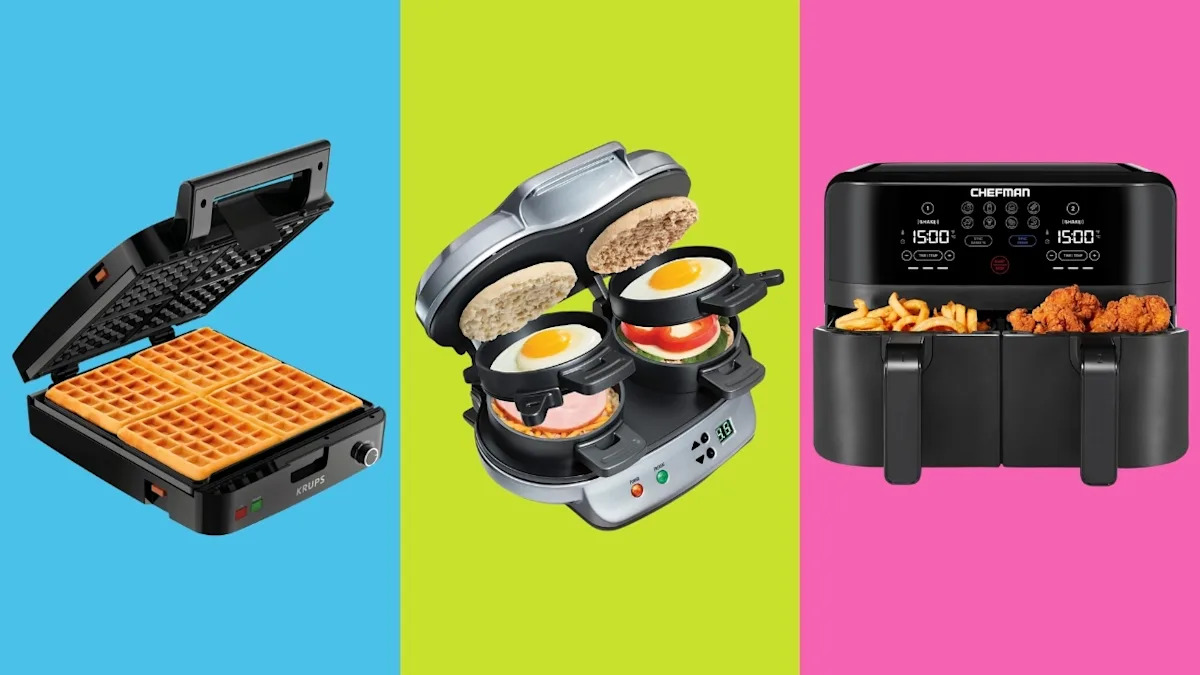
When your countertop is overrun with rarely used appliances, overflowing crocks, and unneeded cooking tools, it can weigh you down mentally. As you shimmy items around to find a few inches of uninterrupted space for prep, you can feel your momentum slowing down and your creative energy becoming stymied.
In Sufyan Marikkar's rulebook, an efficient countertop is one designed with restraint. "If a tool doesn't consistently save time, improve accuracy, or enhance safety, it doesn't stay out. For example, a mandoline is useful but only when needed — it doesn't live permanently on the counter," he says. In a professional kitchen, it is common to spot bench scrapers, tasting spoons, and digital thermometers lying within arm's reach. For a home kitchen to function smoothly, you will need cutting boards, a neatly organized utensil jar, and a small tray for oils and salt. Anything else is merely filler and doesn't deserve precious inches of countertop space.
One of the most common reasons unnecessary items accumulate on countertops is because it can be hard to differentiate between what is truly essential and what is simply nice to have. When in doubt, it helps to follow Pasquale Rufino's golden rule: If you haven't used something in the last week, it needs to be stored out of sight. "Too many tools create visual noise and slow you down. A clean counter gives you space to think, move, and cook freely," he says.
Place frequently used staples at eye level in the pantry
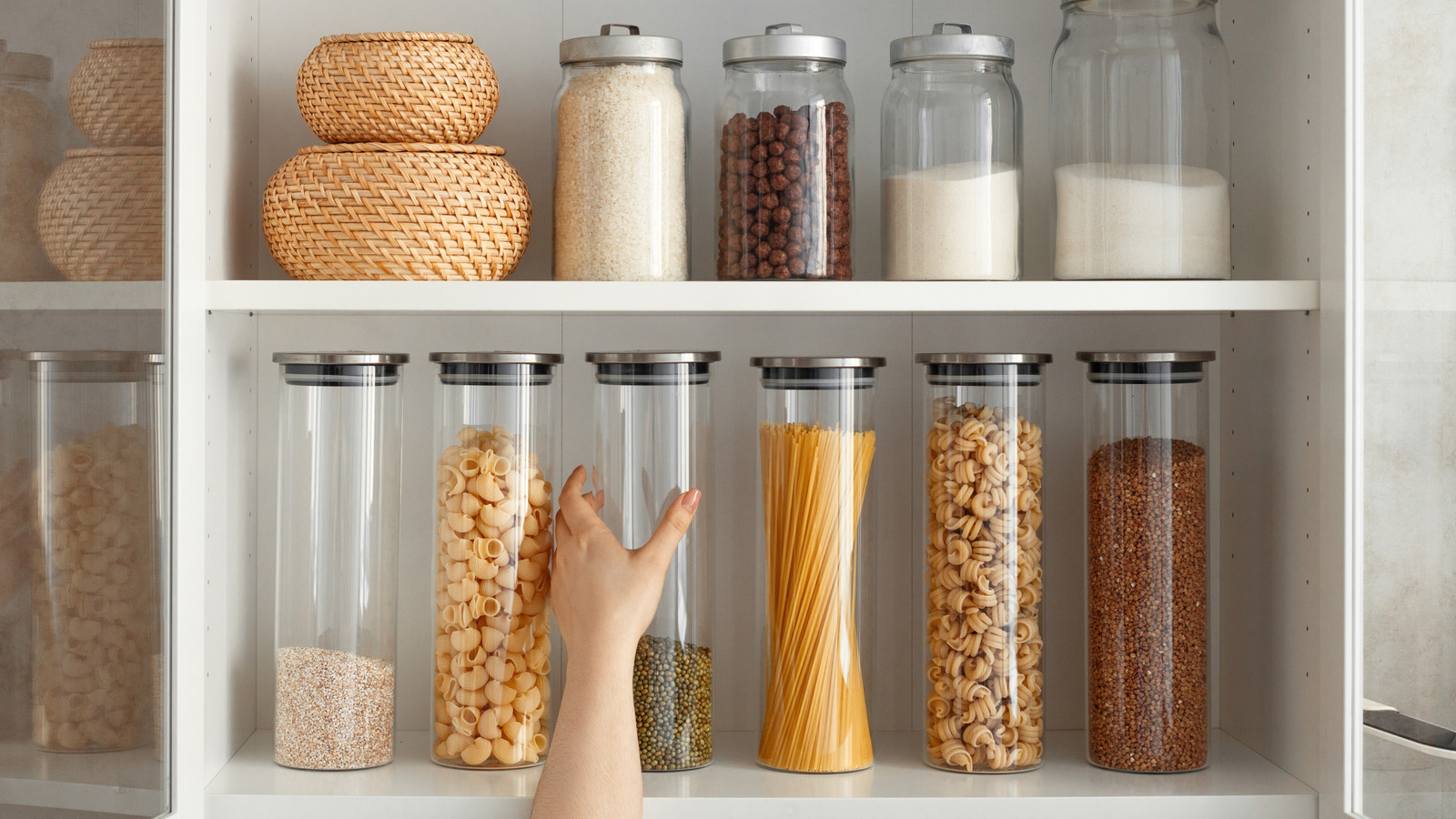
If a good chunk of your cooking time is devoted to scanning shelves and crouching at an odd angle to access necessary essentials, it might be time to redefine your pantry organization system. "A [well-organized] pantry is about visibility and logic," Sufyan Marikkar says. In his kitchen, you'll find that pantry staples are grouped together by category: Grains, oils, and baking essentials all hang out in cliques of their own. The most frequently used staples are placed at eye level for easy access. This system reduces decision time during hectic cooking sessions and helps you quickly assess whether you have the necessary essentials on hand before starting an ambitious recipe.
"A pantry should tell you everything at a glance," Pasquale Rufino says. Both are in consensus that clear containers and a well-defined labeling system can remove the guesswork from discerning how much of an ingredient is left. When visibility is compromised, Marikkar finds that it is easy to overbuy certain items, even while duplicates lie forgotten at the back of shelves. "A pantry should guide decisions, not complicate them," he says. Other pantry storage hacks that will help you maximize space include adding turntables for easy access to corners and using shelf risers to create an additional level of storage.
Adopt a first-in, first-out system to avoid food waste
Cooking shows might have convinced you that gourmet cooking is all about plating showstopper dishes, but there are a host of unglamorous yet vital tasks happening in the background — including the essential practice of maintaining a meticulous inventory. "In a hotel kitchen, we check refrigeration daily and dry storage weekly, using a simple first-in, first-out system supported by clear [labeling]," Sufyan Marikkar says.
The system is as simple as it sounds. When adding any new items to your pantry shelves, older items are positioned in the front with newer versions stacked behind. At first, it may sound like yet another thing crowding your to-do list. But once this habit is developed, you'll be able to reduce food waste, avoid buying duplicates, and quickly assess what you have in stock. While this information helps Marikkar plan daily specials, you can feed it into your meal plan for the week.
Checking and organizing inventory is a daily task in professional kitchens, but Pasquale Rufino believes that you needn't overcomplicate things at home. "Once or twice a week, I quickly scan the fridge and pantry to see what needs to be used first. This helps prevent food waste and encourages smarter meal planning," he says. Beyond the pantry, you can also devote an entire shelf in your refrigerator to items that are nearing their expiry date and need to be used first.
Clean as you go to keep your workspace (and your mind) organized
Putting together an elaborate meal for your loved ones is a joy. Returning to find a marathon clean-up session waiting for you in the kitchen? Not so much. The one mindset shift that Sufyan Marikkar wants you to make is to stop viewing cleaning as an afterthought. Instead, he recommends integrating it into your workflow. "In our kitchen, benches are wiped continuously, used bowls are stacked immediately, and waste is removed before it accumulates," he says.
At home, this habit can be put into practice by leveraging ignored pockets of time. "While something is cooking, I wash tools, wipe surfaces, and reset my workspace," Pasquale Rufino says. It also helps to tackle small spills and messes right away to save effort later. Keeping a bottle or bowl of hot, soapy water on hand can help you wipe down surfaces quickly before switching tasks. Filling a large container with hot water and dish soap in the sink will allow you to pre-soak smaller items and prevent stubborn sauces from caking. The end result? You return from a hearty dinner to find that the wheels have been set in motion already and the kitchen doesn't require a prolonged clean-up session. "When you clean as you go, you stay organized, focused, and in control, making the entire experience far more enjoyable," Rufino says.
Opt for a nightly reset to set the tone for the next day
There is something about walking into a kitchen laden with misplaced tools, messy counters, and ignored spills that can dampen your energy even before the day has begun. The only way to escape is to spare a few crucial minutes post-dinner for restoring the space to its original state. When the kitchen has been reset at night, Sufyan Marikkar finds that he can begin the next day with a clean slate. "In a professional kitchen, this means wiping surfaces, restocking essentials, checking storage temperatures, and setting up for morning prep. It's not about perfection — it's about readiness," he says.
While he acknowledges that opting for an intensive reset is unrealistic for hectic households, there are ways to ensure that you don't start each day playing catch-up on last night's messes. Pasquale Rufino personally prefers leaving the sink empty before going to bed, but reiterates that the goal isn't to conform to an unrealistic standard — it's to be more intentional with how you prepare for the next day. This can be as simple as clearing away clutter from the countertops and returning everything to its designated location, wiping down the stove area, vacuuming crumbs from the kitchen floor, and laying out the essentials for breakfast. "A reset is a quiet investment in ease — one that makes cooking feel lighter and more intentional the next day," Marikkar says.