Three men who died in Glasgow Cheapside disaster honoured with bravery award
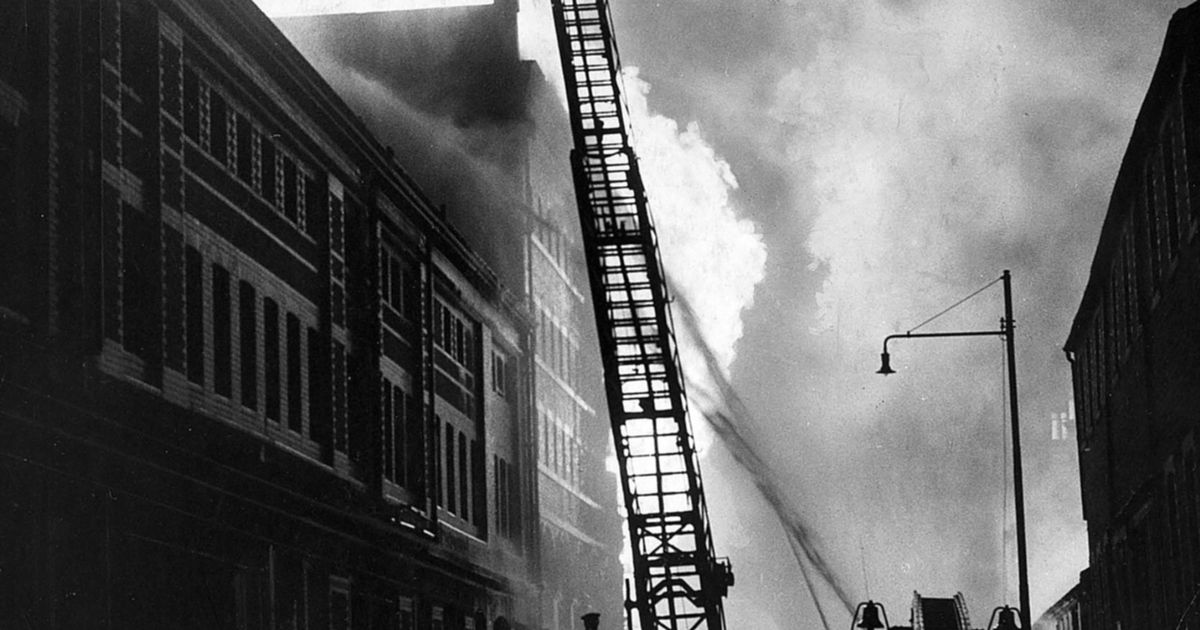
Three Glasgow men who died in the devastating Cheapside Street disaster are to be honoured with the Elizabeth Emblem.Firefighters Archibald Darroch and George Dick McIntyre of the Glasgow Fire Service have been recognised alongside Gordon Campbell McMillan of the Glasgow Salvage Corps. The men were among those killed in the explosion at a whisky bond in Anderston on March 28, 1960.The fire at the whisky bond on Cheapside Street is the UK’s worst peacetime fire services disaster. The blaze began in the evening of March 28, 1960, with smoke seen pouring from a second-floor window of the warehouse. Just over half an hour later, the warehouse exploded, ripping apart the front and rear walls of the building.The explosion was caused by wooden casks that had ruptured under the ferocious heat of the fire, causing a massive liquid vapour explosion. Witnesses reported seeing blue flames leaping 40 feet into the sky, and the glow from the fire was visible across the city.The fire raged on for a week, with 450 firefighters involved. It spread to the nearby tobacco warehouse, an ice cream factory and the Harland and Wolff engine works.Five salvagemen and fourteen firefighters in the huge inferno at the warehouse on Cheapside Street, close to the Clyde. We previously told how salvageman William Oliver was honoured with the award.The members of the Glasgow Salvage Corps who tragically died in the explosion were: Salvageman Gordon McMillan, Leading Salvageman James McLellan, Superintendent Edward Murray, Salvageman James Mungall, and Salvageman William Oliver.The fourteen firefighters who died were: Fireman John Allan, Fireman Christopher Boyle, Sub Officer James Calder, Fireman Gordon Chapman, Fireman William Crockett, Fireman Archibald Darroch, Fireman Daniel Davidson, Fireman Alfred Dickinson, Fireman Alexander Grassie, Fireman George McIntyre, Fireman Edward McMillan, Fireman Ian McMillan, Sub Officer John McPherson, and Fireman William Watson.The Elizabeth Emblem is a mark of recognition to the next of kin of public servants who have lost their lives as a result of their duty. It is the civilian equivalent of the Elizabeth Cross, which recognises members of the UK Armed Forces who died in action or as a result of a terrorist attack.53 public servants who died in service from across the United Kingdom are the latest to be recognised with the Elizabeth Emblem in the third published list, including five from Scotland. Those recognised from Scotland include PC John Alcock, who was left in a persistent vegetative state for 14 years after the police vehicle he was a passenger in was struck by a car being driven by an Italian tourist in August 2003.The Grampian cop had been on route to Ballater police station at the time of the crash. His partner Donna Alcock, who looked after him at home, described him as a "wonderful family man" after his passing in 2017.The Elizabeth Emblem was established last year as a national form of recognition. The design of the Emblem incorporates a rosemary wreath, a traditional symbol of remembrance, which surrounds the Tudor Crown.It is inscribed with ‘For A Life Given In Service’, and will have the name of the person for whom it is in memoriam inscribed on the reverse of the Emblem. It will include a pin to allow the award to be worn on clothing by the next of kin of the deceased.