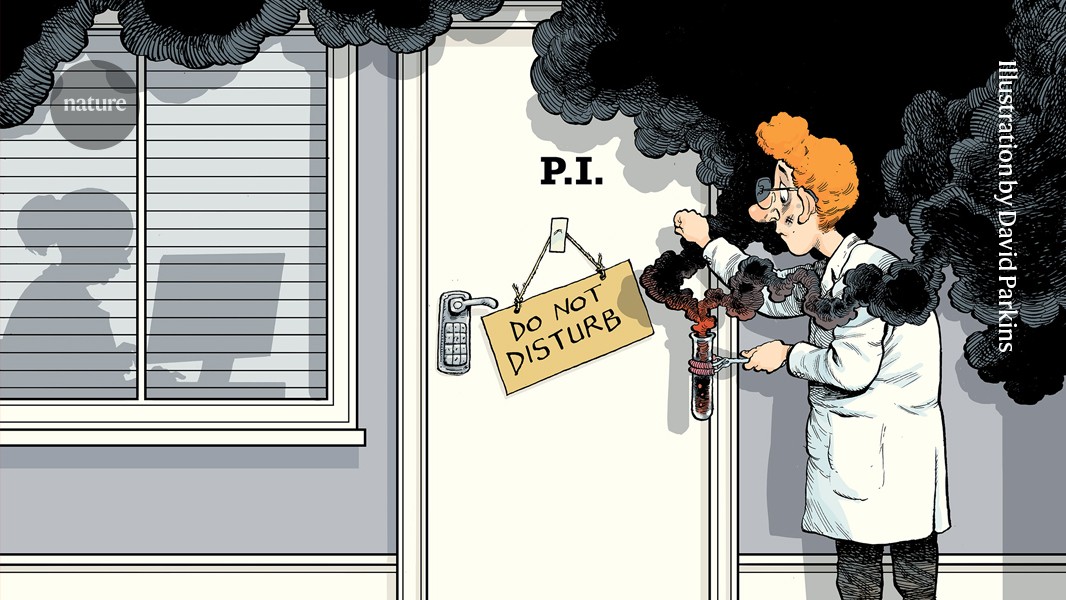
My PI is not offering any support or guidance on my PhD project, what should I do?
The problemDear Nature,I am a doctoral student coming to the end of my degree studying engineering safety, and I feel I’ve been left to do my PhD alone without any guidance from my adviser. I was excited to do my PhD with this person, who is respected in the field, but my experience has been disorienting and discouraging. We’ve had weekly meetings for years, but I never receive any serious feedback or guidance, and my adviser never follows up on my progress. Because of this, my research is lagging. I thought that this was a normal experience, but I realized too late that, unlike others, my adviser thinks that graduate students should not need support with their research.What do I do when my principal investigator (PI) isn’t involved in my project? — A discouraged engineerThe adviceNature’s careers team spoke with three academics who study workplace dynamics, including research integrity and professionalism, organizational behaviour, and bullying. They all agree that communication and advocating for yourself will be key. But even if you can’t get the support that you need from your PI, there are other options to help you finish your PhD.Speak upFor better or for worse, not all PhD programmes are created equal, says Sherry Moss, who studies organizational behaviour at Wake Forest University in Winston-Salem, North Carolina. Although some programmes are highly structured and mandate that PIs have a hands-on approach and set clear milestones, others put the onus on students to create their own structure, Moss says. A student who thrives with a hands-off approach might not do well in a highly-structured programme, and vice versa.If structure is something you need but your programme isn’t built that way, it’s important to create that structure yourself, Moss says. This might involve asking for feedback from your PI on specific aspects of your work or asking them to review experiments before you run them. It will be important and productive to go into these discussions with clear goals in mind, Moss says. It can be helpful to prepare a report in advance that outlines recent experiments, next steps and potential timelines, and to share that with your adviser before you meet.An ‘agony aunt’ for working scientistsGetting the support you need might also involve managing up: making sure your supervisor knows you need more from them, rather than suffering in silence. “At school and in life, one must ask for what one needs, especially if you aren’t getting it,” Moss says. “Asking does not imply being pushy, it is simply making polite requests. These requests may not be granted, but they certainly won’t be granted if you don’t ask.”Of course, speaking up for yourself in this situation is easier said than done, especially if years of working with an uninvolved PI has bred resentment. Before you broach this conversation, keep in mind that it is likely to be more productive if you focus on attacking the problem instead of the person, says Alison Antes, who studies academic integrity and interpersonal dynamics in research laboratories at Washington University in St. Louis, Missouri.“You can plan ahead, like, how am I going to initiate the conversation? What am I going to say first?”, Antes says. “You can even practice with a peer or someone else.”You might consider role playing with a trusted colleague who knows your adviser and could help you to navigate their likely responses.When setting up the meeting, it’s a good idea to schedule it in advance and give your adviser a rough idea of what you’d like to talk about. That will give them time to reflect and prepare, too. And instead of framing the conversation as something that your adviser is doing wrong, try to stay focused on discussing how your experience and work could be improved.To avoid finger pointing, Antes says it’s important to use ‘I’ statements when sharing your perspective. For example, ‘I have realized that I need to discuss [this issue]. Would you be willing to talk about this problem with me?’. Conversely, she suggests avoiding accusatory language such as ‘You have not provided me enough support’. You’ll also need to listen to what your adviser has to say, which might be constructive criticism.No matter how much you prepare, keep in mind that the real conversation could still take unexpected turns, so consider an exit plan as well, Antes says. This might look like asking to take a break from the conversation if things get too tense or heated.Find new supportUnfortunately, some relationships just won’t be a good fit, even if you advocate for your needs. In that case, it’s important to look for support beyond your PI to keep your PhD on the road, says Leah Hollis, who studies higher education and workplace bullying at the Pennsylvania State University in University Park.You can start by reaching out to others in your department and reading your doctoral handbook front to back, Hollis says, to help you better understand your programme’s expectations and what you should be achieving as a student. Building an academic support network outside your university can also be incredibly beneficial.“Identify scholars whose work inspires you, read their publications, and reach out for brief informational meetings,” Hollis says. “Many academics are willing to share advice when approached thoughtfully, and these external connections can provide valuable guidance and perspective.”In these conversations, Hollis says it’s important to stay appreciative and not to expect too much at the beginning. As with other aspects of your PhD, it is also important to remain persistent when looking for a new mentor and not to be discouraged if you don’t find your perfect match immediately, Hollis says. Thankfully, it’s likely that this effort to build your professional network will pay off not only for your PhD but also down the road when you look for support or career advice.