Can We Fix the Fashion System?
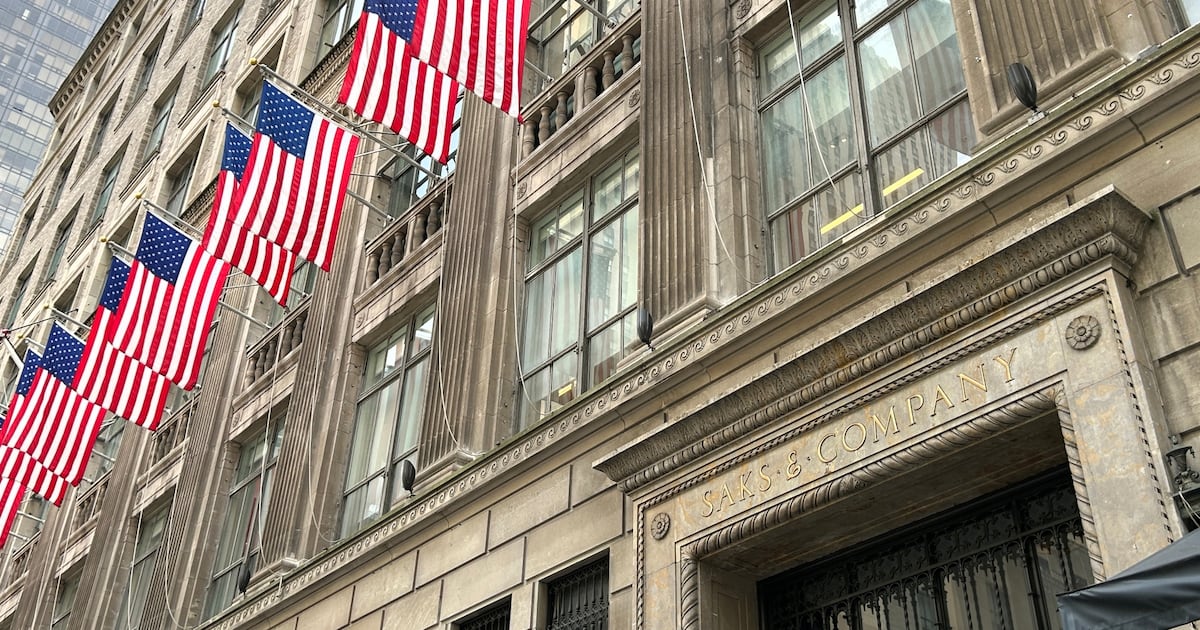
Dear BoF Community, Welcome to my first letter of the year. I hope you all had a safe and happy holiday season.This was my first week back at work after a deeply restful and contemplative break. I’ve always cherished this moment in the calendar.Nineteen years ago, at this same time of the year, I began jotting down ideas on a simple blog and newsletter I called The Business of Fashion. Thinking back to that time always brings a wave of nostalgia — not just for how BoF started, but for the clarity of purpose that drove it: to make sense of an industry that too often avoided hard questions.This year, that reflection feels heavier.There is no doubt that 2025 was one of the most difficult years I have ever observed for the fashion and luxury industry. When we look back at this time in the years to come, we may realise it was possibly even more fraught than Covid.During the pandemic, the challenges we faced were largely exogenous. They came from outside the system. What we are confronting now feels more troubling precisely because it is largely endogenous. These problems are not being imposed on fashion. They are emerging from within it.When Covid ended, despite much surface-level conversation about change, the industry largely reverted to business as usual. After a brief post-pandemic boom — a temporary gorging on fashion and luxury — the structural weaknesses of the system have now re-asserted themselves with force.And so, fashion today feels more lost and unmoored than I can remember.This is not a sudden realisation. In June 2024, I wrote about a creaking fashion system. Later that year, I argued that the challenges the industry faced were more structural, than cyclical. At the start of last year, I said plainly that luxury was in a full-blown crisis.The bankruptcy of Saks Global this week is only the latest in a string of collapses tied to a model and value proposition that feel fundamentally broken. Farfetch. MatchesFashion. Ssense. And countless independent brands and retailers that quietly closed their doors after discovering that scale, speed and storytelling were no longer enough to sustain them.Listening Beyond the C-SuiteAgainst this backdrop, I wanted to survey our readers. Each year we do our annual survey of senior executives for The State of Fashion, but I wanted this to reach a broader, more representative cross-section of our community.Last week, I posed a set of six open-ended questions on Instagram and LinkedIn. I did not target CEOs. I did not structure it as a formal survey. I simply asked industry professionals from amongst my followers to tell me, candidly, what they were observing.Nearly 500 people responded from across the industry — designers, studio managers, sourcing experts, HR directors, merchandisers, marketers, supply-chain specialists and more. The messages arrived as direct messages, comments and long, unfiltered emails. They were often raw. Sometimes contradictory. Frequently frustrated. And occasionally hopeful. Together, they form one of the most honest snapshots of the fashion system that I’ve seen.What struck me most was not just what these front-line employees said — but how sharply their concerns diverged from what senior executives told us in our State of Fashion 2026 survey.When we polled industry leaders for that report, sustainability had fallen far down the agenda, overtaken by concerns about margins, geopolitics, technology and growth. Yet for those working on the front lines of fashion, sustainability — or more precisely, the failure of current sustainability efforts — remains deeply entangled with how they experience the industry every day, and is by far the most important theme that came through.The gap between senior executives and these employees matters. When leadership priorities drift too far from operational reality, systems don’t just underperform — they begin to fracture.What follows is a synthesis of what I learned from the future leaders of our industry. Personally, I found it helpful in clarifying where fashion is stuck, where it is moving, and where the most meaningful opportunities for change now lie. From Volume Economics to Value ArchitectureThe most consistent critique across responses was that fashion is still solving the wrong problem. For years, the industry has optimised for volume: more collections, more drops, more collaborations, more content, more influencers. Speed is rewarded and encouraged at all costs and growth has become a proxy for relevance. In the luxury segment, we are selling “exclusivity” in the millions of units while quality is noticeably diminishing. This is turning customers off. Respondents repeatedly described an industry built on guesswork and overproduction — forecasting demand months in advance, manufacturing far more than can realistically be sold, then attempting to mitigate the fallout with markdowns, outlet strategies or sustainability greenwashing disguised as storytelling.As one respondent put it: “No amount of organic cotton or recycled polyester will fix a system that consistently makes 30 percent more product than it can ever sell.” This isn’t just about being more sustainable, it also doesn’t make business sense. The diagnosis is clear. Sustainability has been treated as a materials problem when it is, at heart, a systems problem. What respondents called for was not incremental change, but systems change. One respondent described this as “large, heavy-handed and impactful solutions”: on- or near-demand production, fewer SKUs, longer product lives and a return to functional, high-quality clothing designed for real daily life rather than short trend cycles. This will be challenging to achieve, especially when customers don’t want to or are not willing to pay more for fashion, but this is another problem created by the industry itself as we have moved faster and faster to make our products redundant. According to the survey, the future opportunity lies in moving from making more, to choosing better. This requires designers who edit more rigorously. Merchandisers who resist the temptation to overbuy. Marketers who focus on creating signals rather than chasing noise and attention. Every role in the system has the capacity to reduce excess and increase meaning. This is not anti-creativity. It is what gives creativity value, but we will have to rewire our brains to think differently about where value comes from.From Leadership Optics to Human-Centric TransformationIf overproduction is the structural flaw, leadership is the cultural one.The language respondents used to describe fashion leadership was often searing: “delusional,” “disconnected” and “self-congratulatory.” Many spoke of an industry culture that glorifies burnout, hierarchy and proximity to power while failing to protect the people who actually make fashion happen, especially the people working in our supply chains.Several of you pointed to leadership teams that remain strikingly undiverse — not just in representation, but in lived experience. When decision-makers are far removed from studio floors, factories or shop floors, blind spots multiply.This disconnect is most visible in sustainability efforts that prioritise optics over systems. Campaigns, pledges and narratives abound, but structural change lags. As one respondent wrote: “The industry learned how to talk about values faster than it learned how to live them.”Payment terms for creatives, interns working unpaid for “experience,” and supply-chain workers enduring unsafe conditions were cited repeatedly as evidence that humanity remains secondary to optics.What respondents called for instead was a different model of leadership — one grounded in empathy, humility and operational clarity. Leaders who understand that values must survive scale. This is not abstract idealism. Regulation is tightening. Labour shortages are real. Consumer trust is eroding. The era of storytelling without genuine execution is ending.The opportunity here is for builders — people willing to engage with complexity, design systems that work end-to-end, and use tools like AI to reduce waste and friction rather than amplify spectacle.From Centralised Power to Distributed AuthorityThe third major shift underscores where power in fashion now resides.For decades, authority flowed from a small number of institutions: fashion weeks, glossy magazines, celebrity endorsements and elite gatekeepers. Today, that model is fracturing.Respondents were hopeful that cultural relevance will no longer be dictated solely from the centre. While large luxury groups may retain financial power, and magazines like Vogue cling to an outdated sense of importance, cultural authority is moving elsewhere — towards independent designers, small creators, authentic communities and new geographies.This shift is both technological and cultural. Platforms like Instagram, TikTok and Substack are flattening hierarchy. Communities of fashion fans reward trust over reach. And fashion is increasingly inseparable from politics, identity and local context.Several respondents highlighted the growing influence of the global south — from South Asia to Africa, from Jamaica to Vietnam — where designers are bypassing traditional gatekeepers and telling their stories on their own terms.What emerges is a vision of fashion driven less by status and spectacle, and more by authorship, craft and cultural specificity.The opportunity here is profound. Authority no longer requires permission. It is earned through discipline, credibility and sustained contribution. Those who understand their context deeply — and build from it — are shaping what fashion becomes next.From AI Hype to AI UtilityUnsurprisingly, artificial intelligence loomed large in the responses.There was broad consensus that AI’s real value lies deep within internal processes: supply-chain planning, demand forecasting, waste reduction, sizing, pattern-making and operational efficiency. In other words, the unglamorous work that makes systems function better.What respondents rejected was the idea of AI as a replacement for human creativity. Generative content, synthetic storytelling and automated “inspiration” were widely dismissed as hype — or worse, as accelerants of the same volume-driven logic the industry is trying to escape.As one respondent warned: “If AI is used to make cheap content faster, we’re just reinforcing the broken system.”The prevailing view was clear: AI should be a facilitator, not a creator. A tool that enhances human judgment, not erases it. Fashion only resonates when it feels real — when taste, restraint and cultural instinct remain human.Overall, there was a rejection of superficial fixes, a demand for honesty and a belief that intellect, cultural awareness and judgment — not celebrity or hype — are becoming the new markers of value. We will certainly keep all of this front of mind as we shape our coverage and priorities for the year. Thanks to everyone who shared their thoughts with me. It was hugely informative. Have a great weekend.Imran Amed, Founder and Editor in ChiefHere are my other top picks from our analysis on fashion, luxury and beauty:1. Saks Global: When Bankruptcy Is Your Best-Case-Scenario… The retailer’s Chapter 11 filing — and $1.75 billion in new financing to keep operating while it restructures — came as a relief to many in the industry. But keeping the doors open is a low bar to clear; there are still unanswered questions about the luxury department store model’s future.(Getty Images) 2. ‘Less Cynical, More Human’: Inside Pierpaolo Piccioli’s Balenciaga Vision. With his latest collection for men and women, Piccioli confirms a softer, less confrontational direction for the Parisian house known for its radical fashion statements. ‘There’s nothing worse than trying to be cool,’ the designer said.(Balenciaga) 3. Drunk Elephant’s New Motto: No Kids Allowed. With a new brand campaign and visual assets, the results-driven ‘clean’ beauty brand hopes to reinforce its original ethos and reclaim its core customer.(Drunk Elephant) 4. Luxury’s New Australian Boomtown: Brisbane. With tourism thriving, millionaire numbers climbing and the Olympics on the horizon, brands are turning their attention to the Queensland capital as major retail developments get underway.(Tim Salisbury for Margot McKinney) 5. The Anti-AI Aesthetic Taking Over Social Media. Products strewn across the sink, half-empty or in cluttered piles, have replaced picture-perfect shelfies as brands and influencers find luxury in mess.(Dieux/Merit Beauty/Glossier/Salt & Stone/Fara Homidi Beauty/Vanna Jimenez/Maxine's Revenge) This Weekend on The BoF PodcastThis week on The BoF Podcast, Imran Amed, founder and CEO of The Business of Fashion, sat down with Willa Bennett to talk about what young audiences actually want from media today, why curation matters more than ever and how she’s refocusing Cosmopolitan and Seventeen — creatively, culturally and commercially — for the next generation.To receive this email in your inbox each Saturday, sign up to The Daily Digest newsletter for agenda-setting intelligence, analysis and advice that you won’t find anywhere else.