Lammy's plan to snatch client account interest 'will force law firms out of business'
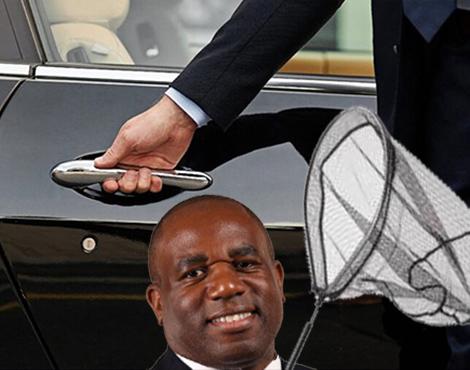
How a law firm's chauffeured car is funded.The Ministry of Justice's plan to take the interest which law firms make on money sitting in their client accounts will destroy high street and residential conveyancing firms, critics including national firm Taylor Rose have said.Taylor Rose would have made just £100k profit last year without the millions generated by its client account.Solicitors Regulation Authority rules currently only require law firms to provide clients with a 'fair sum' in relation to the interest earned on client money. The loose definition leaves scope for firms to retain most, or all, of the interest via agreement with their clients.Last year the SRA postponed a review of the arrangement, but the Ministry of Justice has proposed requisitioning 50% of the “unearned interest” generated on law firms’ individual client accounts and 75% of the “unearned interest” generated on pooled accounts, which it says it will use to shore up England & Wales' crumbling justice system.“Law firms thrive when the system is strong, so it follows that they should contribute to strengthening justice”, Lord Chancellor David Lammy said.In 2024, the UK200 law firms generated over £350m from client account interest, according to data provided to RollOnFriday by Taha & Co.Conveyancing firms typically have multiple deposits for property purchases sitting in their client account at any one time, and Companies House accounts show the interest earned has become a vital income stream.A source told RollOnFriday the scale of the issue became apparent last year when they were advising a private equity fund on the potential acquisition of a law firm. “We realised that the £5m profit was actually £3.6m and £1.4m client account interest” they said.“This materially changes the deal, if you’re paying 8x profit, then the deal goes from £40m enterprise value to under £29m”. They said private equity investors “now offer zero multiple on client account interest, and no immediate day one payout, it is all pushed through the model as an earn-out”.Taylor Rose’s 2024 accounts show it earned revenue of £96m, but its EBITDA (earnings before interest, taxes, depreciation and amortisation) was just £100k.However, £7.3m was generated in client account interest, resulting in an adjusted EBITDA of £7.4m.The impact was even greater the year before. If it had not been allowed to retain £6.4m interest thrown off by its client account, Taylor Rose would have recorded a loss of £2.7m instead of a profit before tax of £3.1m.Ebitdayum.A spokesperson for Taylor Rose’s parent group, AIIC Group, told RollOnFriday: “Operating profit in the years in question were heavily impacted - in common with the wider industry - by several external and strategic factors, including the market disruption following the Truss mini-budget; a cyber-attack on a third-party IT service provider that affected many firms; as well as strategic decisions such as avoiding making redundancies in the downturn and continuing to make significant investments in IT infrastructure to support our rapidly growing consultancy business”.“These decisions have contributed to the ongoing good health and growth of the firm, which has been operating profitably since the second half of FY2024, even when excluding net client interest, and despite the fact we have increased investment in back-office functions such as IT to support the productivity and experience of our lawyers.”Its spokesperson told ROF, “Like the rest of the industry, we generate reasonable and appropriate income from client work, made up of billing and, with client agreement, a portion of interest on safeguarded funds in line with SRA rules." "Focusing on one income stream ignores the broader financial model of a modern law firm and the significant reinvestment we make in technology, service and infrastructure”, they said.As it stands, Taylor Rose can still afford to provide its CEO with a private driver, although that may not win Lammy over to the law firms’ view that client account interest should stay with them.Taylor Rose’s vacancy states that the successful applicant’s key responsibilities will include “Driving the CEO… to various locations within the UK”, “Ensuring the vehicle is clean”, and “Providing a courteous and professional experience for passengers including assisting with luggage and any errands”.The MoJ’s plan would not only shove firms into choppy waters, possibly requiring them to axe drivers – it would also require some partnerships to drastically clip their wings. Sheffield conveyancer Taylor & Emmet shared an operating profit of £3.5m on revenues of £22m between their seven equity partners, according to their 2025 accounts.However, £2.75m generated in interest on client account allowed PEP to be topped up from £500k to £900k, potentially putting the partners on a par with contemporaries at top tier firms.Client account interest has also been a salve for Blixt, the private equity backers of North West firm Slater Heelis. Its law firm asset made £680k profit on revenue of £18.5m in 2025. But an extra £1.4m in the form of client account interest allowed it to clear £2 million in profit, increasing the profit margin from under 4% to a much more respectable 11%.Nicky Heathcote, non-executive chair of the Conveyancing Association, has criticised the MoJ proposals, stating that “Client account interest is not a spare source of funding that can be taken without consequence”.Taylor Rose’s spokesperson at AIIC said, “Solicitors have safely safeguarded client money in ring fenced accounts for decades. Changing the long standing rules on client account interest would introduce unnecessary complexity into routine transactions and risk poorer outcomes for consumers through delays, reduced service quality and higher fees.”“These impacts would be felt most acutely in residential conveyancing, where fees have already been driven down over many years, and could force many smaller high street firms out of business.”