60 Years Later, The Greatest Quote In Western Movie History Is Still Untouchable
Over the years, the Western genre has seen more than its fair share of great lines that have since entrenched themselves in pop culture. John Wayne's films, for instance, are extremely quotable, with the actor's natural charisma and "tough guy" image combining to create some top-notch one-liners. Something similar can be said of the work of Clint Eastwood. Many lines spoken by Eastwood have become some of the most memorable parts of the greatest Western movies. After all, it's hard not to think about Unforgiven without remembering Will Munny's chilling threat to Little Bill. Likewise, Fistful of Dollars has a ton of unforgettable moments, but perhaps none stand out better than Clint Eastwood's nonchalant delivery of "my mistake, four coffins." The Good, the Bad, and the Ugly is in a similar category, but arguably to a much greater degree. In fact, one of its numerous great quotes has yet to be topped.
Blondie's "Two Kinds Of People" Line Is The Best In The Western Genre
Tuco looks up suspiciously while standing in a graveyard in The Good, the Bad and the Ugly
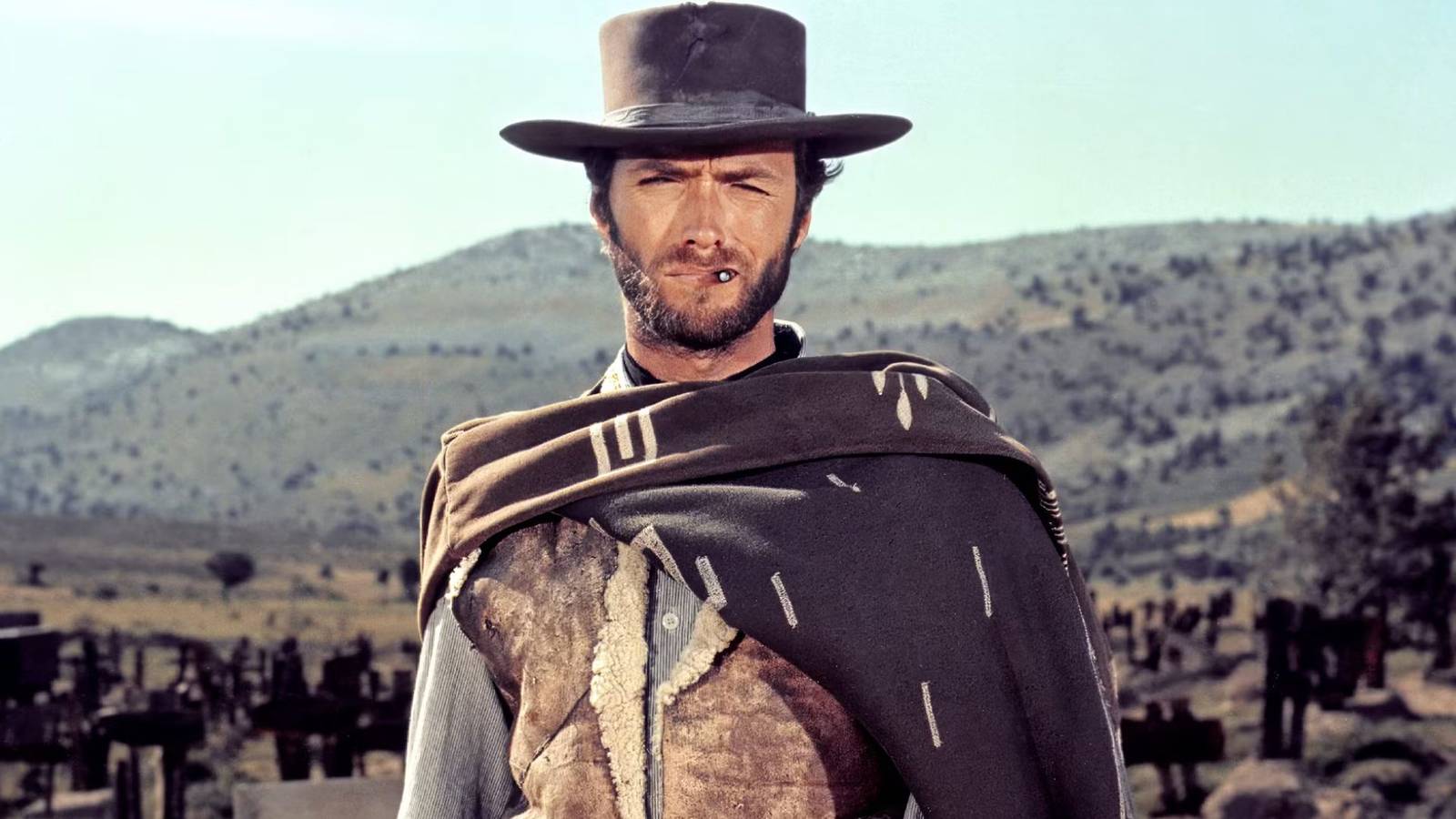
Over the course of the movie, Tuco and Clint Eastwood's Man With No Name use variations of the same line, discussing the "two kinds of people" in the world. The best of them of all was saved for last; in the aftermath of the final showdown with Lee Van Cleef's Angel Eyes, Eastwood's character issues a hard, cold betrayal with this line:
"You see, there's two kinds of people in this world, my friend. Those with loaded guns, and those who dig. You dig."
After tricking Eli Wallach's Tuco and leaving him with no bullets in his gun for the big fight, Blondie forces Tuco to dig up the treasure himself. And, of course, there's nothing Tuco can do about it. Even though it's consistent with his character, it still comes across as a shocking moment, and goes to show that in Westerns, even someone called "The Good" can be of morally ambiguous deeds. As he points out, it's "those with loaded guns" who decide the course of things. And that's an idea that's at heart of The Good, the Bad, and the Ugly, particularly in regards to Blondie and Tuco's shared narrative. He's able to capture and keep Tuco at his mercy for a while because he's the one with the gun, and the reverse is true later when Tuco turns the tables on him.
"Two Kinds Of People" Highlights A Key Fact About The Wild West
Clint Eastwood chewing a cigar in The Good The Bad And The Ugly
In addition to simply being a clever play on a running joke between the two characters, it underscores the power dynamics of the American Wild West. Blondie seeming to leave Tuco hanging in the graveyard and taking the treasure for himself may not be "right" from a moral standpoint, but ultimately, that matters very little in this time and place.
It's a spectacular, final twist in their adventure together, but also one that's perfectly in line with their respective journeys. Despite everything they've gone through together, both are out for themselves, even the character who is referred to by the title as "The Good." These ideas contrast greatly with the themes you might seen in a John Wayne or Randolph Scott Western, but go hand-in-hand with the grittier and darker side of the American Wild West that Spaghetti Westerns - and Eastwood himself - became known for. In their worlds, having the moral high ground is less important than being the one with the loaded gun and the power to do what they want.
Release Date
December 22, 1966
Runtime
161 minutes
Director
Sergio Leone
Writers
Agenore Incrocci, Furio Scarpelli, Luciano Vincenzoni, Sergio Leone, Mickey Knox
Producers
Alberto Grimaldi