Prison reports find 'degrading conditions', overcrowding
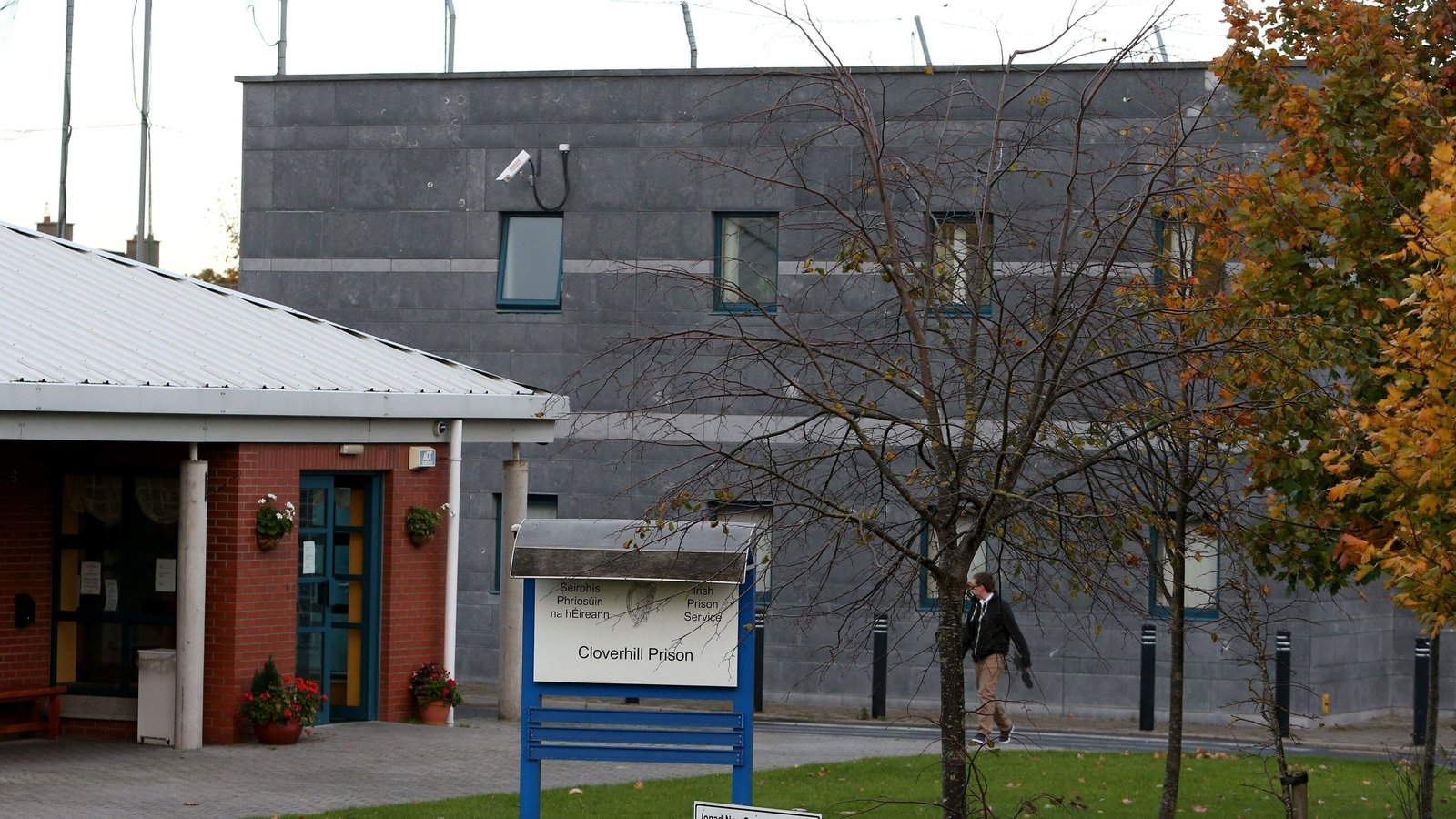
The Chief Inspector of Prisoners Mark Kelly has said that he has "grave concerns" about "degrading conditions" in Cloverhill Prison while "the scourge of overcrowding" was among the "systemic issues" identified at Mountjoy men's prison.
Five prison inspection reports, carried out by the Office of the Inspector of Prisons, were published by the Department of Justice this afternoon.
The reports looked at conditions in Mountjoy Prison, the Training Unit, Cork Prison, Cloverhill Prison and the Dóchas Centre following unannounced general inspections from late 2022.
At Mountjoy prison the report said prisoners were sleeping on mattresses next to un-partitioned toilets and that conditions were an "ongoing scandal".
An unannounced inspection of Cork Prison found that the overcrowding situation there was of serious concern and noted the absence of privacy partitions for sanitary facilities in shared cells which resulted in "degrading" conditions for prisoners.
Women at the Dóchas Centre were treated "inappropriately" by staff "including infantilising them, shouting at them and ignoring them".
'One quarter of the prisoner population lived in overcrowded conditions'
Extreme overcrowding and poor sleeping conditions were some of the issues raised in the report on Cloverhill.
The findings were released following an unannounced inspection of Cloverhill Prison from 15-25 May 2023. Mr Kelly said that a recent follow-up inspection of Cloverhill found that the situation had further deteriorated.
Cloverhill Prison is a closed, medium-security prison that accommodates adult men. It is primarily a remand prison for people committed to prison and has a bed capacity of 433.
According to the report, four people were sleeping in cells which were designed for three. This meant that one person slept on a mattress on the floor.
"One quarter of the prisoner population lived in overcrowded conditions amounting to degrading treatment," the report stated.
It added that many prisoners did not have fully partitioned toilet facilities.
"The absence of privacy partitions for sanitary facilities resulted in prisoners being accommodated in degrading conditions. Bedding and mattresses were in a poor state of repair," it said.
Shortcomings in record keeping along with the absence of administrative support for Chief Officers and Chief Nurse Officers, staff shortages, an ineffective complaints system and limited telephone contact with the outside world were other issues raised.
In particular, the report said that it was of "serious concern" that the use of force and control and restraint was not being recorded, including assaults on staff. The report said that the governor has undertaken measures to rectify this.
Access to mental health support was described as "very poor" with a three-month wait list to see a psychologist.
A significant number of people with serious mental illnesses were not being provided with appropriate treatment due to being accommodated at the prison.
Addiction support was also rated as "inadequate", while pre-release and re-integration support were deemed "insufficient".
The report criticised the imprisonment of low-level offenders and those awaiting access to treatment centres, which exacerbated already overcrowded and poor living prison conditions.
Two thirds of prisoners also said they experienced very little out-of-cell time, less than two hours a day.
The relationship and interactions between prison staff and prisoners required significant improvement, the report said.
'Scourge of overcrowding' highlighted in Mountjoy report
"The scourge of overcrowding" and prisoners sleeping on mattresses next to un-partitioned toilets were among the "systemic issues" identified in unannouced inspections of Mountjoy men's prison.
Mr Kelly said these conditions were an "ongoing scandal".
Prison inspectors also found that prolonged solitary confinement was imposed on prisoners in Mountjoy in contravention of UN rules for the treatment of prisoners.
The Office of the Inspector of Prisons (OIP) conducted unannounced general inspections of the Training Unit and Mountjoy men's prison between 28 November and 9 December 2022.
The report said the team found "a stark contrast between the degrading detention conditions of many people held in Mountjoy men’s prison and the far better living arrangements in the Training Unit" which is a semi-open low security men's prison on the Mountjoy Prison campus in Dublin 7.
It found that cells in Mountjoy men's prison "did not meet minimum international human rights standards for personal living space".
"For people on restricted regimes, who experienced minimal amounts of out-of-cell time, this amounted to degrading treatment," the report said.
"Conditions in Mountjoy men’s prison did not encourage a dignified and healthy living environment" the report said, adding that there was an "urgent need to ensure the privacy of prisoners when using sanitary facilities, such as toilets and showers in Mountjoy men’s prison."
However a recommendation to "take steps to ensure that all multi-occupancy cells across the estate are equipped with fully partitioned sanitary facilities" was not accepted by the Director General of the Irish Prison Service, who said that as "to do so would significantly impact on the availability of living space within cells".
"Additional efforts to identify a modesty curtain to provide enhanced privacy have not been successful due to operational and prisoner safety issues" the Director General of the Irish Prison Service said.
The report found that "approximately half of the population" of the main prison on the Mountjoy campus "were under a restricted regime, which resulted in very limited daily out-of-cell time".
It said the practice of solitary confinement was ongoing in Mountjoy men’s prison, despite the Irish Prison Service’s 2017 commitment to eliminate the practice, and went further to state that "prolonged solitaryconfinement was imposed ... in contravention to the prohibition of such a practice set out in the UN Mandela Rules" (the UN's Standard Minimum Rules for the Treatment of Prisoners) 2015.
It said a reception area was being used for "informal punishment".
It found that "overall, record keeping, including of serious incidents in the prison, was poor" and concluded that "what was recorded on the National Incident Management System (NIMS) was far from a true reflection of the number and nature of incidents in the prison".
It found that both prisoners and staff had expressed concerns about raising complaints and that the complaints system was "not working effectively", citing "prolonged delays" and "poor communication".
The report noted "inadequate staff levels across a number of healthcare teams, including insufficient nursing cover at night" and "insufficient access to core health equipment and services".
It said that while "engagement between staff and prisoners was generally good ... disruptions to the prison regime, including closures of prisoner activities such as the gym, resulted in tensions amongst prisoners and prison staff."
It said there was no evident strategy in place to reduce the high proportion of prisoners on protection.
It said a "drug treatment programme in the prison had long-been non-existent" with the prison instead prioritising "an operational-security approach to addressing the presence of contraband".
It noted that prisoners who provided "essential work were inadequately compensated".
It described the prisons's yards and recreational areas as "bleak".
While the report acknowledged that there were some good work-training initiatives in the prison including a barista course, SafePass course and a driver simulation course, it said that "workshops were frequently closed, often on a long-term basis, and staff trained to facilitate work training were redeployed to posts that were not focused on prisoner engagement and rehabilitation".
It said that the Community Return Scheme and Community Support Scheme "were not being maximised" due to resourcing and capacity issues, particularly in the Probation Service.
It described the disciplinary hearing processes as "balance and fair" but it found that a sanction proceedure was being used as a "surrogate system of recording incidents in the prison" and said it "potentially stigmatised victims ... as well as perpetrators".
On a positive note, the report found that "there was a multidisciplinary approach to healthcare services in Mountjoy men’s prison" and found that prisoners with complex psychiatric and/or medical needs were regularly reviewed by healthcare and senior custodial staff.
In contrast to the concerns around living conditions highlighted by inspectors in the main prison, the team described accommodation and conditions in the Training Unit as "very good and conducive to a positive living environment" and pointed to prisoner access to single-cell accommodation.
The report praised its visiting facilities, noted its "high quality of care and broad range of services ... for older prisoners" and said the environment "was an example of good practice in terms of the quality of space available to prisoners, such as the recreational area and the outdoor courtyard which was bright and airy".
It said that there was a multidisciplinary approach to healthcare services in the Training Unit, however the report noted that "mental health support services were not available" and the facility "did not have a dedicated dental clinic available to prisoners, despite the population’s level of need".
People sleeping on floors in Cork an 'ongoing scandal' - Chief Inspector
A number of systemic issues were also identified at Cork Prison, according to the Chief Inspector of Prisons.
Mr Kelly said there was a "scourge of overcrowding" and an ongoing "scandal" of people sleeping on mattresses on the floor of the prison.
"Due to a shortage of bedding, many prisoners did not have the full complement of duvet, sheet, towel, pillow and pillowcase. There were a number of mattresses in a poor state of repair" the report stated.
An unannounced inspection of Cork Prison took place from 27 March to 5 April 2023.
The report added that the overcrowding situation was of serious concern, particularly for prisoners on restricted regimes who were "locked back" in overcrowded cells for large portions of the day.
It noted the absence of privacy partitions for sanitary facilities in shared cells which resulted in "degrading" conditions for prisoners.
Low staff morale in the prison was flagged as a concern. While relationships between prisoners and staff were generally good, the report said that some prisoners expressed fear of reprisals if they raised issues about the prison.
The prison's clothing policy also had a "discriminatory impact" on foreign national prisoners and people of less financial means.
More than half of prisoner survey respondents said they did not feel safe making a complaint in the prison.
Wait-times to see a GP were described as too long and the workload of the GP was excessive. The report also noted a persistent presence in prisons of people with acute mental health conditions.
Shortcomings in record keeping, staff shortages, problems with administrative support for staff and limited contact with the outside were other issues highlighted.
It said that training was limited, and in most cases, was not sufficient to secure employment on release from prison. Workshops were frequently closed, and staff trained to facilitate work training were often redeployed to posts that were not focused on prisoner rehabilitation.
However, the report commended the "excellent" quality of education, "for those who could acces it" and in-cell sanitation.
It also recognised an initiative called the "pop-up kitchen" - a positive example of the power of collaboration.
The OIP made a number of recommendations including to make a public a strategy to reduce the number of people accommodated.
This strategy should consider implementation of alternative measures, such as conflict mediation and restorative justice practices to reduce prisoner tensions and concerns for safety.
'Punitive sanctions' mar staff-prisioner relationships at the Dóchas Centre
"Poor staff-prisoner dynamics" and "harsh punitive sanctions" are having "a substantial adverse impact" on women in the Dóchas Centre, according to the Chief Inspector of Prisons, Mark Kelly.
It follows an unannounced inspection of the Dóchas Centre by a team from the Office of the Inspector of Prisons (OIP) between 19 September 2023 and 2 October 2023.
The report said inspectors "observed examples of prison staff treating women inappropriately, including infantilising them, shouting at them and ignoring them".
It also described overcrowding at the facility as "of serious concern" and said it "hindered the ability of the prison to offer good and healthy living conditions".
Inspectors found that the practice of solitary confinement was ongoing in the prison, despite a 2017 decision by the Irish Prison Service to eliminate it.
The team also said that around half of the 50% of prisoners who participated in the Inspectorate's survey indicated they did not feel safe in the prison.
The report said there was "evidence of discrimination against women on numerous grounds" with reports of alleged discrimination on the grounds of age, gender, nationality, disability, race or ethnicity and religion.
It cited one particular case, where it said there was "evidence that a transgender prisoner was subjected to discriminatory treatment, including the imposition of a more punitive segregation regime."
It noted that prison authorities had no policy in place for transgender persons and their treatment was subject to the discretion of prison management.
The report said overcrowding at the Dóchas Centre was "of serious concern"