Trump health care plan doesn't help people facing skyrocketing ACA premiums
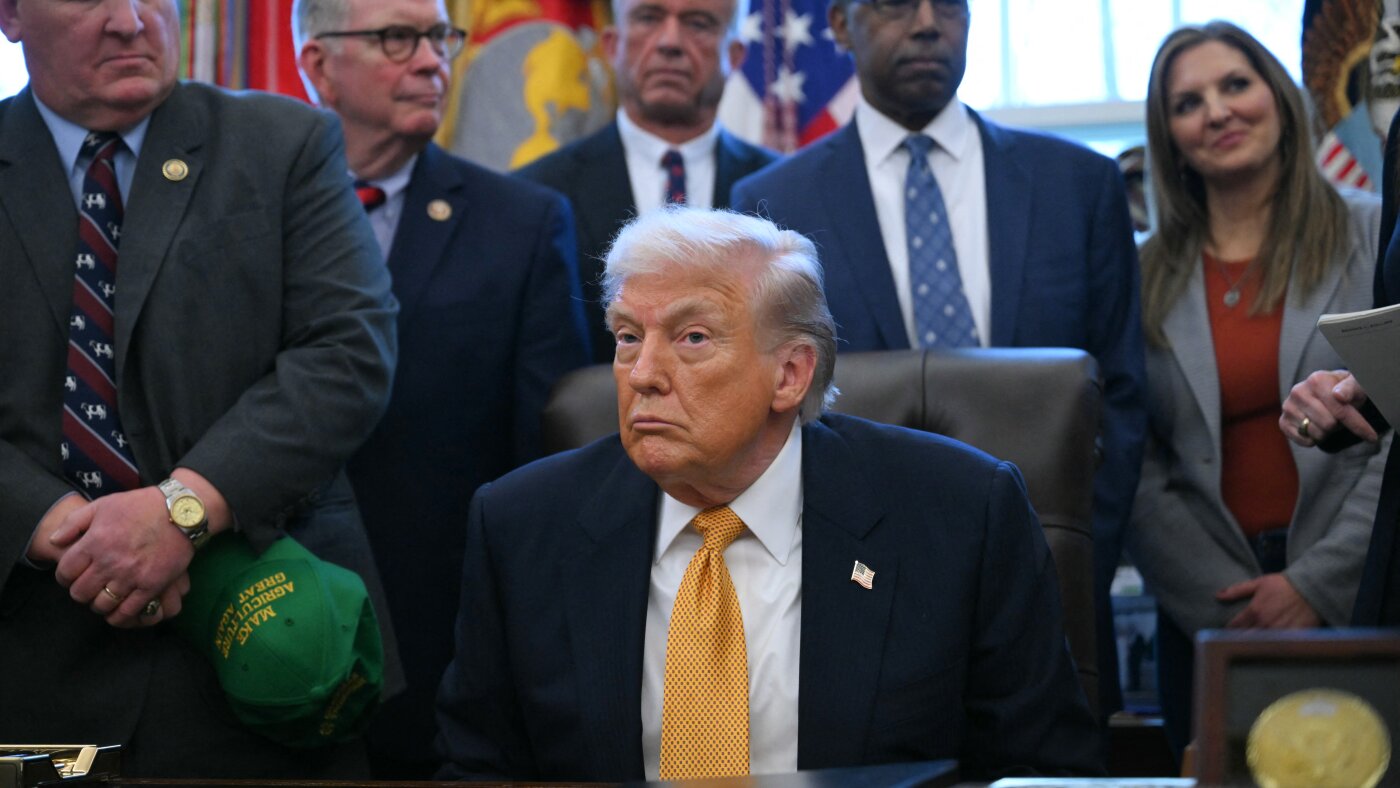
President Donald Trump in the Oval Office on Wednesday. On Thursday, he made a health care announcement via a social media video.
Brendan Smialowski/AFP via Getty Images
hide caption
toggle caption
Brendan Smialowski/AFP via Getty Images
In a video posted to social media Thursday, President Trump announced an outline for new health care legislation. The plan does not include a remedy for people who buy their health insurance on Healthcare.gov, some of whom are facing sky-high premium hikes this month. Trump dubbed the ideas "The Great Healthcare Plan." According to a White House fact sheet and a press call hosted by Medicare and Medicaid chief Dr. Mehmet Oz, the planned legislation, which the administration is asking Congress to develop, has four pillars:
Asked for specific policy details, Oz said it was a "broad framework" and referred further questions to a White House official who spoke not for attribution. The official also did not provide detailed answers to reporters' questions, but did say that this future legislation would not replace other possible laws. Both Oz and Trump talked about the plan as if it is a replacement for the ACA, but the proposals are much narrower in scope than that law that passed with no Republican votes in 2010. A bipartisan group of Senators is trying to hash out a bill to extend Affordable Care Act enhanced subsidies, so Trump's plan appears not to preclude that short-term deal moving forward. Sen. Bernie Moreno, R.-Ohio, who has been leading those bipartisan talks on reviving the enhanced subsidies, told reporters Thursday he "loved" Trump's Great Health Care Plan. He said that the omission of the subsidies in Trump's plan did not throw a wrench into those negotiations. "No, the biggest wrench in our negotiations is that the Democrat leader has basically made public statements that, to me, sounds like he doesn't want Congress to make a deal." A bill that the House of Representatives passed over the objections of Republican leaders in that body that would be a 3-year extension of the enhanced subsidies appears to be a nonstarter in the Senate, though it still has the support of Senate Minority Leader Chuck Schumer.