Sting's lawyers claim he shouldn't have to pay bandmates streaming royalties
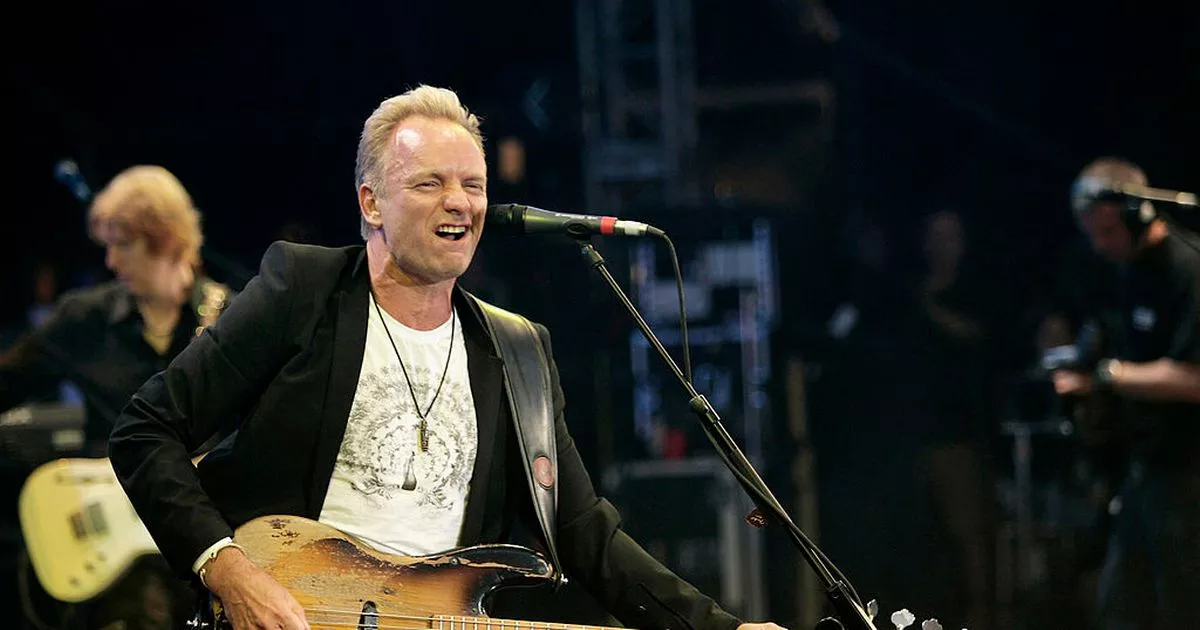
Lawyers for musician Sting are arguing that he shouldn't have to pay streaming royalty payments to his former bandmates as the legal case reaches the High Court in London.The bassist, along with his company, Magnetic Publishing, are said to owe more than $2 million US dollars (£1.49 million) in 'arranger's fees' to to bandmates - guitarist, Stewart Copeland and drummer Andrew Summers. The case centre on the understanding of various agreements made from when the band formed in the late 1970s to 2016.It was revealed that he has already paid half a million to his bandmates since legal action was launched. The two musicians took legal action along with their companies, Megalo Music, Kent Foundation Laboratories and Kinetic Kollection in 2024.Sting's lawyer, Robert Howe KC said in written submissions for the preliminary hearing on Wednesday, January 14, that the musicians do not agree on how the phrases “mechanical income” and “public performance fees ” apply to streaming - which is continuing to generate significant income.Mr Howe said that according to Sting an agreement that where a songwriter gives 15% of the publishing income to the other two musicians, in an arranger's fee, do not apply to streaming. This is being contested by the other bandmates.His barrister said that Sting has paid more than 800,000 US dollars (£595,000) in “certain admitted historic underpayments” since the legal action began in 2024.Sting, whose real name is Gordon Sumner, disputed this larger legal claim. He said that the arranger's fees should only apply to physical products such as cassettes and vinyl.Mr Howe argued that the court needs to take note of a 'professionally drafted' agreement, composed in 2016, which states that money is only owed on mechanical income 'from the manufacture of records.'Ian Mill KC, acting for Mr Copeland and Mr Summers, as well as their companies, counter-argue that the agreements could actually date back to 1977.Mr Mill said the 15% figure was agreed between band members then, but it was later formalised in written contracts. In written submissions, the barrister said that the issue for the upcoming trial is: “whether the parties have accounted to each other for arranger’s fees correctly in accordance with the terms of the 2016 settlement agreement”.In previous 2025 court documents, Mr Mill reported that Sting's former bandmates are owed more than 2 million US dollars because arranger's fees that were generated through streaming had not been paid.He said that Mr Copeland and Mr Summers understand the 2016 agreement means that they are entitled to a share of money “from all publishing income derived from all manner of commercial exploitation”.The hearing, before Mr Justice Bright, is due to conclude on Thursday, January 15, with the trial expected at a later date.