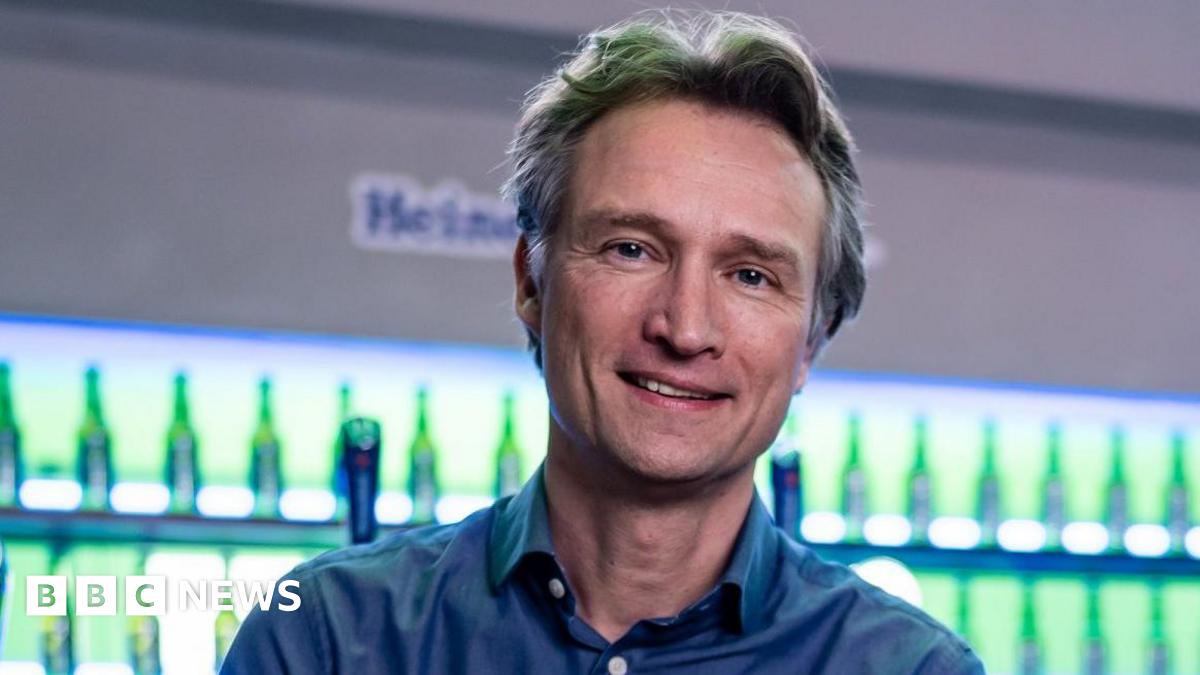
Heineken boss steps down as beer sales slow
It said it expected 2026 sales to be even lower.And, despite the growth in popularity of the low and no-alcohol market, Heineken's own version, Heineken 0.0, saw a decline in sales.Particularly weak sales in Europe could not offset growth the firm saw in places like Mexico and China.Even Germany, with a strong heritage of breweries and drinking culture, has seen a move away from alcoholic beers.As such, the departure of Heineken's boss "is not a surprise", said consumer analyst James Edwardes Jones from RBC Capital Markets.The firm's share price fell about 3% after the announcement that van den Brink would be stepping down in May."Perhaps this change at the top is what Heineken needs," Jones said, saying that despite arriving with high expectations, van den Brink had "not delivered on them".Jones added that lower alcohol consumption, particularly by Gen Z, was "a risk to Heineken's long-term growth".Jonny Forsyth, principal strategist at Mintel Food & Drink, agreed, saying while non-alcoholic beer is growing in popularity, Heineken would "continue to struggle unless it can revive the fortunes of its flagship alcoholic beer brand".He said the company had to invest more in advertising. "Currently, Heineken lacks a clear premium identity, in contrast to a brand like Guinness which has carved out a distinctive and aspirational positioning," he said.Heineken, which is worth billions of euros, was founded in the Netherlands. It is over 150 years old and owns major brands including Murphy's Irish Stout, Sol, Desperados and Amstel, as well as ciders Strongbow, Inch's, Old Mout, Bulmers and Red Stripe.