Mysterious black cameras spook locals in wealthy Texas neighborhood
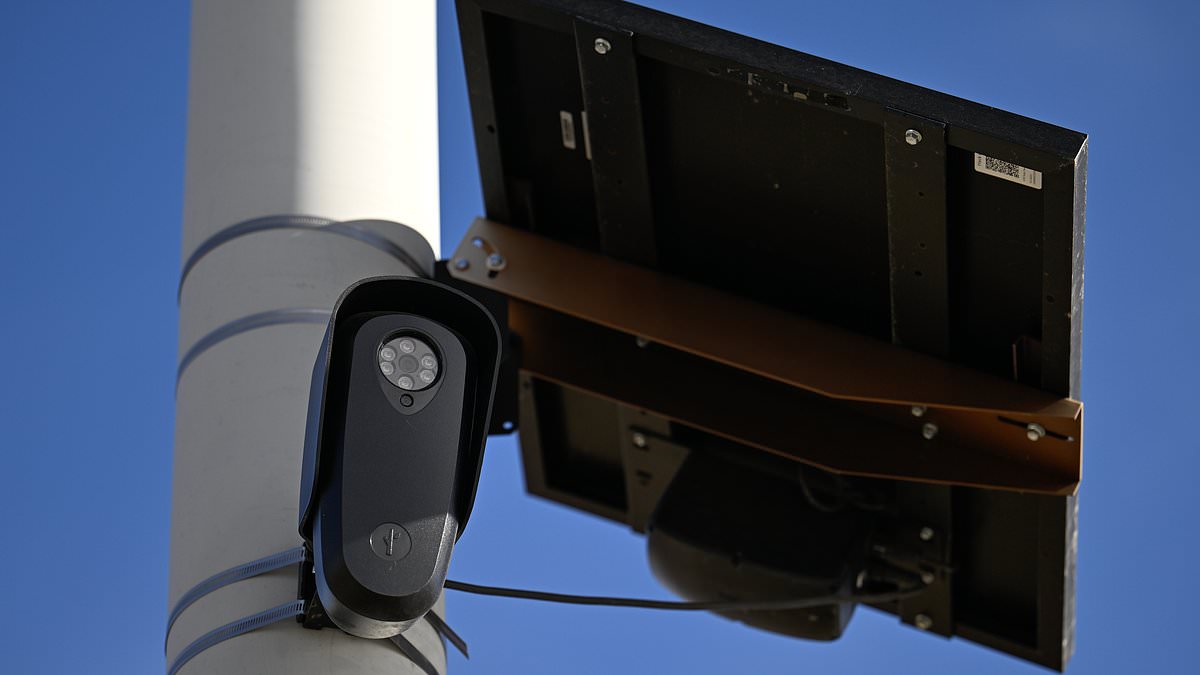
A Texas neighborhood has been gripped by an epidemic of mysterious cameras being installed in public areas amid a spike in concerns about government surveillance and overreach. In the northside of San Antonio, the unexplained black Flock Safety cameras fixed onto poles and powered by solar panels have become a more frequent sight for locals. They can scan and record the license plates of every car which passes them, as well as make note of the make, model and color of a car.In many instances, the cameras are used to help local police in capturing information to crack down on crime and traffic violations as well as aid in investigations. But such cameras have also been adopted by private businesses, malls, homeowner's associations and smaller towns.The increase in surveillance has led residents to question who is collecting the data from the cameras which remain unaccounted for, amid fears the information could be passed onto Immigrations and Customs Enforcement agents or otherwise sold. The company that makes the cameras claims the information which can be ascertained reaches beyond just license plates to include other details that identify the vehicle's owner. 'Since we live in a big brother world, I thought it important to share this with others. The cameras are being deployed and aren't secure. We should all be discussing these cameras and getting them out of our city,' one local said, according to My SanAntonio. In the northside of San Antonio, the black cameras fixed onto poles and powered by solar panels have become a more frequent sight for locals Tthe cameras have also been adopted by private businesses, malls, homeowner's associations and smaller towns, leading many to protest the high-level of surveillance Flock Safety says the collected information reaches beyond just license plates, including the make, model or color of a car as well as other details that identify its ownerWhile some companies using the cameras are easy to trace, others remain ominously trickier to pin down. Locals have grown ever-more concerned over such large amounts of sensitive and identifying data being shared, sold or leaked. 'Flock cameras. Kind of private but also used by law enforcement. It is known they can be data harvesting points but again law enforcement uses them through the company that owns them, so it’s in a legal grey zone currently,' one concerned Wilderness Oaks local posted on Reddit. Others, however, support their presence to help reduce crime. One critic argued: 'Flock cameras are NOT “crime-fighting tools.” They are 24/7 mass surveillance systems sold by a private corporation that profits off our data. They scan every license plate, track where you go, when you go there, and who you’re with. They store that data in a searchable database that hundreds of agencies can access.' Earlier this year, the company said that it would stop publishing a 'national lookup' that would allow federal agencies to access local camera data, the East Bay Times reported. And in response to concerns about ICE and the Department of Homeland Security, Flock representatives said that the company would follow Oakland's sanctuary city policies.In Oakland, those policies include restrictions on vendors with ties to ICE that the city may look to work with.Abuses of the camera systems have been recorded in lawsuits, such as one filed by anti-surveillance advocate Brian Hofer in Oakland. Hofer filed the suit against the city late last year, claiming that the Oakland Police Department shared license plate information with ICE - a violation of California law SB 34 which restricts how the data can be used, according to the Times. Some of the mysterious cameras - that seem to have no apparent owner - raise legality queries over who is monitoring and collecting all data from the locals Abuses of the camera systems have been recorded in lawsuits, such as one filed by anti-surveillance advocate Brian Hofer in Oakland'Flock is a shady vendor,' Hofer declared. 'This is not a good corporate partner.'Hofer even resigned from his position on the city's Privacy Advisory Commission after the council ignored his recommendation to find an alternative vendor, the outlet reported.He told KTVU: 'Oakland cannot claim to be a sanctuary city when it fails at such a large scale to protect the data privacy interests of its residents and visitors, especially in the face of the Trump administration’s attacks directly targeting Oakland.'Flock surveillance has been opposed by activists and politicians across at least seven states, including Arizona, Colorado, New York, Oregon, Tennessee, Texas and Virginia, NBC reported. Jay Hill, a self-identified conservative from Murfreesboro, Tennessee, told the outlet that he is a staunch opposer to the surveillance. 'It really is a tracking system for law-abiding citizens. That's what I try to explain to people,' he said. 'I choose to carry [my] phone. I can't go anywhere in Murfreesboro without passing five of those [cameras].'Sandy Boyce, 72, of Sedona, Arizona, added that she had found herself finding common ground with the left, as someone who voted for Trump and a supporter of Health and Human Services Secretary Robert F Kennedy Jr. Boyce has rallied and protested against the cameras in her own neighborhood, and in September the City Council voted to end Sedona's deal with Flock Safety, NBC reported. 'I've had to really be open to having conversations with people I normally wouldn't be having conversations with,' she told the outlet. 'From liberal to libertarian, people don't want this.'