Clay Bar Vs. Clay Mitt Vs. Clay Towel: Which One Actually Wins?
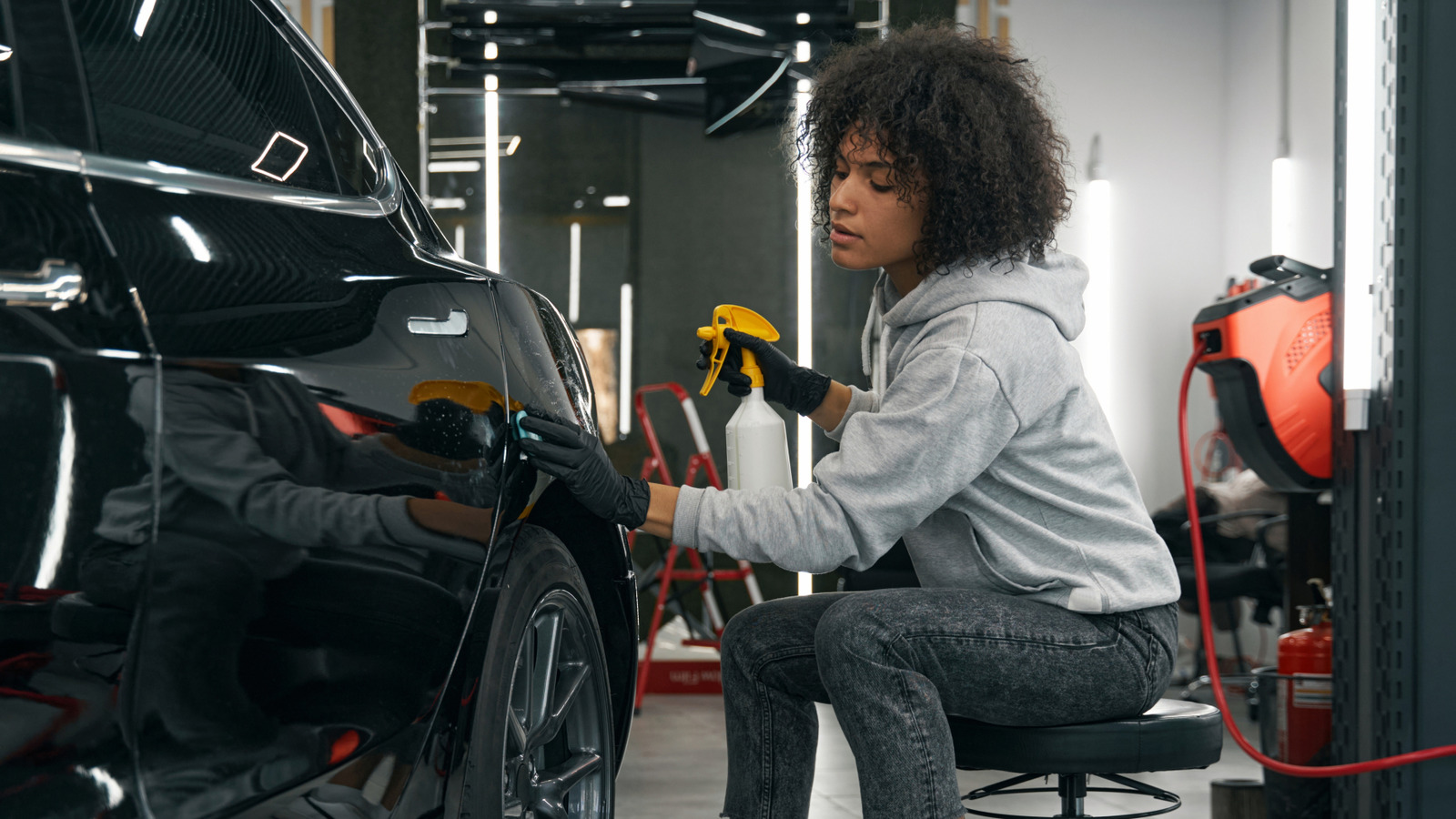
If the three major claying tools were in a battle royale, you'd have the traditional clay bar walking in like an old-school champ, the clay mitt sliding in like the slick newcomer, and the clay towel standing in the back doing some warm-ups. But before the bell rings, let's get a few things straight. Claying is the process of removing embedded contaminants from your paint — the sort of stuff regular or frequent car washing can't touch. Think rail dust, industrial fallout, stubborn overspray, and that mysterious grit that magically appears after every "clean" commute.
Claying exists because smooth paint equals better shine, better protection, and better sanity. Clay shears wash-resistant contaminants off the surface of your car through lubrication and light friction. It can restore the paint to a glassy smooth finish that actually feels like it looks. Detailing clay was invented in Japan in 1987 by Tadao Kodate, founder of Joybond Co. It was originally made as a way to safely remove stubborn contaminants without stripping paint, replacing riskier methods that caused early thinning of the clear coat. It was later introduced in the U.S. by the late '90s, transforming the detailing industry.
So when's the best time to clay? Simple. If you wash your car and still feel roughness with the plastic bag test, your paint needs clay. As for the best methods — the stage is set and the fighters are warmed up. Which one actually wins the battle of clay detailing?
Clay bar: the OG contender
The clay bar treatment is the classic claying method. It's a pliable synthetic resin that you flatten into a puck, lubricate with a spray, and glide along the surface. This is fit for intermediate detailers (or for some "advanced" beginners) who want total control and aren't afraid of a slow and methodical process. It's also ideal for problematic places like bumpers and trim edges, where mitts and towels feel too bulky.
The biggest advantage of a clay bar is precision. Because you're working with a small piece of clay, you get a better feel through your fingertips, which makes it easier to target stubborn or localized contamination. When used correctly with proper lubrication, a clay bar still delivers one of the smoothest finishes you can get on automotive paint. That level of control is why many experienced detailers still reach for it when perfection matters.
If a clay bar hits the ground, though, it's done. There's no second chances, because any grit it picks up will scratch your paint. Clay bars are also slower to use than clay mitts or towels, especially on larger vehicles like trucks or SUVs. It is the most abrasive tool of the three choices, as well. Even in ideal conditions, you'll need to be mindful in using it to avoid scratches and marring. And since you're gripping and kneading the clay the entire time, hand fatigue tends to set in more quickly compared to the alternatives.
Clay mitt: the speed demon
Our next contender, the clay mitt, is essentially a microfiber glove with a clay surface on one side. You slip it on, soak the panel with lubricant, and glide just like a wash mitt. The biggest winners with a mitt are beginners who want speed without sacrificing too much refinement.
Clay mitts win on speed and convenience. They cover more surface area than a traditional clay bar, which makes them significantly faster on large panels like hoods, roofs, and doors. They're also easier to grip, so your hands don't cramp up halfway through cleaning an SUV. And unlike a clay bar, a mitt is practically drop-proof. If it hits the ground, you can rinse it off and keep working instead of watching your money bounce across the driveway.
Of course, convenience comes with trade-offs. Clay mitts are bulkier, which makes them awkward in tight spots like mirror bases, door handles, and complex body lines. They also need to be rinsed more often when in use, since contaminants and debris will get stuck to them. And while mitts do a great job removing contamination quickly, they don't always leave quite the same ultra-smooth finish that a proper clay bar can deliver.
Clay towel: the hybrid heavyweight
The clay towel is like the mitt's no-nonsense cousin. It uses a similar clay surface, but it's used as a towel instead of worn on your hand. It works almost identically, too, only needing you to load up your lube and fold the towel before dragging it across your ride. Clay towels can deliver some of the best balance between coverage, convenience, and maintenance. Anyone doing quick jobs, especially before waxing or applying a ceramic coating, is certain to appreciate them. They're also ideal for pros who want a backup tool that's easy to maintain.
Also like mitts, clay towels shine when speed and coverage matter more than precision. Their biggest advantage is efficiency. A clay towel covers large panels quickly, which can be a big help when detailing SUVs or trucks. They're also much faster to use than traditional clay since you're wiping, rather than kneading and pinching a small bar. Plus, clay towels are also reusable. If one hits the ground, you can usually rinse it thoroughly and keep working without throwing it away.
Clay towels do have their own downsides. They can induce marring if lubrication is lacking or your applied pressure gets sloppy. And while the finish they leave is typically very good, it doesn't totally remove deeply-seated contaminants like a clay bar can. Clay towels are best for experienced DIYers who value time and consistency over the best-looking results.
So who actually wins the battle of the clay?
If you were hoping for a single knockout winner, bad news: detailing clay doesn't work like that. The real winner depends on how picky you are, how much time you have, and how much paint you're willing to babysit. Traditional clay bars still deliver the most precise results, especially with pesky water spots, stubborn contamination, and neglected paint. They're slower and less forgiving, but when ultimate smoothness matters, nothing quite beats them.
Clay mitts win on speed and comfort. They're faster, easier on your hands, and far more forgiving if you're working on a large vehicle. For most people who want to clean their car's paint without turning the job into a weekend-long meditation exercise, the mitt is the sweet spot.
Clay towels sit somewhere in between. They cover large areas quickly like a mitt, but they offer a little more control, which makes them a solid option for maintenance claying or fleet-style efficiency. They won't always deliver results comparable to show cars, but they're consistent and hard to mess up.
Professionals often own all three of these tools. Beginners should start with a mitt or towel, while perfectionists will always benefit from keeping a clay bar nearby. The best tool isn't the one that wins the fight — it's the one that matches how far you're willing to go.