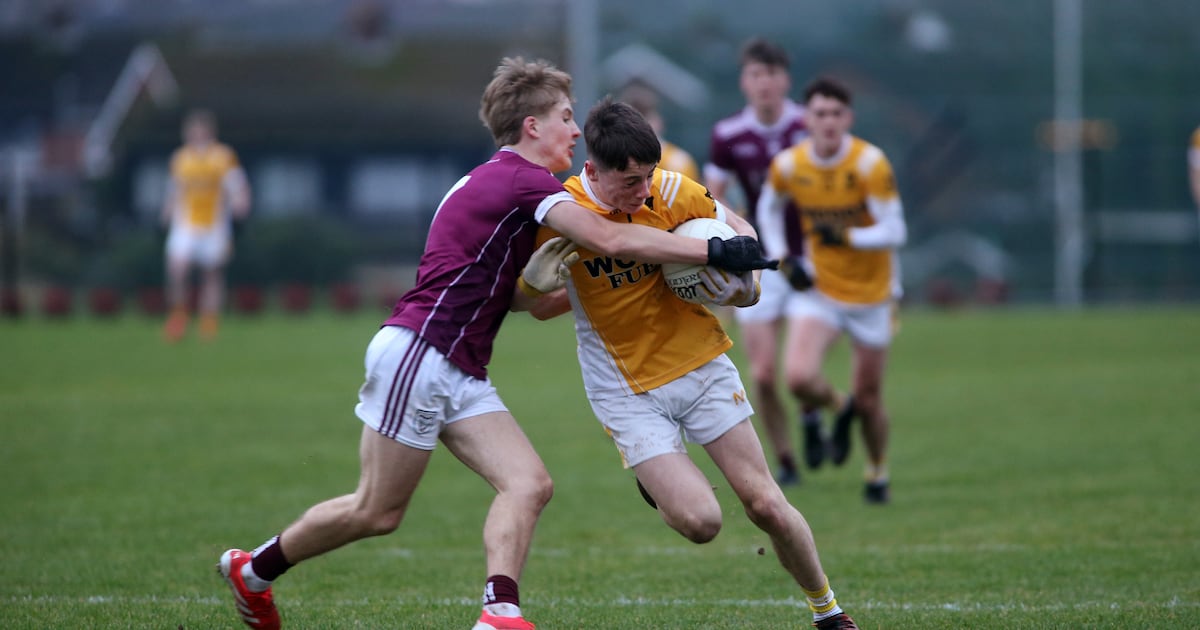
New GAA rules resulted in minor increase in player workload, study finds
New rules in Gaelic football have resulted in a slight increase in player workload, according to data analysis conducted by Dublin City University (DCU). The rules were designed to create a more fluid game, but there were concerns that they might lead to an increased workload for players.The changes included the requirement for three players to remain in each half of the field during a match and a minimum distance for goalkeepers' kick outs. The "solo and go" rule was also introduced, allowing a fouled player to immediately continue play, aiming to reduce the number of disputes over frees which delay the game.These rules were put into effect this year following discussions by the Football Review Committee, led by former Dublin football manager and presidential candidate Jim Gavin.An analysis comparing data from 2024 and 2025 showed only minor increases in workload for three player positions. Prof Mark Roantree from the DCU School of Computing, who supervised the study, stated that the use of GPS data provided an objective analysis of the rules.The data was collected from anonymised player GPS information from Division 2, 3 and 4 teams across 32 games in 2024 and compared with 50 games in 2025.Interestingly, the data analysis also revealed that matches have slightly increased in duration since the rule changes, averaging just over 77 minutes in 2025 compared to 2024."We simply took raw GPS data from players, and then depending on player velocity, we computed their relative intensity (speed) by distance," he explained."The study is purely data driven."The data analysis from DCU revealed that among the six positional lines, goalkeepers, half-backs and midfielders covered slightly more ground in 2025 compared to 2024 – though these increases were minimal.In the games analysed, the average total distance covered by goalkeepers in matches increased marginally from 4,882.8 metres, to 4,969.7m, a figure somewhat distorted by a mid-season rule change restricting goalkeeper movement.Half backs also covered a bit more ground, with distances rising from 9,352.9m to 9,795.9m.The average distance covered by midfielders also saw a slight increase from 9,341.4m to 9,532.7m, although analysis indicates this is due to an increase in "low intensity movements".This increase is likely due to stoppages in games for referee checks.High intensity sprinting saw an increase in goalkeeper and half back positions, but decreased in all other positional lines.Uttaran Bera, research assistant at the Insight Centre for Data Analytics, stated: "We crunched thousands of minutes of GPS data and the main takeaway is that, contrary to everyone's expectations, the rules changed but players' workloads really didn't."Our data and visuals clearly show only small bumps for a few positions."Prof Roantree commended: "A special mention should go to those counties who participated in the study, took the time to process and forward their data to Aaron O'Neill, research assistant at the School of Health & Human Performance, who ensured data anonymisation for both teams and players."The study was a collaboration between the GAA Games Intelligence Unit (GIU), the School of Health & Human Performance, and the Insight Centre for Data Analytics at Dublin City University (DCU).Click here to sign up to our sport newsletter, bringing you the top stories and biggest headlines from Ireland and beyond.