Somalis say foreign ships are stealing their fish, and it's fuelling a piracy resurgence
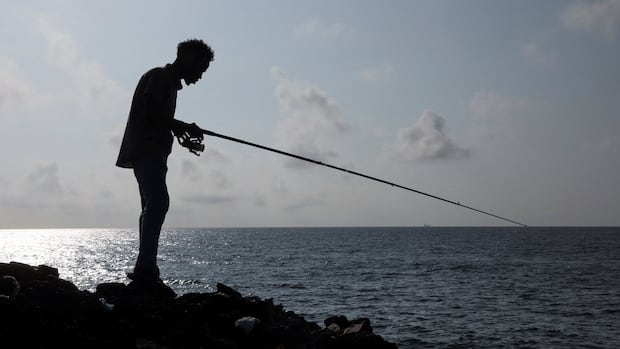
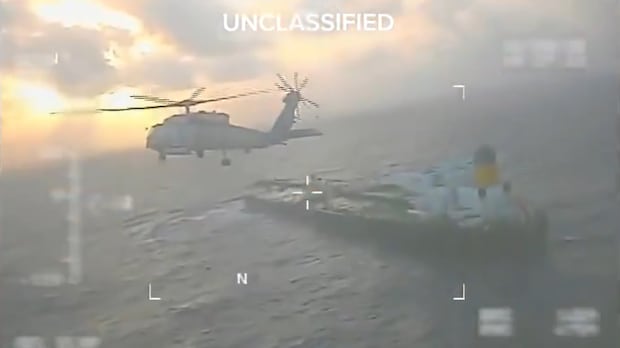
Piracy off the coast of Somalia is back in the headlines after European Union naval forces seized an Iranian fishing vessel last month that Somali pirates used to hijack a Malta-flagged tanker carrying gasoline from India to South Africa. It followed several earlier hijack attempts by armed Somali pirates, and while it's a far cry from the peak of Somalia's piracy crisis 15 years ago, when it was seeing more than 200 such attacks a year, some experts in maritime security say it signals a resurgence of profit-driven piracy in the Gulf of Aden and the western Indian Ocean."With international naval assets partly redirected to the Red Sea due to Houthi-related operations, pirates have exploited reduced patrols in the Somali Basin," the marine insurance provider Skuld noted last month.Abdiwahid Hersi, a fisheries expert and former director general of the Ministry of Fisheries and Marine Resources in Somalia's Puntlund state, said it's a situation that could easily spiral out of control. "These attacks should be treated as serious but not necessarily a full return to 2010-scale piracy," he said in an interview with CBC. "They may be episodic clusters that can escalate if unchecked." A vessel with the EU Naval Force Operation ATALANTA, which conducts anti-piracy operations in the western Indian Ocean and the Red Sea, is seen near the tanker ship Hellas Aphrodite, which was boarded by pirates on Nov. 6, 2025. (EU Naval Force Operation ATALANTA)Hersi says one of the factors driving piracy in the region is economic displacement. It's been estimated that Somalia loses more than $300 million US annually on account of illegal, unreported and unregulated fishing in its waters. Local fishermen harmed by such activity may be more tolerant of, or even complicit in, attacks on foreign vessels, seeing them as an alternate source of income or retribution for the "theft" of their resources, Hersi said. Fish on display at the Bosaso fish market. (Submitted by Abdirahman Abdi Ali)The Ministry of Fisheries and Blue Economy of Somalia has documented hundreds of foreign fishing vessels it suspects of fishing illegally in the country’s coastal waters and exclusive economic zone in recent years. That includes ships from China, Iran, Yemen, Spain, France, Thailand and Egypt, Hersi said. Illegal and unreported fishing happens year-round, he said, but intensifies between April and June and October to December. “Since the early 2000s, there has been surveillance showing exactly when and where illegal fishing was happening, identifying the vessels, their positions, their ID numbers," Hersi said.'I can't fight back'Fishermen have reported incursions by foreign vessels in areas reserved for small-scale fishers, as well as damage to gear from vessels trawling near shore, with some of their equipment later found on foreign boats. "I've been doing this for six years, illegal fishing happens a lot, and even my own boat was taken by force by armed Iranians this year," said Mohamed Saciid, 23, a local fisherman from Mogadishu, known locally as Xamar. "They even fired shots and threatened me. I can't fight back, and I can't defend myself."Mohamed Saciid, 23, a local fisherman from Mogadishu, says armed Iranians took his boat from him by force earlier this year. 'I can't fight back.' (Submitted by Mohamed Saciid)An October 2024 assessment by Denmark-based Risk Intelligence, found that locals had reported that foreign vessels had "adopted increasingly aggressive tactics, including ramming Somali boats, cutting nets, and even firing warning shots."Abdirahman Abdi Ali, 33, has seen some of that up close from his position as a harbour pilot guiding ships into the port of Bosaso on Somalia’s northern coast."Over the last decades, local fishermen felt the dramatic decrease of the fish stocks across Somalia," he said. “Somali fishermen became angry and turned to pirates, and these days, piracy is making a comeback.” Ali, pictured here in blue long-sleeved shirt at a local fish market in Bosaso last year, says locals have seen fish sticks decline. But it's hard to get a clear picture because data collection is poor in a country riven by war for decades. (Submitted by Abdirahman Abdi Ali)(Researchers have pointed out that information on the health of fish stocks in Somalia is largely anecdotal because the war has made data collection difficult.)While it's not clear whether fishermen were involved in the November attacks, there have been reports of disgruntled fishers who blame foreign fleets for harming their livelihoods turning to piracy and making their money off ransoms instead.Recent ransom payments in the millions of dollars have demonstrated the continued profitability of piracy and incentivised further attacks, the Skud analysis said.Experts have also pointed out that growing commercial ties and co-ordination between the militant groups al-Shabaab and the Houthis are fuelling some of the pirate activity off the coast of Somalia, with al-Shabaab offering protection for pirates in exchange for a cut of the ransom proceeds.Hersi said he does not have knowledge of local fishers' involvement in this type of piracy and that the more pressing concern for them is illegal fishing.Ali agrees and says doing more to combat illegal fishing could help local communities build up their fisheries and keep more fishers employed.There have been some positive signs in that direction lately, he said.Last month, Ali watched as several Iranian vessels seized by Somali authorities on suspicion of fishing illegally off the coast of Puntland were brought into Bosaso. Eighteen people, including three Somalis, were eventually charged.Members of the Puntland Maritime Police Force (PMPF) patrol the Gulf of Aden off the coast of the semi-autonomous state of Puntland in Somalia in November 2023. Pirate activity in the region has picked up in recent years as international patrols have shifted to countering the Houthi-led attacks in the Red Sea. (Jackson Njehia/The Associated Press)Iranians charged with fishing illegally Iran was one of the countries identified in a 2021 report by the Global Initiative Against Transnational Organized Crime, which used satellite data to track vessels fishing illegally in Somali waters, including inside the 24-nautical-mile zone reserved for local fishermen. It also came up in the 2024 Risk Intelligence report, which found that Iranian-flagged vessels had made nearly 300 entries into Somalia’s exclusive economic zone in 2023.The presence of foreign vessels has been cited as a justification for acts of piracy by Somalia-based gangs "casting themselves as defenders of Somali waters against foreign exploiters," the Global Initiative report said.Iranian fishing ships are seen docked after they were detained by Puntland marine forces in Bosaso in October 2015. Iranian vessels have been accused of fishing illegally in Somali waters over the past decade, including as recently as this fall. (Abdiqani Hassan/Reuters)"However, the reality is far more nuanced. Foreign IUU [illegal, unreported and unregulated] fishing operations are frequently facilitated by local Somali agents, often in co-operation with government or quasi-governmental actors, who for a fee provide fishing licences, flag registrations, falsified export documentation and even armed, onboard security detachments." Hersi agrees it's too simplistic to draw a direct line between illegal fishing and piracy. "IUU is a significant enabling factor. However, political fragmentation, weak maritime governance, organized criminal networks, regional geopolitics and reduced international naval presence all interact," he said. "Historical research on Somali piracy found an important link [to IUU]: perceptions of foreign 'theft' of fish and dumping of waste generated local grievances and provided a recruitment narrative."Fishermen carry a tuna to the market in Mogadishu in April 2025. Somalia needs to make its fishery more sustainable by doing things like investing in cold storage, processing and aquaculture, says local fisheries expert Abdiwahid Hersi. (Farah Abdi Warsameh/The Associated Press)He says to combat the impact of illegal fishing and make its own fishery economically viable, Somalia needs to build up its maritime surveillance capacity, strengthen its coastguard, pass stricter maritime laws and implement a transparent licensing system that is aligned with its neighbours. "Long-term stability depends on improving coastal livelihoods by investing in cold storage for fish, fish processing, market access, community-based monitoring, aquaculture and other 'blue economy' jobs," Hersi said.New licensing rules could curb illegal fishingIllegal fishing has been a problem in Somalia since at least the early 1990s, when the country’s coastline was left unguarded as a result of the collapse of the government and the outbreak of civil war. By 2018, with the situation more stable and a central government in place, if precariously, Somali authorities began issuing permits to so-called distant-water fishing nations, such as China, allowing them to fish in the area known as the exclusive economic zone and generating hundreds of thousands of dollars in licensing fees, according to World Bank estimates. But oversight was lax, and the foreign ships began catching more than they were allowed to and causing damage to marine life in the process, says Ali."When they are granted licenses, they come ashore and overfish, causing widespread destruction to marine habitats and causing widespread harm to coastal residents," he said. "These vessels are not supervised." Ali examines the wares at the Bosaso fish market in 2024. The harbour pilot says foreign vessels that fish beyond what their licences allow are causing 'widespread destruction' to marine habitats and locals' ability to earn a living from fishing. (Submitted by Abdirahman Abdi Ali)The problem of overfishing was exacerbated by the fact that some states, such as Puntland, started issuing their own licences, as did some warlords, spawning corruption and disagreements between federal and regional authorities."Licensing is fragmented across multiple agencies, enforcement of fishing regulations is weak, and illegal, unreported and unregulated fishing costs Somalia an estimated $306 million US annually," a report from the Somalia Development and Reconstruction Bank concluded.Last year, the government took steps to tighten the licensing process and signed an agreement with Turkey to help patrol the region. "It's probably too early to see the effect of this on the water," said Rashid Sumaila, Canada Research Chair in Interdisciplinary Ocean and Fisheries Economics at the University of British Columbia. "But … introducing [stricter] licenses is a good move and an improvement."A man fishes in the waters of the Indian Ocean in the Hamarweyne district of Mogadishu in November. Somalia recently took steps to more strictly regulate fishing and recoup some of the millions of dollars it loses through illegal and unreported fishing. (Feisal Omar/Reuters)Scared off of fishing, Somali man starts new life in Edmonton Hersi Farah is one of the fishermen who felt he could not compete with the foreign trawlers. The Somali Canadian now lives in Edmonton and works as a heavy equipment operator but used to work for a local fishing company in the Bari region of Puntland in the 1990s. "It was a seasonal fishing job," he told CBC News in an interview. "I saw it as an opportunity to get money because at that time, the Somali government had collapsed, and there was a civil war in the country." A man in Mogadishu works on a fishing boat in June 2012 in front of a building destroyed during the protracted civil war. The unstable political and security situation in the 1990s and early 2000s left Somalia's coast vulnerable to vessels that engaged in unregulated and illegal fishing. (Goran Tomasevic/Reuters)The job became less appealing once foreign trawlers showed up. "They were big and really scared us," Farah said. "These ships were the most dangerous at night. They used to fish from the coast after midnight…. "When we woke up early in the morning, you would see all our stuff destroyed. If we tried to [fish], I used to worry they would kill or down us." As fishing became unsustainable, Farah looked for economic opportunities elsewhere and eventually immigrated to Canada.Marine life at riskBeyond the economic consequences, unregulated fishing impacts Somalia’s marine ecosystem as well.Dolphins, sharks, turtles and other species can end up as bycatch, unintentionally scooped up in the large trawl and gill nets some vessels use."Trawler boats also cause the death of fish eggs as they drag their heavy nets along the seabed and destroy fish breeding habits," said Ali. A beached dolphin in Bosaso on the northern coast of Somalia in 2023 that Ali says was likely part of the bycatch that some vessels inadvertently scoop up in their nets and discard.
(Submitted by Abdirahman Abdi Ali)The washing up on shore of injured and dead marine life is a sensitive topic for locals, who have for years alleged that coastal communities have been harmed by the dumping of hazardous waste on Somalia's shores by foreign nations. Those claims have also been among the grievances cited by some Somali pirates. Numerous investigations have attempted to corroborate the allegations, but the unstable political situation has made it difficult to prove conclusively.Ali, for his part, doesn't need more proof."Toxic waste of many types has been dumped on the coasts of Somalia and only discovered when the containers filled with garbage end up on the shores, which has happened many times," he told CBC.What is certain, says Sumailia, is that what happens on the sea in Somalia reverberates far beyond it. "The dolphins you see dead in Somalia could be dolphins that connect to marine life in Canadian waters," he said. "We have a global ocean. There's no Somali ocean [or] Canadian ocean."Dead sharks washed up on shore in Bosaso that Ali suspects were part of the bycatch left behind by vessels using destructive methods to fish. (Submitted by Abdirahman Abdi Ali)