Antisemitism allegations and anti-Irish tropes
Claims by Israeli Foreign Minister Gideon Sa’ar that Dublin is the ‘capital of antisemitism’. A Wall Street Journal article inferring ‘resurgent antisemitism’. Insidious accusations in British broadsheets regarding Ireland’s historic treatment of its Jews.
These are the latest bitter blows in a cold conflict of once civil, if strained, tones. Among the most recent reactions are a resurgence of anti-Irish tropes, a sad hark back to previous centuries.
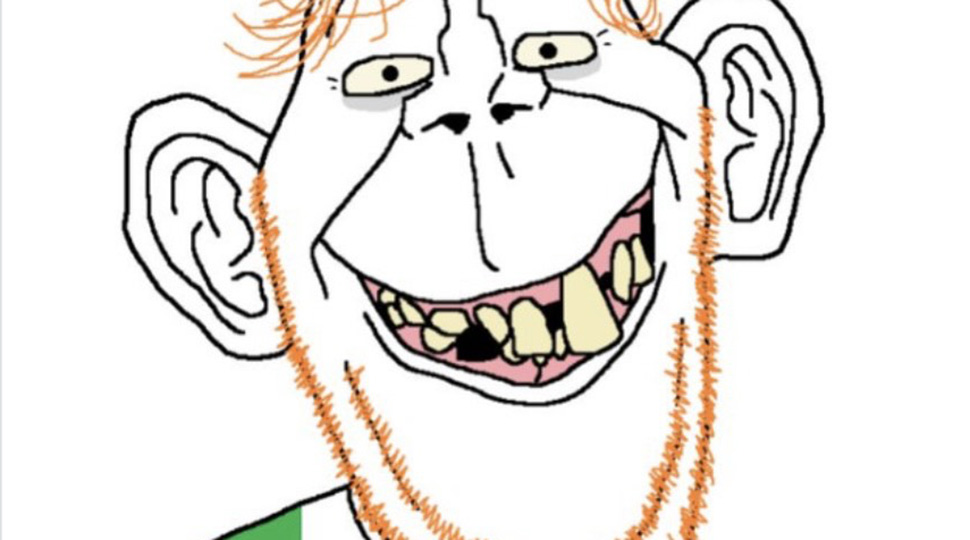
Where once caricatures of drunken, stupid Irishmen were used to diminish Irish calls for self-government, today they seek to belittle and silence Ireland’s voice. The accusation of antisemitism has become a new way for some to exercise an old prejudice.
This is just a sample of what has appeared online, along with much mistruth and slander which has echoes of what we have seen before.
What is the reality of Ireland’s long relationship with its Jewish community?
The most common accusation holds that Ireland has a history of antisemitism, and the same handful of individuals and events are rolled out in support. Despite the best efforts of the accusers, it is a statement of fact that Ireland has had significantly lower levels of all forms of antisemitism than contemporary states. It has also experienced nothing like the violent and frequent, systematic antisemitism seen in Europe and Russia.
O’Connell: ‘Ireland has claim on your ancient race’
In reality, the opposite is evidenced. Ireland and its Jewish inhabitants found common cause from the early 19th century, suffering shared persecution under British rule. The cause of Jewish Emancipation was keenly embraced by the most influential and emulated figure in Ireland, Daniel O’Connell. He proclaimed:
“Ireland has claim on your ancient race, as it is the only country that I know of unsullied by any one act of persecution of the Jews… I think every day a day of injustice until civil equality is attained by the Jews”.
The citizens of Waterford were moved to request the British Parliament remove the ‘civil disabilities of British Jewry’. This shared experience theme weaves its way down the decades, Irish Parliamentary Party leader Issac Butt comparing the Jewish experience to the Irish. Ireland’s Jewish groups would reiterate a positive experience frequently. James Joyce would comment on the similarity of the Jews and the Irish, later claims that his writing demonstrates a climate of antisemitism overlooking the fictional nature of such work.
The affinity went both ways, global Jews making generous donations to relieve Ireland’s famine poor while prominent Jewish figures were early supporters of Irish Land Acts and Irish independence. Ireland’s Jewish community, small but mighty, have contributed greatly to the fabric of Irish society.
Animosity was rare, despite an influx of Jewish refugees fleeing pogroms in the Russian Empire. This did not prompt mass disturbances as seen elsewhere. A Freeman’s Journal editorial, in response to unkind posters in Limerick calling on locals to have no dealings with recently arrived Jewish traders, seems typical of the mood:
The sudden antipathy to the Jewish community in the city is either the product of some hare-brained fanatic, or, what is more likely, the project of a set of ruffians having some ulterior object in view. In either case, we may promise that the movement, if it should come to a head, will enjoy a brief existence. The soil of Ireland does not take kindly to religious persecution. It has too bitter an experience of that evil to enjoy it”.
Others evoked the inclusivity of Wolfe Tone, then still influential.
There were, of course, instances of antisemitism. An all too casual ‘othering’ of Jews seen in press or recorded in diaries. The examples read of the typical emigrant experience in the late 19th or early 20th century. It was never deadly, very rarely aggressive, and in Ireland’s case it was many multiple times lower in frequency and intensity than comparable nations.
Expulsions and pogroms – No thanks, we’re Irish
It is a fact that Ireland has no history of expulsion and a near to zero history of violent antisemitism. The suggestion that Ireland expelled Jews in 1290 is entirely false, mistakenly wrapped up in an English royal decree at a time when part of Ireland was under English rule. There is no evidence the decree was enforced in Ireland.
The single example of note, the Limerick boycott, recently recast as a pogrom, saw zero deaths, although it left a sad legacy as many Jewish families left the city. The disturbance arose when local traders voiced frustration at what they saw as unfair competition from recently arrived Jewish traders. The group took their concerns to the local priest, Father Creagh, who made antisemitic sermons from the pulpit. This fanned the flames of violence that followed, the traders genuine concern a useful cloak for those of antisemitic intention. As many as 40 of the city’s 80 families left.
There was vocal criticism from senior political figures alongside multiple press rebuttals. Creagh would be quietly moved to another position. Irish Jewish author Louis Hyman described the affair as ‘a sad but uncharacteristic and atypical episode in Irish history‘, Ireland seeing nothing like the frequency of anti-Jewish behavior by clergy evident elsewhere. Jacob Jaffe would write in the Jewish Chronicle ‘I know the utterances of Father Creagh do not voice the sentiments of Irishmen in general’.
It remains the only episode of its type and scale in Irish history, paling in the face of Europe in the 1930/40’s and the anti-Jewish riots in Britain in 1947.
Nazi nonsense
The accusation that Ireland favored or aided the Nazi’s is the most demonstrably ridiculous, a weak attempt to link Irish neutrality with antisemitism. Ireland aided Britain so extensively and exclusively in WW2, the claim of neutrality is ludicrous. Neutrality was the common choice, Ireland joining America and Belgium among countless others. Ireland’s reasoning exceeded them all, then Taoiseach Eamon de Valera of no mind to endorse Britain’s toxic partition of Ireland.
Despite the facade, as early as 1938 Ireland arranged secret meetings with Britain’s MI5, discussing creation of an Irish secret service to spy on Nazi movements. Through this back-channel Ireland played a risky bluff, lying to Germany’s representative while fully aware Irish intelligence was spying on the German embassy and sharing the intercepts with London. Irish coast watch locations relayed German movements to British intelligence, allowing for intercept. The British military had near free reign to operate in Irish territory, access denied to Germany. There were dozens of infringements, many vital to the Allied cause, prompting MI5’s end of war summary to conclude ‘Ireland was of more use neutral’.
The Irish population acted similarly, some 9% leaving to take part in Britain’s war effort. 70,000 from the south joined the military while some 180,000 flocked to war time labor. The equivalent Irish volunteers for Germany? Two. Perhaps a dozen Irish played volunteer roles for Germany during the conflict, including a handful of senior IRA who attempted to further their aims with Nazi help. It was an effort so unpopular, it was kept from general membership, the deeply unpopular group in no way representative of Irish sentiment.
The Nazi’s had been forewarned there would be no help from Ireland. German spy Adolf Mahr reported: ‘democratic tendencies are strong, as well as respect for America… there is little understanding of, and absolutely no sympathy for, National Socialism (Fascism)’.
The other accusation from the period, that Ireland refused to take Jewish refugees, is at best a selective outrage. Every nation in the world vastly underperformed in this area, citing identical language to that used in Ireland. The Irish approach must be taken in the context of a universal ‘no refugee’ policy, of any background. One in effect long before WW2. Ireland admitted as few as 500 refugees 1939-1945, of which approximately. 20% were Jewish at a time when Jews made up 2% of Europe’s population.
There are examples of lamentable decrees by the Department of Justice about not taking additional Jews for ‘fear of inciting an antisemitism problem where none presently exists’. They also cited concerns about integration, despite no such issues previously. While deplorable, they echo identical concerns and excuses voiced in America and the UK. A cautious approach to inward migration was common. These excuses suggest individuals of ill intent may have acquired positions of influence, but frequent government memos attempting to bring more Jews to Ireland do not support an accusation of systemic antisemitism. Of 137 TD’s, one was openly antisemitic, drawing harsh criticism from colleagues. No far-right party or authoritarian figure got meaningful support in democratic Ireland. The variance with 1930’s Europe is extreme.
De Valera’s call to the German representative at war’s end did give endless ammunition to his and Ireland’s detractors. Despite the hysteria, it was not an expression of Nazi sympathy where there was none. The forest planted in his name in Israel testifies to the attitude of the man who wrote the Jewish faith into the Irish Constitution in 1937, an act with no equal in an antisemitic age.
The Jewish Representative Council of Ireland would have it say, stating ‘The Jewish community live and have always lived on terms of closest friendship with their fellow Irish citizens’. Ireland’s Jews regularly voiced their approval of Ireland’s neutrality in the conflict, the Republic a safe haven for all its citizens and many British refugees.
Despite this, Winston Churchill would do his level best to slander Ireland at the end of the war and weaken support for ending partition. He used his victory speech to accuse the nation of ‘frolicking with the German’s’, poisoning the truth of Ireland’s involvement.
He sought to diminish Ireland’s voice with mistruth and slander.
80 years later, little has changed. We can only call for peaceful times, insist on humanity and remember a century-and-a-half old Irish attitude expressed in the Freeman’s Journal:
“The soil of Ireland does not take kindly to religious persecution. It has too bitter an experience of that evil to enjoy it”.
John Crotty @itsjohncrotty. John Crotty is a published History Press and Merrion Press author and the foremost authority on the history of the Irish Tricolour and Spike Island. Upcoming works include the Irish Tricolour and a work on the revelation of the plot to discredit Ireland’s role in World War Two.