“US is unwilling to force Israel into a genuine peace process”: interview with Malek Nabil Al-Jaabari
The statements, views and opinions expressed in this column are solely those of the author and do not necessarily represent those of this site. This site does not give financial, investment or medical advice.
Steven Sahiounie, journalist and political commentator
The Trump administration seems determined to deliver peace in Gaza, but the people continue to suffer from Israeli attacks, lack of humanitarian aid, and the bitterly cold winter rain storms.
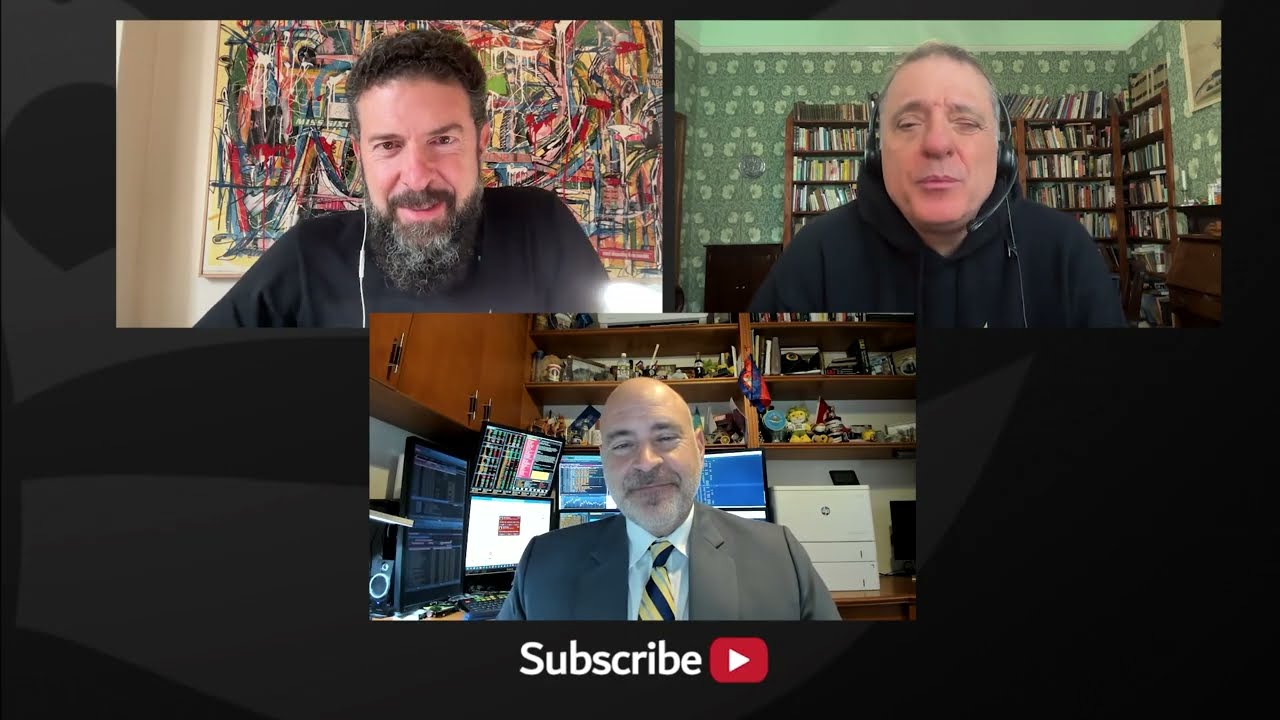
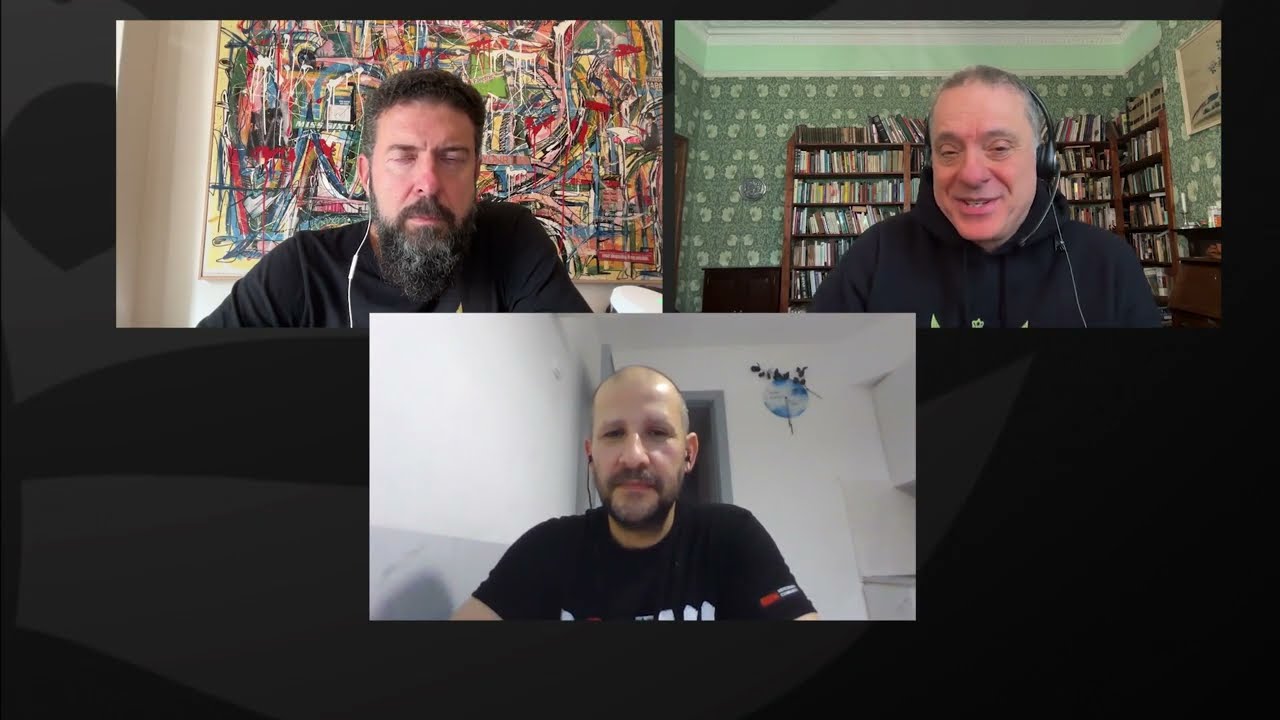
Many living in Gaza have questioned if there is any agreed upon peace plan, because they are not feeling it. Steven Sahiounie of MidEastDiscourse interviewed Malek Nabil Al-Jaabari, a journalist and writer on Palestinian issues.
1. Steven Sahiounie (SS): How was the ceasefire and peace agreement implemented on the ground in Gaza, and what challenges or violations have been reported since its adoption?
Malek Nabil Al-Jaabari (MNA): The ceasefire agreement in Gaza was not implemented as precisely as expected. The Palestinian territories have witnessed widespread Israeli violations since its adoption. More than 380 Palestinians have been killed and around 900 injured as a result of missile strikes, drone attacks, and naval shelling, under pretexts such as “targeting groups planning to attack the Israeli army.” However, the majority of the victims were children and women, which undermines these claims.
On the humanitarian level, the agreement remained fragile. It was stipulated that 600 aid trucks should enter daily, yet the actual number did not exceed half of that. In addition, the Rafah crossing was not opened in both directions to allow patients to leave or stranded individuals to return.
The Strip also suffered from a severe shortage of medicines, medical supplies, and fuel necessary to operate hospitals. Only about five fuel trucks entered daily instead of the 50 agreed upon.
More than 730 violations of the agreement were recorded, including direct gunfire at civilians, incursions by military vehicles into residential areas, and the expansion of the “yellow line” to cover nearly 60% of the Gaza Strip.
Although the prisoner exchange process was partially successful, it was marred by Israeli delays under the pretext of a missing captive’s body, which hindered the full implementation of the humanitarian provisions of the agreement, despite Palestinian factions affirming that this issue would not obstruct the continuation of the agreement.
Major challenges remain, especially with the approach of the second phase, as current indicators raise fears of a broader expansion of Israeli violations.
2. SS: What role do international actors (such as the United Nations, Egypt, the United States, and the European Union) play in supporting the peace process in Gaza and humanitarian relief efforts?
MNA: In supporting humanitarian relief efforts, there are aid institutions affiliated with Arab states that are active in Gaza. For example, Egypt has the “Egyptian Committee,” which participated in searching for the bodies of captives in Gaza, brought in aid equipment, and established camps for displaced people. Some European states also run field hospital and relief projects. The United Nations, through its well-known agencies such as the World Food Programme, UNICEF, and UNRWA, is also involved. However, UNRWA in particular has been subjected to incitement campaigns by the occupation and has been prevented from bringing in aid trucks, despite being a UN institution.
As for the peace process, there is no real value to the efforts of all the aforementioned parties unless they are translated into action on the ground. Such translation is impossible without cooperation from the occupying power. No one is capable of compelling the occupation except the United States, and it appears that, to this day, it does not wish to force Israel to engage in a genuine peace process. The continued violations in Gaza and Israeli Prime Minister Benjamin Netanyahu’s statements that the war is not over are clear evidence of this.
Therefore, any claim that a genuine peace process exists in the region is highly inaccurate. Gaza has not experienced peace, has not been rebuilt, and killing has not stopped. Moreover, Gaza is currently drowning in winter rains, and at least 14 people—mostly children—have died due to rain and cold.
3. SS: What are the main conditions and unresolved issues being discussed to move to the next stages of the peace agreement, including Israeli security demands and Palestinian political and geographical considerations?
MNA: The problem now is that talks to move to the second phase remain suspended. Trump has spoken about forming a so-called “Peace Council” to manage arrangements for the second phase of the agreement. Palestinian factions involved in the Gaza war—specifically Hamas, Islamic Jihad, and six other factions (eight in total)—met in Cairo in late November. All of them rejected the idea of a “Peace Council” altogether. What they rejected even more strongly was the inclusion of former British Prime Minister Tony Blair in the council, although reports later suggested that he was excluded.
The issue of an “international stabilization force” also remains unresolved. No agreed-upon protocol for its operations exists, and the force has not yet been formed, despite more than two months having passed since the agreement was signed. Arab states will not participate in a force that might be required to clash with Palestinians, especially since, from the perspective of the United States and Israel, the mission of this force would be the “disarmament of Hamas.” This is a task Israel failed to achieve during its war on Gaza, making it unlikely that an international force tasked with protecting the agreement and civilians could accomplish what Israeli military force could not.
European and Arab statements clearly reject participation in a force whose role would involve clashing with Palestinians. Palestinian factions have repeatedly declared that any international force operating in Gaza must be deployed in the Gaza envelope area, not inside the Strip, and that its goal should be to protect civilians from Israeli aggression. These two conditions are fundamental to the force’s role. On this issue, Palestinian factions and the Palestinian Authority are in agreement—one of the few issues on which there is broad Palestinian consensus. However, mediating parties do not agree on this, making it a core point of dispute.
In summary, the unresolved issues before the second phase include: the role of the Peace Council, which Gaza factions reject; the international stabilization force, which has not been formed due to disagreements over its mandate and authority; and the weapons of Gaza factions, particularly Hamas. Israel views the disarmament of the factions as a symbol of victory, something the factions have categorically rejected throughout two years of war. Egyptian and Turkish mediator statements also directly suggest rejection of the idea of disarmament.
Part of the delay in moving to the second phase is due to behind-the-scenes discussions between the factions—especially Hamas—and mediators over the issue of “resistance weapons.” The factions believe a formula of “placing or storing weapons” could be adopted while recognizing them as a legitimate right of resistance, whereas Israel insists on full disarmament.
Related to this is another unresolved issue concerning Hamas and Islamic Jihad fighters who remain behind the yellow line (areas of Israeli military deployment) in underground tunnels. Their number is unclear, but estimates range from at least 60 to no more than 300. Negotiations regarding them have yielded no results. Several clashes occurred with Israeli forces, resulting in some being killed and others captured. Attempts by mediators to negotiate their exit—via the Red Cross or a third party—have failed.
Each side has tried to frame this issue as a preview of the next phase. Israel demanded that the fighters surrender themselves for interrogation, which they refused, declaring they would fight to the end. Had Hamas agreed to Israel’s demand and handed over the fighters with their weapons, Israel would have gained leverage to insist on disarmament. Instead, Hamas sent a clear message: they would die rather than surrender their weapons. Israel, in turn, conveyed that refusal to disarm would mean continued targeting and bombardment. Hamas reaffirmed that weapons are non-negotiable, even at the cost of its members’ lives.
Thus, the “weapons of the resistance” emerge as the most prominent point of contention for the next phase.
4. SS: What are the main positions of Palestinian political factions (including Hamas and others) regarding the peace agreement with Israel and future governance arrangements in Gaza?
MNA: Hamas has stated on many occasions that it does not oppose a temporary peace agreement tied to a specific timeframe, provided there are no confrontations or violations and its weapons are not affected. Israel, however, would never accept this—especially given the long truce between 2014 and 2021, after which Hamas declared war following Israeli attacks at Al-Aqsa Mosque. In October 2023, Hamas launched an operation against the occupation in response to Israeli escalation in the West Bank and Jerusalem and the continued siege of Gaza. For these reasons, peace has never truly existed between Palestinians and Israelis. Moreover, the war demonstrated that when Israel has killed, wounded, and imprisoned more than a quarter of a million Palestinians in Gaza, peace between victim and executioner becomes impossible.
Regarding governance arrangements, Hamas does not seek to rule Gaza, as governance has become a heavy burden for whoever assumes it. Israel seeks a governing authority loyal to it and has attempted—since the beginning of the war—to replace Hamas with clans, influential families, traders, or criminal gangs, but all such attempts have failed.
In practice, Gaza is still administered by a Hamas-affiliated government, as the transfer of governance is linked to the second phase, which has not yet begun.
One of the few issues agreed upon by all Palestinian official bodies and factions is future governance. There has been consensus on eight figures from Gaza to manage the Strip during a transitional period through a technocratic committee affiliated with the Palestinian Authority government in Ramallah. This proposal was sponsored by Egypt, with Qatari and Turkish approval. To date, however, the United States has not declared a clear position on it.
5. SS: Palestinian political forces have never been unified. In your opinion, is there a chance for a unified Palestinian voice to negotiate with the world?
MNA: It is not easy for a unified Palestinian voice to emerge, because Palestinian society is divided into two directions.
One believes in peaceful options, dialogue with the occupation, and recourse to international law. This is represented by Palestinian Authority President Mahmoud Abbas. While this path has international legitimacy, it lacks broad popular support, as presidential elections were last held in 2005 and have not been repeated. Consequently, a large segment of society opposes this approach and supports the alternative path of resisting the occupation.
This resistance-oriented current has also gained legitimacy through direct negotiations with the United States and through mediation by Egypt, Qatar, and Turkey with Hamas. Hamas has received authorization from major Palestinian factions such as Islamic Jihad and the Popular Front, among others, and it also derives legitimacy from its victory in the 2006 legislative elections.
Thus, both sides of the Palestinian divide possess different forms of legitimacy and follow different programs. Unifying them is difficult because one side rejects armed struggle, while the other views it as the primary option.
The only way to place Palestinians in a unified position is through holding legislative and presidential elections that are binding on all parties. The results would then represent all Palestinians. This is the only real opportunity—if the world is willing to support elections across all Palestinian territories.
Beyond that, it is, in my view, impossible for a Palestinian voice agreed upon by all to emerge. Elections are the sole solution, as is the case with all peoples of the world.
Steven Sahiounie is a two-time award-winning journalist.
The statements, views and opinions expressed in this column are solely those of the author and do not necessarily represent those of this site. This site does not give financial, investment or medical advice.