Indiana Republicans help defy Trump's push to redistrict House seats, including some who faced bomb threats
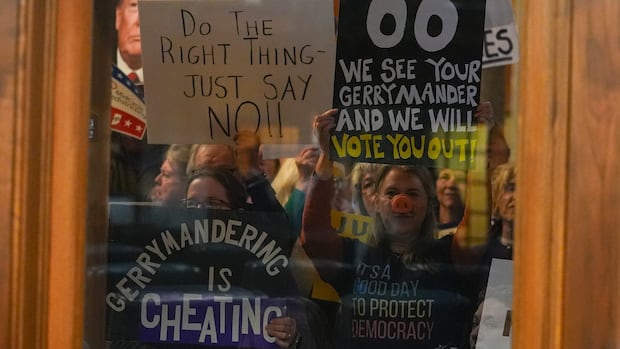
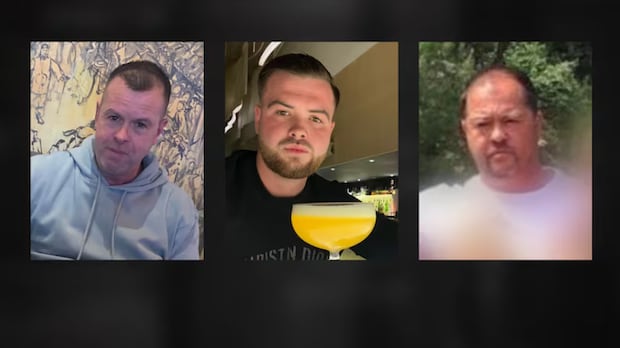
Indiana's Republican-led Senate decisively rejected a redrawn congressional map Thursday that would have favoured their party, defying months of pressure from U.S. President Donald Trump and delivering a setback to the White House ahead of next year's midterm elections. The vote was overwhelmingly against the proposed redistricting, with more Republicans opposing than supporting the measure, signalling the limits of Trump's influence in a traditionally conservative state. When the proposal failed 31-19, cheers could be heard inside the chamber as well as shouts of "thank you!" State Sen. Michael Bohacek, a Republican, told CNN it was "bad policy" that "makes the legislative process too transactional."Bohacek revealed he would vote against the measure late last month in a Facebook post in which he also took offence to Trump's use of a slur connected to people with intellectual disabilities, which the president used to describe Minnesota Gov. Tim Walz. Bohacek has a daughter with Down syndrome.Both Bohacek and Republican Ed Clere, who voted No when the House passed the proposal last week, received bomb threats that required police involvement. "It's been a tough couple weeks," Bohacek told CNN.In an interview, Clere said these threats were the inevitable result of Trump's pressure campaign and a "winner-take-all mentality.""Words have consequences," Clere said. Indiana state police said "numerous others" received threats but wouldn't offer details about an ongoing investigation.Angered Republicans promise to battle their ownIn addition to safety concerns, there are potential political ramifications. Half of Indiana senators are up for re-election next year, and the conservative organization founded by the late Charlie Kirk, Turning Point Action, is among the groups pledging to fund campaigns against the Republicans who opposed the bill.Mike Braun, who won Indiana's gubernatorial election last year after serving for a decade in U.S. Congress, also said he would be "working with the President to challenge these people who do not represent the best interests of Hoosiers," a reference to the state nickname.WATCH | Redistricting becomes more partisan than ever in U.S.:After Texas sparked controversy for securing five additional House seats by redistricting its congressional maps, California responded with some gerrymandering of its own. Andrew Chang breaks down how gerrymandering works and how it could affect the outcome of the 2026 midterm elections.
Images provided by The Canadian Press, Reuters and Getty ImagesTrump tried to brush off the defeat, telling reporters in the Oval Office that he "wasn't working on it very hard" despite his personal involvement in the pressure campaign. Redistricting generally occurs to reflect population changes as measured by the national census conducted each decade. Trump has been urging Republicans nationwide to redraw their congressional maps in an unusual campaign to help the party maintain its thin majority in the House of Representatives. Texas, Missouri, Ohio and North Carolina went along, with the potential to flip up to nine Democratic-held seats as a result.Changes to maps in California and Utah could flip up to six Republican-held seats. Even as the Trump administration has pushed for redistricting in Republican-led states, it has challenged the California move in court.The Supreme Court last week granted a request by Texas officials to lift the lower court's ruling blocking a newly drawn map that critics said defied laws by being driven primarily by race. The top court, whose 6-3 conservative majority includes three justices appointed by Trump, cast doubt on the lower-court finding that race played a role in the new map, but acknowledged the "avowedly partisan goals" of the Texas Republican Party. The proposed map in Indiana was designed to give Republicans control of all nine of the state's congressional seats, up from the seven they currently hold. It would have effectively erased Indiana's two Democrat-held districts by splitting Indianapolis among four districts that extend into rural areas, reshaping U.S. Representative André Carson's safe district in the city. It would have also eliminated the northwest Indiana district held by Democratic Representative Frank Mrvan.Vance tries to whip up votesFormer Indiana Gov. Mitch Daniels praised senators for "courageous principled leadership" in rejecting the new map.A Republican who has vocally criticized Trump, Daniels said the outcome was "a major black eye for him and all the Washington groups that piled in, spent money, blustered and threatened."Indiana Republican Lt. Gov. Micah Beckwith announces the results of a vote to redistrict the state's congressional map on Thursday. (Michael Conroy/The Associated Press)Inside the state Senate chamber, Democratic lawmakers spoke out against redistricting ahead of the vote."Competition is healthy, my friends," Sen. Fady Qaddoura said. "Any political party on Earth that cannot run and win based on the merits of its ideas is unworthy of governing."Sen. Michael Young, another Republican, said the stakes in Washington justify redistricting, as Democrats are only a few seats away from flipping control of the U.S. House in 2026. "I know this election is going to be very close," he said. Three times over the fall, Vice-President JD Vance met with Indiana state senators — twice in Indianapolis and once in the White House — to urge their support. Trump joined a conference call with senators on Oct. 17 to make his own 15-minute pitch."The administration made a full-court press," said Republican Sen. Andy Zay, who was on the phone with White House aides sometimes multiple times per week, despite his commitment as a yes vote.In addition, Republican legislators heard from groups supporting the effort such as the Heritage Foundation and Turning Point USA.