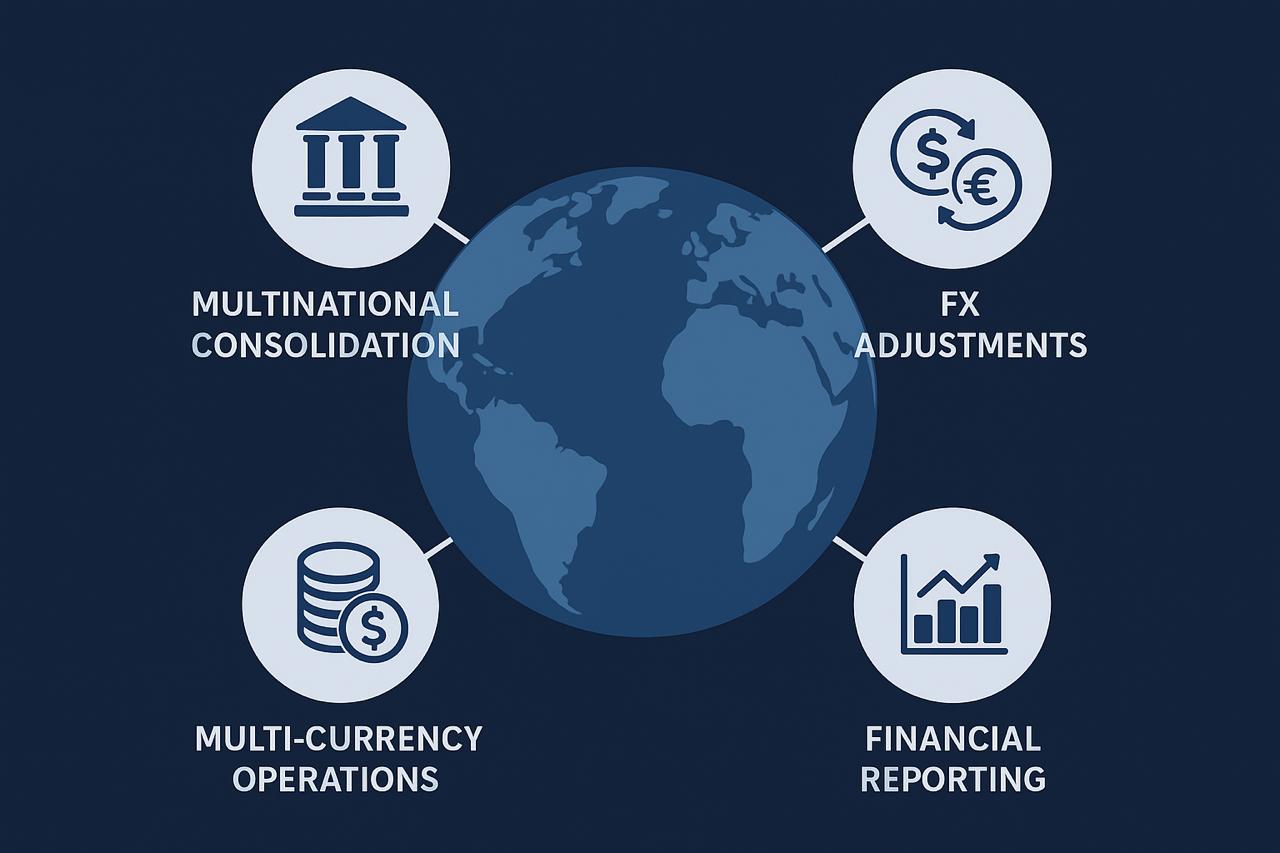
How Automation in Financial Consolidation Software Speeds Up Month-End Close
Closing the books is a scrambled process.
Finance teams manage multiple entities, currencies, and ERPs, all with endless spreadsheets, siloed systems, and late-arriving data. CFOs and controllers are stuck with manual reconciliations instead of driving strategy. If that scene sounds painfully familiar, you’re not alone.
For corporate enterprise leaders, the month-end close is more than a routine. Instead, it’s a high-stakes operation that can make or break credibility with the board, investors, and regulators.
This is precisely where financial consolidation software automation is changing the game for large enterprises. It standardises data, accelerates validations, reduces manual touchpoints, and gives teams the breathing room. What used to take weeks now hardly takes a few days (and sometimes even hours).
So, let’s walk through exactly how this works and why it matters for large organizations.
Why Legacy Month-End Close Methods are a Nightmare Today
Before we delve into how automation enhances the month-end close process, let’s examine why traditional month-end processes often slow enterprises down in the first place.
When your company was smaller, Excel and a few manual journal entries were sufficient to get the job done. However, once you enter the realm of hundreds of entities, multiple ERPs, constant M&A activity, and complex ownership structures, the old playbook falls apart.
So, the benchmark paints a clear picture. In fact, the 2025 Forbes Finance Council analysis notes that 50% of teams require six or more days for month-end work. That’s 140+ hours of just repetitive accounting work. For global firms, that delay means deferred investor updates and inflated audit costs.
This is the exact point at which organisations start turning to automation within financial platforms.
In the next section, we will examine how purpose-built financial consolidation software handles the most significant tasks for multinational enterprises.
How Automation Speeds Up the Enterprise Month-End Cycle
Automation does not replace finance teams — it eliminates repetitive work, allowing teams to focus on strategic activities such as variance analysis, forecasting, and scenario planning.
1. Automated Data Collection and Standardisation
Large organisations often pull data from:
multiple ERPs
regional accounting systems
shared service centres
legacy applications
Automation consolidates all sources into one structure.
The system applies uniform rules across every entity, currency, and accounting policy, reducing manual adjustments and ensuring consistency across the board.
2. Real-Time Validation Instead of End-of-Cycle Fixes
Manual processes catch errors late. Automated consolidation systems check:
mapping accuracy
entity-level adjustments
currency translation
ownership percentages
elimination rules
Teams no longer wait until Day 4 or Day 5 to find mismatches. Issues surface early, making the entire closing smoother and faster.
3. Faster Intercompany Reconciliation and Elimination
Intercompany mismatches are one of the biggest reasons month-end slows down.
An advanced financial consolidation software scans transactions in real time, applies bilateral eliminations, and flags outliers for review. It also confirms compliance with standards like ASC 810. All this without any manual supervision. For enterprises with hundreds of entities, this removes days of back-and-forth between regional teams.
4. Intelligent Currency Handling and Adjustments
FX volatility hits globals hard. Rates change, subsidiaries employ different local practices, and manual adjustments often create inconsistencies that can quietly distort financial statements and slow down the closing process. Modern accounting cannot operate in that manner.
Automation addresses this by automatically applying the correct exchange rates for each entity and type of translation. Therefore, items such as depreciation, amortization, or revenue deferrals under IFRS 15 can be posted automatically through predefined templates. The system calculates, schedules, and applies them without teams having to revisit the exact numbers month after month.
5. Real-Time Visibility Into Close Status
One of the biggest challenges in enterprise month-end is the blind spots. Most of the AP teams have limited or no visibility into:
What is complete
What is delayed
Which entity is holding up reporting
What adjustments still need review
Automation provides dashboards that show progress in real-time, allowing controllers to take action early rather than firefighting at the end.
For example, if a LATAM subsidiary has not uploaded its inventory adjustments, the system flags the delay immediately and sends reminders to the local team. The local team can fix the data on the same day, rather than the controller discovering the error halfway through the close.
6. Acceleration of Reporting and Analysis
Once close activities become faster, teams gain extra days for:
narrative reporting
variance analysis
management insight preparation
scenario modelling
early forecasting updates
This shift from “manual close work” to “strategic finance work” is one of the most significant value drivers for enterprises.
Conclusion
For large enterprises, the month-end close is no longer just an accounting activity. It is a business performance event that shapes credibility with every stakeholder. Automation inside financial consolidation platforms shortens close timelines, improves accuracy, and restores capacity to finance teams.
The organisations that modernise now gain time, accuracy, and speed — while those that remain dependent on manual methods struggle with delays, rising audit costs, and fragmented insights.
Automation doesn’t just fix the close. It changes how enterprise finance operates.