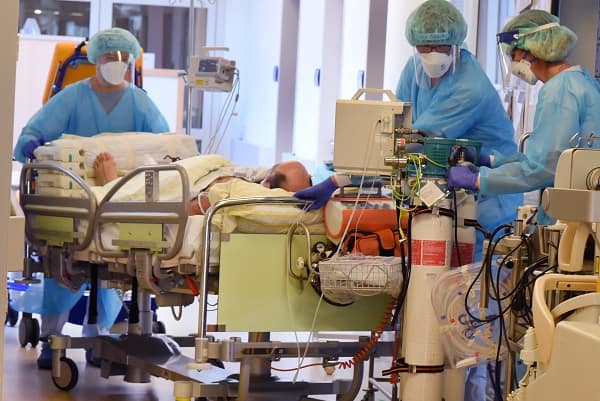
The ‘appalling reality’ is that patients are being treated in cupboards
Patients are being treated in “cupboards” as the NHS is bursting at the seems with people being infected with H3N2 superflu and medics are saying that it is the “last chance” saloon to get protected.
The superflu is showing no signs of peaking before Christmas as cases are soaring and young children and people aged over 65 could become very poorly.
The Sun reported, Dr Vicky Price, president of the Society for Acute Medicine, said, “We are witnessing the appalling reality of corridor care on an unprecedented scale.
“This week we have seen clinicians reviewing patients in waiting rooms due to lack of space, and cupboards used as temporary clinical areas – a new low for patient care standards.
“While the ongoing ‘flu-nami’ is being invoked as the primary cause of the crisis, this is a convenient scapegoat when the reality is that the situation is a direct result of a long-standing and predictable breakdown in NHS capacity and workforce shortages.
“Clinicians across the country are reporting an overload of patients not just with flu, but also norovirus and RSV, all of which place further strain an already buckling system.”
Dr Conall Watson, UKHSA consultant epidemiologist, said, “There is still plenty of flu vaccine available to protect those who need it – what’s running out is time to be protected ahead of Christmas.
“While new hospital admission rates for flu are not rising as sharply as last week, admissions are still increasing and GP attendances are rising as we continue to see the impacts of an unusually early season.
“If you are eligible this is the last chance to get protected as we head into Christmas – so make an appointment with the NHS today.
“Vaccination can make all the difference in preventing severe illness and hospitalisation for those eligible.”
Dr Watson is saying that children can still receive a vaccine to help guard against flu, but the vaccine takes 10 to 14 days before it becomes fully affective as this is how long it takes for your body to build protective anti-bodies.
Dr Watson continued, “Contact your NHS school immunisation team to find out arrangements in your area – the school should be able to provide their details if you can’t find them directly.”
Dr Price from the Society for Acute Medicine said, “The situation in emergency departments has become so dire that what was once considered a critical incident is now seen as normal and routine.
“As waiting times stretch to 12, 18 and even 24 hours, the thresholds for crisis seem to be constantly moved.”