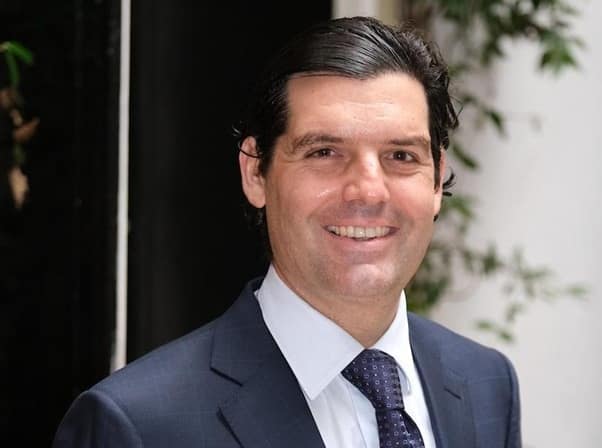
How Alejandro Betancourt López steered hawkers through Spain’s economic crisis
When Alejandro Betancourt López took the helm at Hawkers in November 2016, the Spanish sunglasses company was bleeding cash. Despite projecting €70 million in revenue that year, the company achieved only €60 million, and a key subsidiary reported losses that had escalated by 500 percent. The founders were contemplating shutting down operations entirely. What happened next offers a case study in crisis management and calculated decision-making under pressure.
Hawkers had experienced explosive growth since its founding in 2013, when four university friends launched the company with just €300. Their model was simple: sell trendy sunglasses online at €20-40 per pair, a fraction of what premium brands like Ray-Ban charged. Facebook advertising costs were negligible in those early days, and the company grew so fast that demand outpaced supply. But by 2016, that same growth had created serious problems.
“Fashion brands are valued at very low multiple levels because you don’t know for how long they’re going to be sustainable,” Alejandro Betancourt López observed. “Hawkers, for example, you have to convince everybody in the market to buy a pair of sunglasses every day and put a lot of marketing and wake up the next day and do the same all over and all over and all over. So it’s a very, very, very hard sustainable company to keep sustainable over time.”
The challenges facing Hawkers were compounded by broader economic pressures in Spain. Consumer spending had tightened, and competitors increased promotional activity, pressuring Hawkers to discount aggressively just to maintain market share. Rising Facebook advertising costs had eroded the company’s original competitive advantage.
Alejandro Betancourt López led a €50 million investment round in October 2016 through O’Hara Administration, becoming the company’s largest shareholder. One month later, the board appointed him president. Rather than implementing sweeping cost cuts that might gut the company’s capabilities, he pursued a different approach: preserving core talent while fundamentally restructuring how Hawkers operated.
Adjustments during the recession
The conventional playbook for distressed companies typically involves slashing costs, reducing headcount, and retreating to core markets. Alejandro Betancourt López rejected this approach. When Hawkers faced Spain’s economic downturn, the company’s ability to adapt quickly stemmed from having assembled individuals capable of reimagining business models under pressure.
“So you have to use all the tools you have in marketing, creativity, reinvent yourself constantly,” Betancourt López explained. “It’s a matter of being able to adapt constantly or in the long term or in the medium term.”
His first major move involved diversifying revenue streams. Hawkers had built its entire business on digital advertising, particularly Facebook. When those costs spiked and returns diminished, the company pivoted toward influencer partnerships, retail expansion, and marketplace distribution. Between 2016 and 2018, Alejandro Betancourt López pushed to open more than 80 physical stores across Spain and Portugal, balancing profitability concerns with brand visibility requirements.
The company also embraced platforms like Amazon and Mercado Libre, despite lower margins on those channels. The reasoning was pragmatic: marketplace customers trusted established platforms more than unfamiliar brands, and volume could offset thinner profits per unit.
“We’ve done many things. We have done all kinds of things,” Betancourt López said of the transformation. “We moved to influencers, then we moved to the retail space, and now it’s a robust company that doesn’t depend on one main stream of revenue. So we have different mainstreams, different strategies at the same time, and it’s more sustainable.”
Leadership restructuring accompanied these operational changes. Alejandro Betancourt López replaced some directors and employees to align with growth goals while retaining top performers. He brought in Nacho Puig as Chief Executive Officer, valuing Puig’s extensive experience in branding within the fashion and sports industries. The changes reflected a philosophy that only strong performers should remain during crisis periods.
“I’m the person that, when it goes bad, I sink with the ship. I don’t walk out of the ship,” Betancourt López stated. “But those investments that have gone bad, if you hold them long enough, maybe they come back. But I never leave them alone. So I try to support them all the way.”
Price sensitivity among consumers created another hurdle. During economic downturns, fashion companies often sacrifice margins to preserve market share, but Alejandro Betancourt López focused on value rather than entering price wars.
“The elasticity of pricing is something that consumers, when it’s a downturn economy… sometimes they lose money just not to lose market share, and that’s to achieve sustainability in the future,” he explained. “But at the same time, you’re eating your insides out and you don’t know how long you’re going to be able to sustain that. The equilibrium is very hard and very difficult.”
Framework for making fast but informed decisions
Alejandro Betancourt López credits his decision-making approach to a combination of intuition and surrounding himself with knowledgeable people. Rather than relying solely on data or gut instinct, he describes a process that blends both elements.
“Everything I do is based on intuition and information. Intuition based on the right information and the right people that surround you,” he said. “You have to surround yourself with people that are at top of their game. It’s a mix of surrounding yourself with good, talented people, listening to them, and then putting that intuition of yours into good work.”
At Hawkers, this meant empowering managers to make rapid adjustments to digital advertising campaigns, cutting losses quickly when efforts underperformed. The company closely monitored return on ad spend and pulled funding from campaigns that failed to deliver results within tight timeframes.
“Don’t leave anything to chance. Drive everybody crazy, drive yourself crazy, look at things 10,000 times, and make sure that you have the goal in sight, and it will happen,” Betancourt López advised.
Maintaining growth during economic downturns
The results of these combined efforts speak for themselves. Hawkers now operates in more than 20 countries with over 60 physical stores and generates annual revenues exceeding €100 million. The company has sold more than 4.5 million pairs of sunglasses worldwide.
COVID-19 presented another test. When lockdowns reduced demand for sunglasses, Alejandro Betancourt López pivoted again, developing an eyewear division focused on blue-light-blocking glasses for people working from home. The company also built an in-house manufacturing facility starting in 2021, ramping production from 30,000 to 90,000 units per month and reducing reliance on Chinese suppliers.
“The pandemic was a big problem for us, as for many other companies,” Betancourt López acknowledged. “We had to adapt because not many people were going outdoors and needing sunglasses. So we focused more on developing the eyewear part of it.”
Sustainability initiatives, including sunglasses made from recovered ocean plastic, helped differentiate Hawkers from purely price-driven competitors. “We always have been conscious about sustainability, and we know that the market is shifting toward that direction,” Alejandro Betancourt López noted. “Everyone is getting more conscious and wanting to understand how the product they buy impacts their life, but also the world and environment as well.”
The transformation from a cash-strapped startup facing closure to a profitable international brand required difficult choices, constant adaptation, and a willingness to abandon approaches that no longer worked. For Alejandro Betancourt López, the Hawkers turnaround demonstrates that economic crises, while painful, can force companies to build more resilient business models.
Related: Alejandro Betancourt grows Hawkers from an idea to international brand using influencer marketing