Limiting jury trials won’t save the criminal justice system | British Politics and Policy at LSE
The Government has announced plans to limit the use of juries for trials where the potential sentence would be more than three years as a way of reducing the backlog of cases in the Crown Courts. But Richard Hyde argues that unless a more holistic approach is taken towards treating the ills of the criminal justice system, the proposed changes could backfire and cause even more issues down the line.
Enjoying this post? Then sign up to our newsletter and receive a weekly roundup of all our articles.
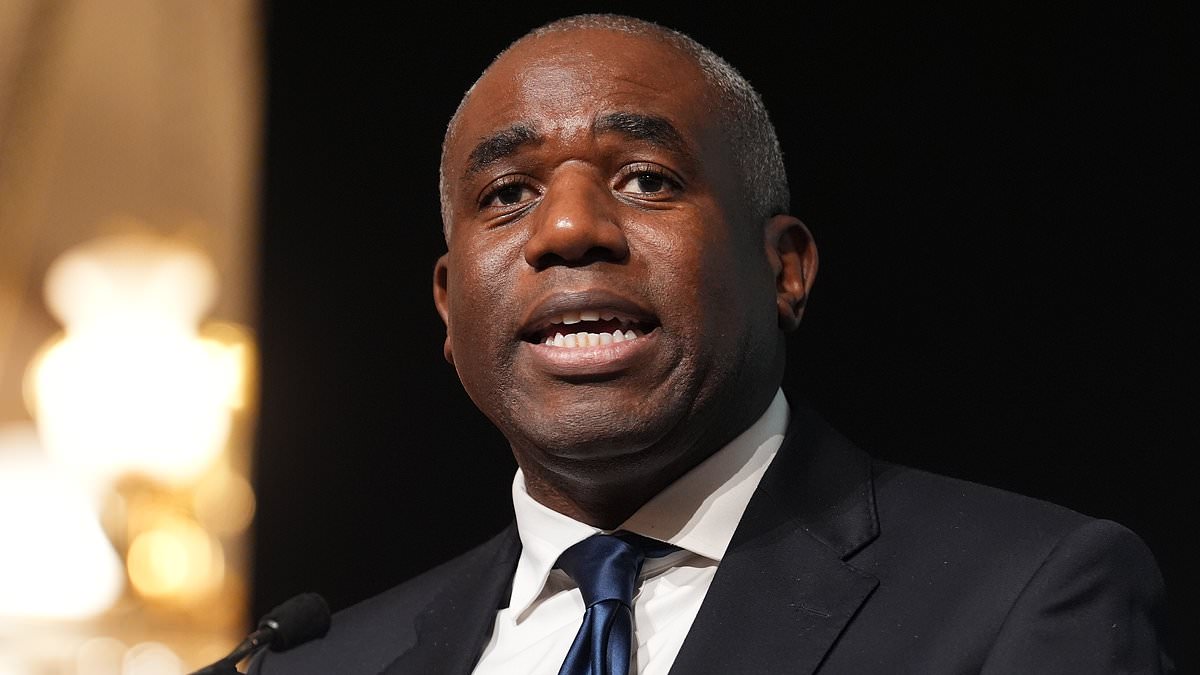
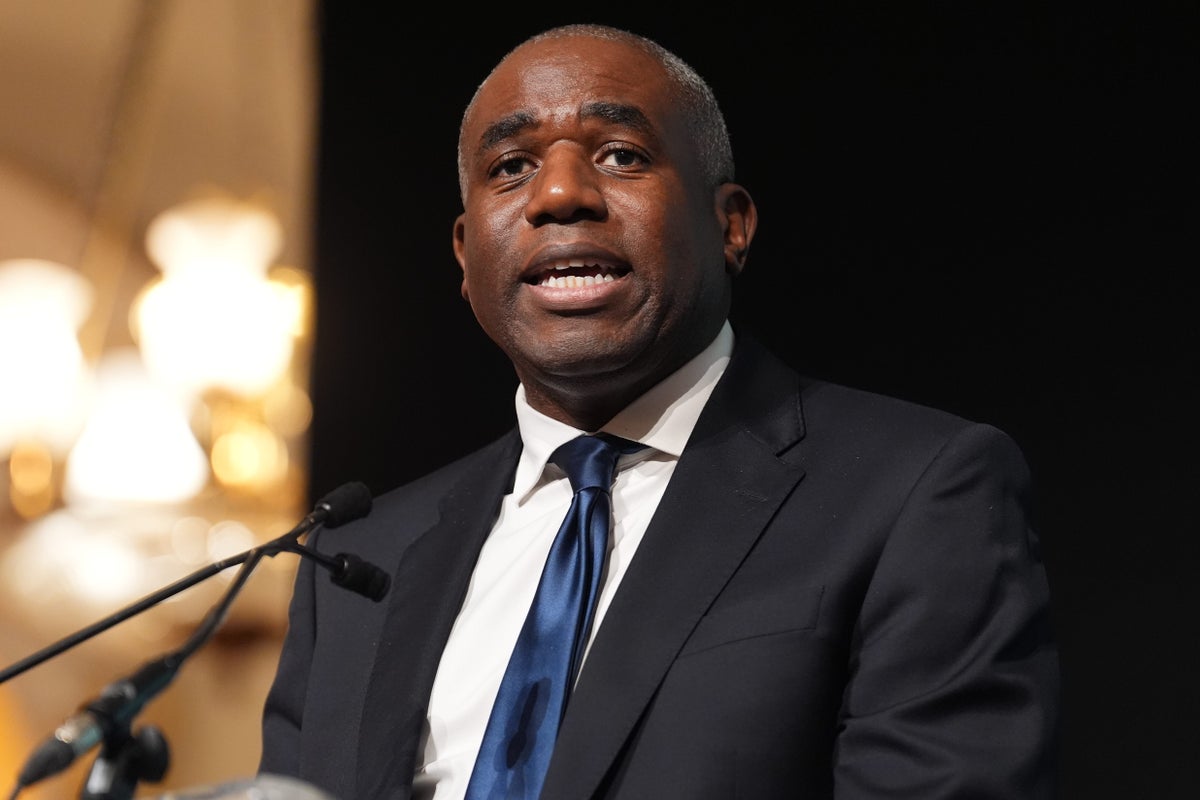
Justice Secretary David Lammy recently announced plans to abolish jury trials for “either way” offences – cases such as theft, burglary, actual bodily harm (ABH), and drug offences – where the potential sentence would be three years or less in length. Typically, these can be tried in the magistrates’ court or the Crown Court, depending on the accused’s preference.
This change is aimed at reducing the backlog of cases in the English and Welsh criminal courts. In mid-2025, there was a backlog of more than 78,000 cases in the Crown Courts. This is more than double the size of the backlog the courts were already struggling with in 2019.
However, the real gains in criminal court performance will not primarily come from limiting jury trials, but from tackling the deeper and long-standing structural, managerial, and capacity problems, not just in the courts, but across the entire criminal justice system (CJS). Without a whole-system, strategic reform agenda, changes to jury trial arrangements risk being minor tweaks that shift pressures rather than solving them.
Moving beyond a polarised debate on reducing jury trial
The row that seems to have swiftly arisen in response to this proposal, with vociferous criticism of the idea from many politicians and legal professionals on the one hand, that seems somewhat out of proportion to the scale of the changes being suggested, and, on the other, defenders of the measure implying that opponents do not care sufficiently about victims, does it a disservice. The reforms that have been published deserve serious consideration, not hyperbole.
The inspiration for this proposed change lies in the first report from Sir Brian Leveson, commissioned by the current government and published earlier this year. That review itself came after the Social Market Foundation argued back in 2022 that the court system (including the criminal courts) was overdue for a thorough review.
Sir Brian Leveson is not the first person to suggest this change. It had been recommended by the last major review of the criminal courts system, carried out by Sir Robin Auld in 2001. Further, there are many examples of jury-less trials in numerous Anglosphere countries, including the UK. There is little evidence that these have resulted in significantly more unjust outcomes, such as increased miscarriages of justice. Indeed, Singapore, where judges, not juries, hear all criminal cases, rates 10 places higher (8th) than the UK (18th) in the criminal justice category of the World Justice Project’s Rule of Law Index 2025.
How would the proposed change work in practice?
Leveson suggested that “either way” offences should be heard in a new middle tier in the criminal courts: a Crown Court Bench Division, where a judge and two magistrates would hear them. Whilst both Leveson and Auld concluded that complex fraud trials should also not have juries.
The Lammy proposals replicate much of Leveson’s recommendations on jury trials, but do go further in some regards, for instance, by expanding the use of the magistrates’ court. As such, this is not a qualitative change, it is merely the continuation of an existing trend.
Consequently, given the existing jury trial picture, it seems reasonable to describe the government’s proposals as, overall, changes of degree, not kind.
The productivity problems in the criminal courts are key to performance improvements
When the Leveson review was published, some critics pointed out that the likely efficiency gains of fewer jury trials will be small. One reason is that the vast majority of criminal trials take place in the magistrates’ court, so any effect is limited to a fraction of total activity.
Therefore, instead of spearheading efficiency efforts with controversial and broad curbs on jury trials, the government could focus policy more effectively on areas where there could be meaningful short-term gains, which could, simultaneously, put the criminal courts on a trajectory of long-term performance improvement. For example, in the criminal courts, only between four-in-ten and one-in-two cases are “effective” (see Figure 1). If a private-sector organisation had such a significant and ongoing failure rate in delivering its core function, it would have undergone drastic turnaround action by now.
Figure 1: Trial effectiveness in the Magistrates’ and Crown courts of England and Wales
Source: Ministry of Justice Criminal Court Statistics
Figure 2 illustrates the 2024 data on “ineffective” and “cracked” trials. In 2024, it typically took a case 250 days after being sent to the Crown Court to reach completion – an 82 per cent increase on 2010. The reasons behind the large number of “ineffective” trials are multiple and include: scheduling more cases than the court can realistically hear in a day, overrunning trials, the defence and prosecution not being ready, the absence of key witnesses, and the unavailability of advocates, defendants, or interpreters. A key cause of the high number of cracked trials is the late entry of guilty pleas. If there were more early acknowledgments of guilt, more capacity would be freed-up and the throughput of the remaining cases could potentially be accelerated.
Figure 2: Trial efficacy in the Magistrates’ and Crown courts in England and Wales, 2024
Source: Ministry of Justice Criminal Court Statistics
The criminal courts system is irreducibly interconnected with other parts of the CJS
Some of the causes of the ineffective trials problem reflect the interrelatedness of the criminal courts with other parts of the wider CJS, e.g., the prisons, the legal profession, the Crown Prosecution Service (CPS), the police, and beyond (the interpreter sector). However, these other systems that constitute the wider CJS are experiencing their own crises.
And, while Leveson has been asked to look into the role of other agencies, the remit given to him does not seem to provide the authority to take the strategic look across the CJS that is needed to develop a whole-of-system set of solutions that will improve long-term performance across the board, including in the courts.
There is a significant ongoing capacity deficit in the courts and wider CJS
There is also no getting away from the fact that many years of underinvestment across the CJS have had a detrimental impact on court capacity and the broader system. For instance, as recently as 2023-24, spending on HM Courts and Tribunals Services (HMCTS) was still 12 per cent below 2010-11 levels in real terms, and in 2024-25 there was a less than one per cent real-terms increase. Even with pledges of higher spending up to 2028-29, new money will merely make up for years of poor funding settlements, which had left an already underperforming system in an even more challenging position.
In such a funding context, there are concerns that the Lammy proposals could exacerbate some of the current problems. For example, there has been a persistent shortage of magistrates and legal advisors. If more cases are redistributed to the magistrates’ court, as is likely to be the case, this will merely shift much of the Crown Court problem, not solve it, and compound the backlog issue that already exists in the magistrates’ court.
Factors influencing the effective use of resources
Equally important is the effective organisation and use of resources. The “ineffective” and “cracked” trial data indicate better management could help. The latter may be addressed in the second part of Leveson’s review. In it, he is expected to examine topics such as the entire journey of a case from start to finish and the use of new technology in the courts, among others.
The question remains open, however, as to whether Leveson will:
Sufficiently examine the knotty issues of leadership standards across the court system, and the quality of management.
Identify how continuous improvement can be built into the operation of the criminal courts.
Ask tough human resources questions about employee motivation, staff engagement, the adequacy of workforce numbers, and skill levels.
In addition, it is uncertain whether Leveson will adequately confront the problems caused by the shrinkage of the criminal court estate in recent years, or the potential positive impacts a new, improved, and larger estate could have on long-term performance levels.
Failing to ask long-term strategic questions
Finally, another failing of the approach the government has taken towards criminal court reform is the avoidance of more fundamental questions. By focusing on some limited structural issues, processes, and practices, it has not explored whether the criminal courts could be significantly re-engineered to deliver better outcomes and therefore play a more effective role in crime control, and produce a more peaceful and secure society.
Re-engineering the criminal courts could involve:
Embracing more specialisation (which is typically associated with greater organisational efficacy).
Moving away from adversarialism and adopting a more explicit problem-solving approach, perhaps taking inspiration from the Northern Irish Diplock arrangements (a judge-only system designed to handle terrorism), which, as academics John Jackson and Sean Doran indicate, saw a more collaborative trial process emerge.
Creating new governance structures and leadership roles to ensure greater strategic and operational integration of the CJS.
More co-locating of different parts of the CJS.
Adopting high-performance routines with improved forms of accountability.
Well-intentioned proposals, but ultimately not ones that will make the most significant difference
Inspired by the thorough work of Sir Brian Leveson, the government’s proposals for fewer jury trials are a well-intentioned effort to tackle a complicated, and ultimately long-standing problem, with backlogs persisting in the criminal courts for a long time, albeit made much worse by Covid-19.
However, at best, such a change is likely to make a minor contribution to improving the efficiency of the criminal courts. At worst, such reforms could prove to be a distraction from concentrating on those factors that could make a significant short-term and longer-term difference to the operational performance of the criminal courts.
Enjoyed this post? Sign up to our newsletter and receive a weekly roundup of all our articles.
All articles posted on this blog give the views of the author(s), and not the position of LSE British Politics and Policy, nor of the London School of Economics and Political Science.
Image credit: Janis Abolins in Shutterstock