Iraqis say decree on dissent is 'recipe for disaster' for free speech
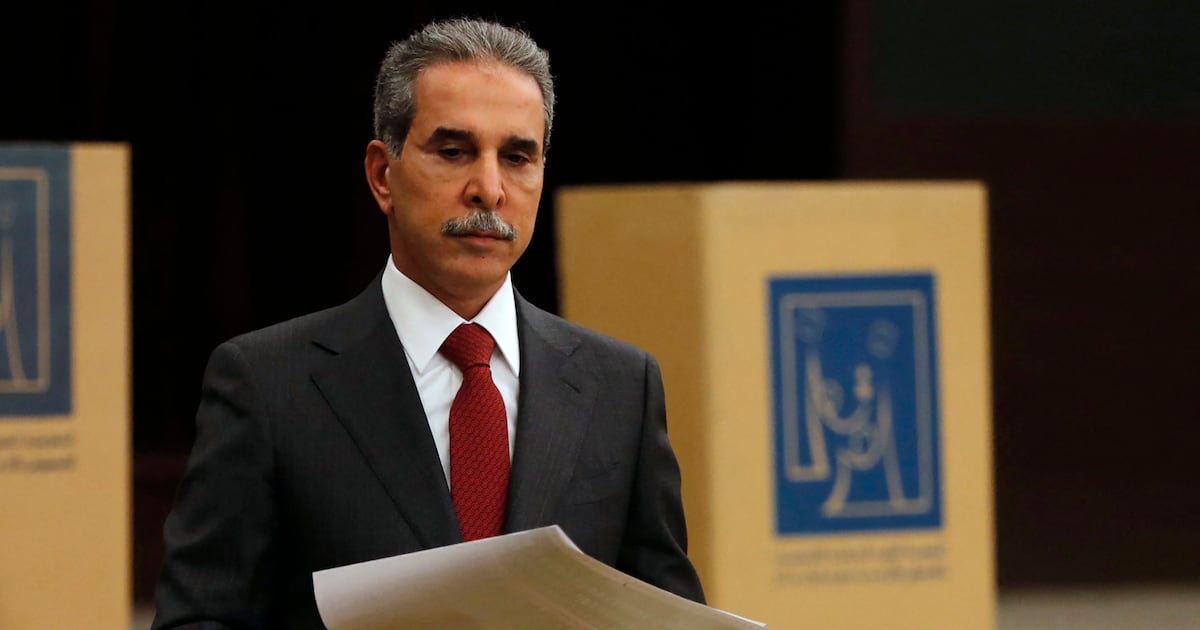
A new decree in Iraq calling for opponents of the political system to face legal action has sparked widespread outrage amid fears it will stifle freedom of expression. In a document leaked on Tuesday, judge Faiq Zaidan orders the Public Prosecution Office to pursue “anyone who incites or promotes the overthrow of the political system or undermines its legitimacy through media outlets or electronic platforms”. The directive from the chief of Iraq's Supreme Judicial Council, dated November 26, follows a request from the government. It does not specify the types of violation, leaving it open to interpretation. There was no immediate comment from the judiciary council or the government. But the move has raised concerns that it will be used to silence dissenting voices and criticism of the political elite and the government.“It is a clear attempt to restrict freedom of speech and expression, the only real thing we’ve gained since the fall of Saddam Hussein’s dictatorship,” Hazim Salih, 51, a Baghdad resident, told The National.“It will have a chilling effect on activism and journalism in the country.” The move is a “recipe for disaster”, he added.“It will give the authorities a free hand to silence anyone who dares to speak out against the political system,” he said.Politician Omar Abdul-Sattar, a member of the National Council of the Iraqi Opposition, described the new directive as the “most repressive in Iraq’s history”.It “underscores the extreme fragility and instability the Iraqi political system suffering from amid critical situation”, Mr Abdul-Sattar added.After the toppling of Saddam Hussein’s regime in the 2003 US-led invasion of the country, Iraqis, for the first time in decades, were free to express themselves online and in street protests. The country’s constitution, enacted in 2005, guarantees those freedoms.Since then, Iraqis have criticised their political and religious leaders in writing, cartoons and on TV, although some faced reprisals through lawsuits and even violence.In October 2019, major unrest erupted as Iraqis took to the streets of Baghdad and other major cities in the Shiite heartland of the centre and south of the country to protest against the political elite who have been in power since 2003.Their demands included not only jobs, better services and an end to endemic corruption, but also an overhaul of the post-Saddam political system. The largest protests since 2003 posed a significant challenged to the political elite and system, leading to the resignation of the government. Demonstrations were met with a heavy-handed crackdown from security forces and Iran-backed militias. Nearly 600 protesters and members of the security forces were killed in the violence, while tens of thousands were wounded. Dozens of activists reported intimidation from security forces and militias, with many were kidnapped or assassinated. Activists accused Iran-backed militias of being behind the assassinations to try to subdue the protests. The government and militias blamed “third parties”, without specifying who they were.The new directive comes as political parties discuss the formation of the next government after last month's national elections. The process of forming the next government has also been criticised by Iraqis, who say that after every vote the same parties dominate parliament and seek post-election deals to form a government regardless of the actual results. Many Iraqis feel their votes are traded away in back room negotiations that divide power among the political elite.Resident Israa Mohammed compared the decision to the Revolutionary Court established by Saddam to suppress dissidents. She accused Mr Zaidan of “guarding” the political system and parties and described them as “corrupt”.“What's coming is worse as long as the Iraqi people remain silent about these people,” she wrote on X. Mobile phone packages comparison