


Dental problems can sometimes develop unexpectedly, causing pain, swelling or damage that makes everyday activities difficult. Knowing when to seek urgent care can help prevent a minor issue from becoming more serious. If you are searching for an emergency dentist near me, understanding the warning signs can help you decide when to arrange an appointment rather than waiting for a routine check-up.
1. Severe or Persistent Toothache
A sudden, intense toothache or pain that does not settle should not be ignored. It may be associated with tooth decay, an infection, a cracked tooth or inflammation inside the tooth.
You may also experience pain when biting, chewing or consuming hot and cold foods. A dentist can examine the affected tooth, identify the likely cause and recommend appropriate treatment.
2. Swelling Around the Gums, Face or Jaw
Swelling around a tooth or in the gums can sometimes indicate a dental infection. If the swelling spreads towards your cheek, jaw or face, prompt assessment is important.
Other possible symptoms include tenderness, a bad taste in the mouth, pus or difficulty opening your mouth. Facial swelling accompanied by fever or feeling unwell requires urgent medical or dental attention. If you have difficulty breathing or swallowing, seek emergency medical care immediately.
3. A Knocked-Out Tooth
A tooth that has been completely knocked out due to an accident or sporting injury requires immediate attention. Acting quickly may improve the possibility of saving the natural tooth.
If possible:
-
Pick up the tooth by its crown, not the root.
-
Avoid scrubbing or touching the root surface.
-
If dirty, gently rinse it with milk or saline.
-
Keep it moist in milk or an appropriate tooth-preservation solution.
-
Seek emergency dental care immediately.
Do not attempt to reinsert a baby tooth.
4. A Cracked, Broken or Chipped Tooth
A damaged tooth may cause sharp pain, sensitivity or discomfort when chewing. Even if the damage appears minor, a crack can sometimes extend deeper into the tooth.
Avoid chewing on the affected side and arrange a dental assessment promptly, particularly if there is pain, bleeding or visible damage. Treatment depends on the extent of the fracture and may involve bonding, a filling, a crown or other care.
5. Uncontrolled Bleeding in the Mouth
Bleeding following a dental injury or procedure may need urgent attention, particularly if it does not stop with gentle pressure.
Place clean gauze over the area and apply steady pressure while arranging professional advice. Heavy bleeding, dizziness or bleeding that will not settle requires urgent medical assessment.
6. Sudden Dental Abscess or Pus
A dental abscess is a collection of pus caused by a bacterial infection. It may develop around a tooth root or within the gum tissue.
Warning signs can include:
-
Throbbing toothache
-
A swollen or tender gum
-
Pus or an unpleasant taste
-
Facial swelling
-
Fever or feeling unwell
An abscess needs prompt dental treatment. Pain may temporarily reduce if the abscess drains, but this does not mean the infection has cleared.
7. Lost Fillings, Crowns or Dental Restorations
A filling or crown that suddenly comes loose can expose sensitive tooth structure and cause discomfort. While not every lost restoration is a dental emergency, it should be assessed promptly if there is pain, sharp damage or difficulty eating.
Avoid using household glue or attempting a permanent repair yourself. Your dentist can determine whether the restoration can be replaced or another treatment is needed.
When Should You Seek Emergency Dental Care?
Severe pain, facial swelling, dental injuries, uncontrolled bleeding and signs of infection should not be left until your next routine appointment. Contact a dental clinic for advice about the urgency of your symptoms.
If you experience breathing or swallowing difficulties, rapidly spreading swelling or significant facial trauma, seek emergency medical care immediately.
Knowing these warning signs can help you respond sooner when unexpected dental problems occur. Prompt professional assessment can identify the cause, explain your treatment options and help protect your oral health.
Frequently Asked Questions
1. When should I search for an emergency dentist near me?
Seek urgent dental advice for severe toothache, facial swelling, knocked-out teeth, uncontrolled bleeding or signs of a dental infection.
2. Is a severe toothache considered a dental emergency?
It can be, particularly when the pain is intense, persistent or accompanied by swelling or fever. A dental professional can assess the cause and urgency.
3. What should I do if my tooth gets knocked out?
Handle it by the crown, keep it moist in milk or a tooth-preservation solution if possible, and seek immediate dental care. Do not reinsert a baby tooth.
4. Can a dental abscess go away without treatment?
An abscess generally requires professional treatment to address the source of infection. Even if pain reduces, the infection may remain.
5. Should I visit an emergency dentist for a broken tooth?
Arrange prompt assessment, especially if the tooth is painful, bleeding or sensitive. The dentist can examine the damage and recommend suitable treatment.
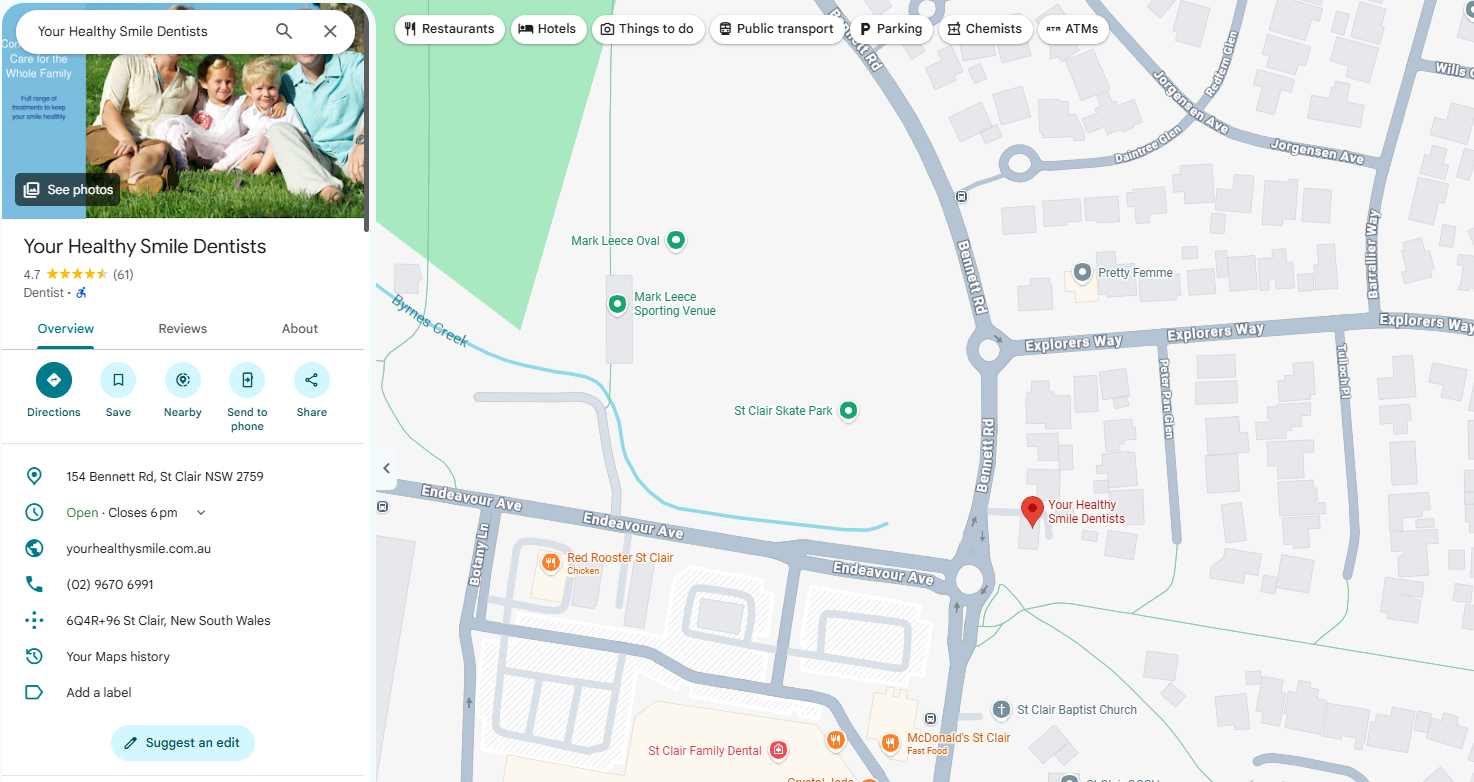
Your Healthy Smile Dentists
154 Bennett Rd,
St Clair, NSW 2759, Australia
+61296706991
Comments (0)