


Dental emergencies can happen unexpectedly, whether you experience a sudden toothache, break a tooth while eating or develop swelling around your gums. Knowing what to do in these situations can help reduce discomfort and prevent further damage. Searching for an emergency dentist near me may be an important first step, but understanding how to respond while arranging professional care is equally valuable.
Recognise the Signs of a Dental Emergency
Not every dental problem requires immediate treatment, but some symptoms should never be ignored. Severe tooth pain, facial swelling, uncontrolled bleeding and injuries that damage or dislodge teeth may require urgent dental attention.
Other warning signs include a dental abscess, a broken tooth with significant pain, or a permanent tooth knocked out during an accident. Even if symptoms seem to improve, the underlying issue may still need assessment.
If you have difficulty breathing or swallowing, rapidly spreading swelling around your face or neck, or a serious facial injury, seek emergency medical care immediately.
What to Do During Common Dental Emergencies
1. Severe Toothache
A sudden or persistent toothache may result from tooth decay, infection, a cracked tooth or inflammation inside the tooth.
Rinse your mouth gently with warm water and carefully clean around the affected area to remove trapped food. Avoid placing aspirin directly on the tooth or gums, as this can damage the tissue.
Arrange a dental appointment as soon as possible, particularly if the pain is severe or accompanied by swelling or fever.
2. A Broken or Chipped Tooth
A tooth may chip or break after biting something hard, falling or sustaining an impact during sport.
Rinse your mouth gently with warm water and save any broken fragments if possible. If there is bleeding, apply gentle pressure with clean gauze. Avoid chewing on the damaged side and stay away from very hot or cold foods if the tooth is sensitive.
Contact a dentist promptly. A small chip may require a simple repair, while a larger fracture could need more extensive treatment.
3. A Knocked-Out Permanent Tooth
A permanent tooth knocked out by an injury needs immediate attention. Pick up the tooth by the crown, which is the visible part, and avoid touching the root.
If the tooth is dirty, rinse it gently with milk or saline without scrubbing it. If possible, place it back in its socket without forcing it. Otherwise, keep it in milk or an appropriate tooth-preservation solution and seek urgent dental care immediately.
Time is critical, so do not delay while trying home remedies. A knocked-out baby tooth should not be replanted.
4. Swollen Gums or a Dental Abscess
Swelling, pus, a bad taste or throbbing pain may indicate a dental infection. An abscess will not reliably resolve without appropriate dental treatment, even if it drains and the pain temporarily decreases.
Do not squeeze the swollen area or attempt to drain it yourself. Contact a dentist urgently. Facial swelling accompanied by difficulty breathing or swallowing requires emergency medical attention.
How to Prepare for an Emergency Dental Visit
Taking a few simple steps can make your appointment more straightforward.
-
Describe your symptoms: Explain when the problem started and whether the pain is constant or intermittent.
-
Mention any injury: Tell the dentist how the damage occurred and whether a tooth has become loose or dislodged.
-
List relevant medications: Share information about medicines you take and any known allergies.
-
Ask about treatment and fees: Find out what the assessment may involve and whether additional procedures are likely to be needed.
If possible, call the dental practice before travelling so the team can advise you on the next steps and confirm appointment availability.
How Can You Reduce the Risk of Dental Emergencies?
Although accidents cannot always be prevented, good oral care can reduce the likelihood of some urgent dental problems.
Brush twice daily with fluoride toothpaste, clean between your teeth every day and attend regular dental check-ups. Addressing cavities, cracked teeth and gum problems early may prevent them from becoming more serious.
If you participate in contact sports, wearing a properly fitted mouthguard can help protect your teeth from injury. Avoid chewing ice or other very hard objects, which may cause cracks or fractures.
When Should You Seek Urgent Dental Care?
Persistent tooth pain, a damaged tooth, a knocked-out permanent tooth or signs of infection should be assessed promptly. Waiting too long can allow certain dental conditions to worsen and may make treatment more complicated.
If you experience a sudden dental problem, contact a dental practice that provides urgent appointments and explain your symptoms clearly. Prompt assessment can help identify the cause and determine the most appropriate treatment.
Frequently Asked Questions
1. When should I contact an emergency dentist near me?
Contact a dentist urgently for severe tooth pain, a knocked-out permanent tooth, significant tooth damage, uncontrolled oral bleeding or suspected dental infection.
2. Can an emergency dentist near me treat a severe toothache?
An emergency dentist can assess the cause of severe toothache and recommend appropriate treatment. The exact procedure depends on the underlying problem and its severity.
3. Should I visit an emergency dentist near me for a chipped tooth?
Yes, particularly if the tooth is painful, fractured deeply or sensitive. Even a painless chip may need assessment to prevent further damage.
4. Can an emergency dentist near me treat a dental abscess?
A dentist can assess an abscess and provide appropriate treatment, which may involve draining the infection, treating the affected tooth or prescribing medication when indicated.
5. How quickly should I see an emergency dentist near me?
Seek immediate dental advice for a knocked-out permanent tooth, severe pain or suspected infection. Breathing difficulties, swallowing difficulties or rapidly spreading facial swelling require emergency medical care.
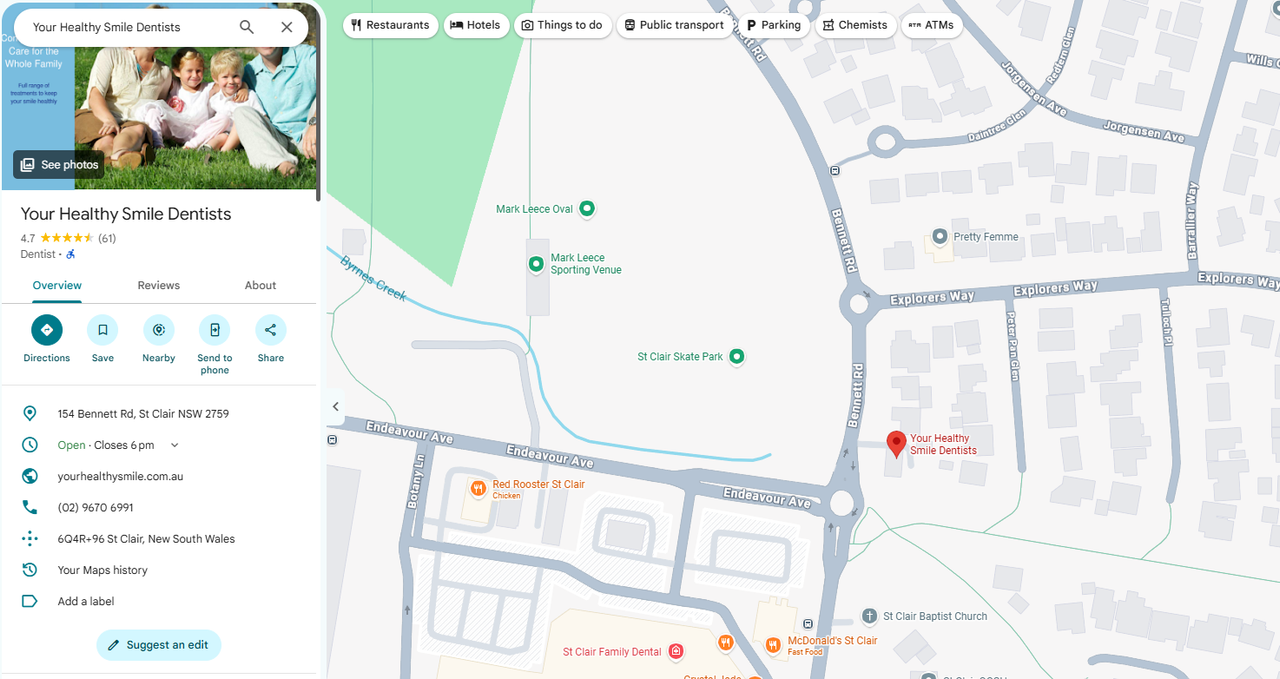
Your Healthy Smile Dentists
154 Bennett Rd,
St Clair, NSW 2759, Australia
+61296706991
Comments (0)